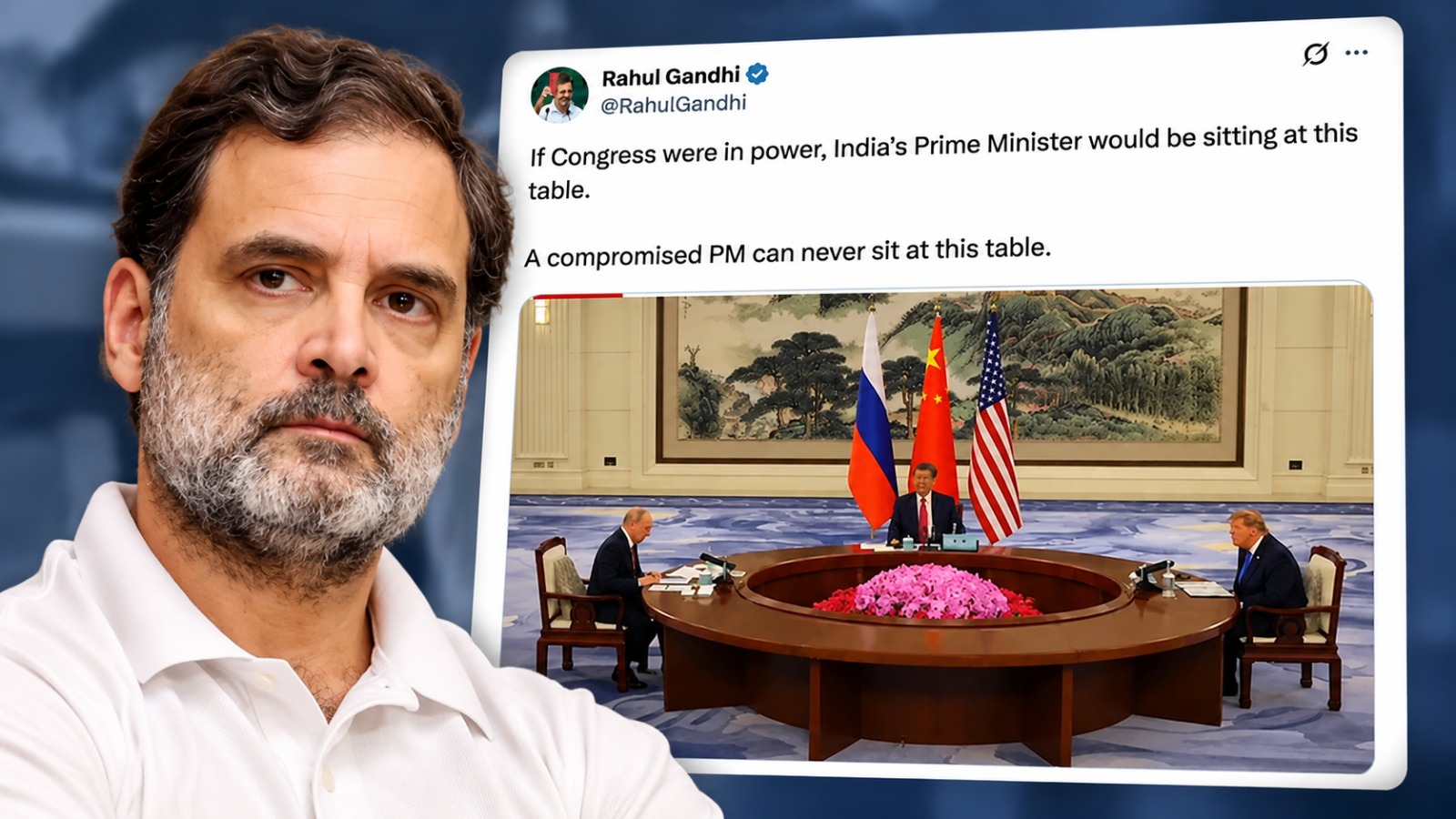

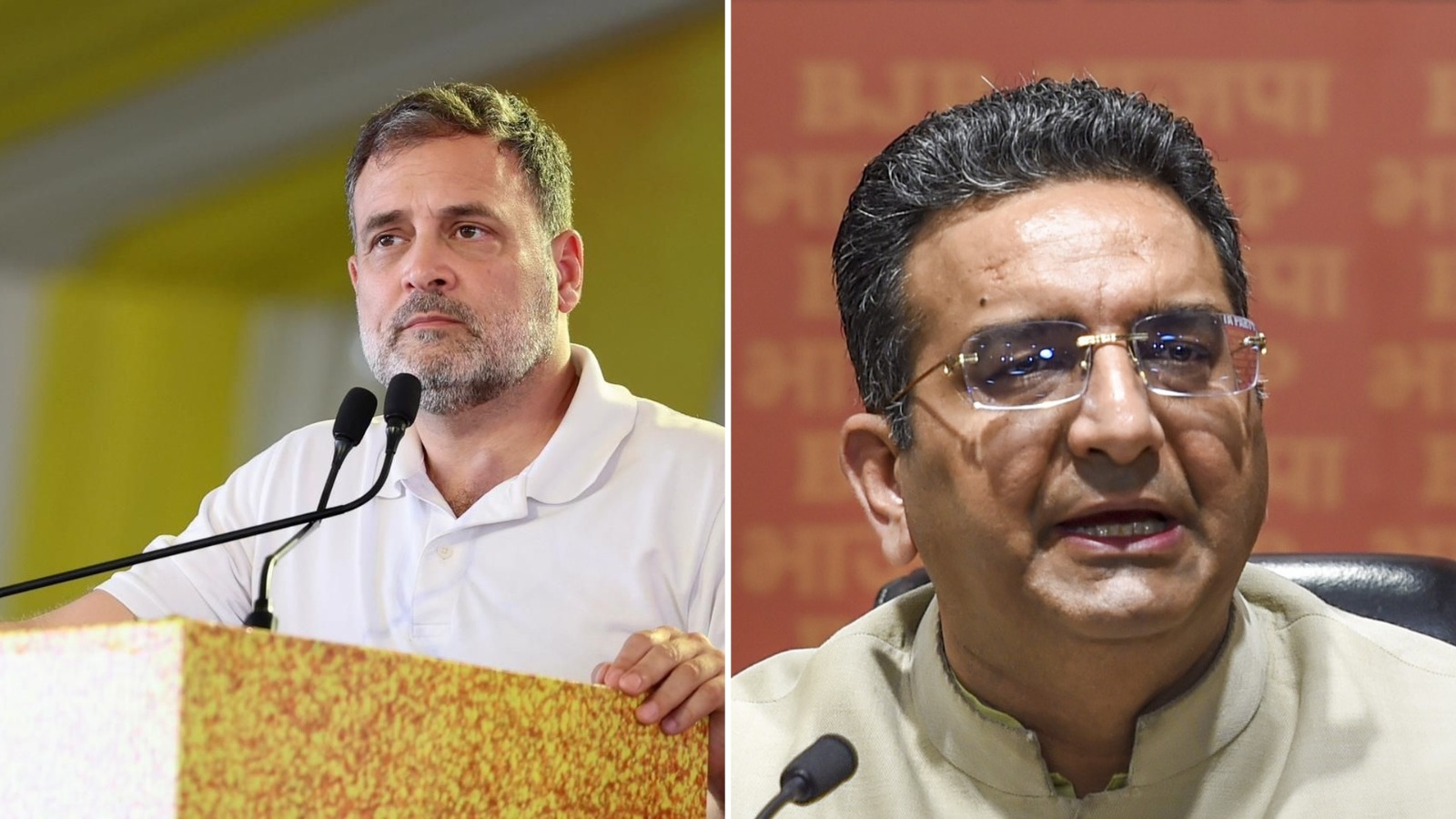
A fresh political confrontation has erupted between the Bharatiya Janata Party (BJP) and the Congress after Leader of Opposition in the Lok Sabha Rahul Gandhi criticised India's economic condition, unemployment situation and education system during an interaction at Columbia University in New York. The BJP on Wednesday launched a sharp attack on the Congress leader, accusing him of repeatedly portraying India in a negative light on international platforms and undermining the country's global image.
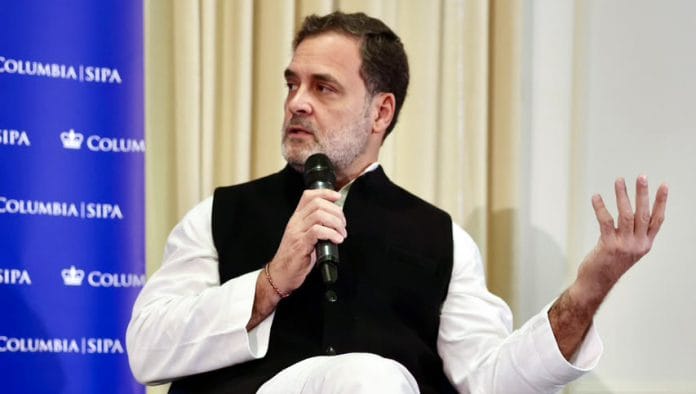
The controversy began after Gandhi, speaking at an event at Columbia University on Tuesday, November 17, described India's economic situation as deeply concerning and warned of what he termed an impending economic crisis.
"The blunt thing is that India is sitting on an economic disaster. That's the reality," Gandhi said during the interaction.
The Congress leader pointed to widespread unemployment, a struggling manufacturing sector and structural weaknesses in the education system as major challenges confronting the country. He argued that India's economic model had failed to deliver the desired results over the past decade and questioned the effectiveness of flagship government initiatives such as 'Make in India' and 'Start-up India'.
According to Gandhi, the country's economic challenges were increasingly affecting young people, particularly those from middle-class families who had received formal education but were struggling to find meaningful employment opportunities.
He also expressed concern over the frustration among India's youth, arguing that many young people no longer saw a clear path towards a secure economic future.
However, his remarks triggered an immediate political backlash from the BJP, with several senior party leaders accusing him of using foreign platforms to question India's economic achievements and democratic institutions.
BJP Calls Rahul Gandhi 'Mir Jafar of India'
Addressing a press conference at the BJP headquarters in New Delhi, party national spokesperson Gaurav Bhatia launched a particularly strong attack on Gandhi, describing him as immature, irresponsible and anti-India.
Bhatia alleged that Gandhi's remarks were part of a deliberate attempt to damage India's international reputation.
"Today, every Indian feels ashamed by the baseless, false, and anti-India statements made by Rahul Gandhi on foreign soil to defame the country," Bhatia said.
He went on to call the Congress leader the "Mir Jafar of India", invoking the historical figure associated with betrayal.
"Rahul Gandhi is immature, anti-India, and the 'Mir Jafar' of India," Bhatia added.
The BJP spokesperson further questioned Gandhi's repeated overseas visits ahead of Parliament sessions, alleging that he travelled abroad to seek guidance from foreign interests.
Bhatia also accused the Congress leader of having a "sinister design" to weaken India's image internationally, arguing that criticism of the government should not translate into questioning the country's standing before foreign audiences.
'Pernicious Pattern of Tarnishing India's Image': CR Kesavan
BJP national spokesperson C R Kesavan also criticised Gandhi, alleging that the Congress leader followed a consistent pattern of making statements that damage India's reputation whenever he travelled overseas.
"Whenever Rahul Gandhi travels abroad, he follows a pernicious pattern of tarnishing India's image with his toxic lies," Kesavan said, according to ANI.
He argued that describing the Indian economy as being on the brink of disaster was particularly misleading at a time when India was being recognised internationally for its economic growth.
Kesavan also drew a comparison between Prime Minister Narendra Modi's conduct during foreign visits and Gandhi's remarks at international events.
Referring to the recent Quad Summit, Kesavan claimed that Modi had demonstrated respect for the national flag by picking up the Indian tricolour from the floor, while Gandhi had allegedly applauded foreign delegates who criticised Indian democracy.
The BJP leader accused Gandhi of indulging in what he termed "third-rate politics" and said his comments exposed the Congress leader's political bankruptcy.
BJP Questions Rahul's Claims on Economy
The BJP also sought to counter Gandhi's economic assessment by highlighting India's growth projections and poverty-reduction figures.
Party leaders argued that several international financial institutions continued to project India as one of the world's fastest-growing major economies.
BJP national media convenor Ashish Usha Agarwal said global economic assessments presented a very different picture from the one Gandhi had described at Columbia University.
"While the world recognises India as one of the fastest-growing major economies, Rahul Gandhi is busy portraying the country as an 'economic disaster' on foreign soil," Agarwal said.
Citing projections from international institutions, Agarwal said the International Monetary Fund and Moody's had projected India's economic growth at around 7 per cent for the financial year 2026-27. He also referred to estimates by the Reserve Bank of India's professional forecasters and Goldman Sachs.
He further cited World Bank figures suggesting a significant reduction in poverty at the lower-middle-income benchmark, claiming that the proportion of people living below that threshold had declined from 57.7 per cent to 16.1 per cent.
According to Agarwal, India's progress in infrastructure, manufacturing, digital transformation, services and financial inclusion demonstrated that the country was moving forward despite global economic uncertainties.
He also questioned the purpose behind Gandhi's repeated criticism of India's economic condition on international platforms.
"What exactly is the objective behind this narrative?" Agarwal asked.
He maintained that India's economic progress was supported by data and that the country's ambitions under the Viksit Bharat 2047 vision could not be undermined by political criticism.
Telangana BJP Chief Also Targets Congress Leader
BJP Telangana president N Ramchander Rao joined the criticism, accusing Gandhi of repeatedly speaking against India while travelling abroad.
"Yet again, Rahul Gandhi speaks against India and its economy on foreign soil. Until yesterday, he was inviting foreigners to speak against India on Indian soil. Now he has gone abroad and is speaking against the country," Rao said.
Questioning Gandhi's criticism of India's education system, Rao asked why international students continued to come to Indian universities if the country's education infrastructure was as weak as the Congress leader had suggested.
He also cited India's GDP growth, quarterly Goods and Services Tax (GST) collections and employment-related figures to challenge Gandhi's claims.
Rao claimed that India's unemployment rate had declined from 6 per cent to 3 per cent and referred to poverty-reduction figures while defending the government's economic record.
'While Opposing BJP, He Has Started Opposing India': Sanjay Saraogi
Bihar BJP president Sanjay Saraogi also accused Gandhi of allowing his opposition to the BJP to turn into opposition to the country itself.
"This is Rahul Gandhi's problem, while opposing the BJP, he has started opposing India," Saraogi said.
He referred to India's economic and military standing, arguing that the country had strengthened its position internationally under Prime Minister Narendra Modi's leadership.
Saraogi questioned Gandhi's description of India as being on the verge of an economic disaster and alleged that such remarks were disconnected from the country's achievements.
He also blamed the Congress leadership's political approach for the party's electoral setbacks.
Rahul Gandhi's US Visit and the Political Controversy
Gandhi is on a two-day visit to the United States, where he interacted with students, faculty members and academics at Columbia University in New York.
During the interaction, the Congress leader discussed India's economic trajectory, unemployment, the state of manufacturing and the challenges facing the education system. He argued that the country's economic model needed fundamental changes to generate employment and provide opportunities for its growing young population.
His remarks have once again brought the political debate over India's economy and international image into sharp focus.
While the Congress leader has sought to highlight structural weaknesses and question the government's economic policies, the BJP has accused him of projecting a distorted picture of the country before international audiences.