
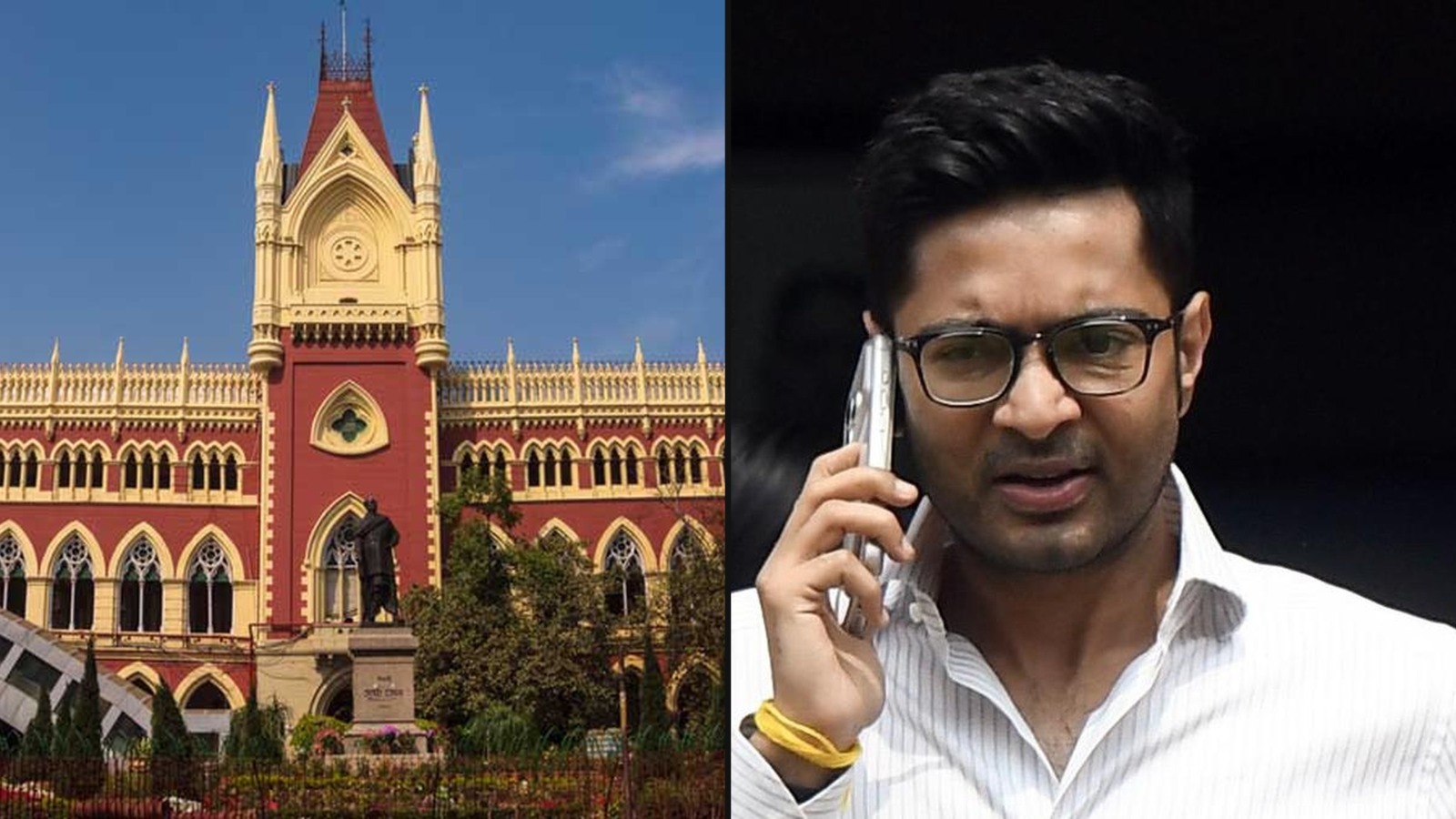
In a setback to Trinamool Congress (TMC) national general secretary Abhishek Banerjee's personal assistant Sumit Roy, the Calcutta High Court on Thursday refused to grant him interim protection in a writ petition alleging that he was being falsely implicated in multiple criminal cases at the behest of the Bharatiya Janata Party (BJP).
A single-judge bench of Justice Saugata Bhattacharyya rejected Roy's request for an interim direction restraining the West Bengal government from registering fresh criminal cases against him or taking coercive action in connection with the existing proceedings.
The petition concerns five criminal cases registered against Roy. His legal team had sought protection in four of these cases, pointing out that he was already in custody in connection with another case.
The court, however, was not inclined to grant the requested relief, observing that the issues raised in the petition did not require examination at this stage.
The development comes amid an intensifying political confrontation in West Bengal, with the TMC alleging that criminal proceedings against its leaders and associates are politically motivated, while the BJP has consistently defended the actions of the state administration.
Why Did Sumit Roy Approach the Calcutta High Court?
Roy had moved the Calcutta High Court alleging that multiple criminal proceedings were being initiated against him at the instance of the BJP.
His petition sought judicial intervention against what he described as politically motivated criminal cases. He also requested an interim direction preventing the state from registering further cases against him and taking coercive steps in the existing proceedings.
During Thursday's hearing, Senior Advocate Gopal Sankaranarayan, appearing on behalf of Roy, informed the court that his client was facing five criminal proceedings.
The lawyer pointed out that Roy was already in custody in connection with one of the cases and sought interim protection in the remaining four matters.
Sankaranarayan argued that such protection was necessary to allow Roy to pursue appropriate legal remedies in the case in which he was already being held.
The senior advocate placed the circumstances surrounding the five proceedings before the court and sought temporary relief from further coercive action.
However, the court declined to accept the request.
Court Says Writ Jurisdiction Must Be Exercised Sparingly
Justice Saugata Bhattacharyya observed that the concerns raised by Roy did not need to be examined at the present stage.
The court also emphasised the limitations of exercising writ jurisdiction in criminal matters, particularly when alternative legal remedies are available to an aggrieved person.
The bench observed that "the writ jurisdiction in criminal matters must be exercised sparingly", indicating that the High Court should exercise caution while intervening in ongoing criminal proceedings.
The court further noted that individuals facing criminal proceedings have alternative legal forums available to seek appropriate remedies.
On this basis, Justice Bhattacharyya refused to grant the interim protection sought by Roy.
The order does not amount to a final determination of Roy's allegations that the criminal cases against him were politically motivated. Rather, the court declined to grant the immediate protective relief requested in the writ petition.
Five Criminal Proceedings at the Centre of the Dispute
The writ petition concerns five criminal proceedings instituted against Roy.
During the hearing, his counsel specifically highlighted that Roy was already in custody in one of the cases and was seeking protection from coercive action in the remaining four.
The legal team argued that the requested interim relief would allow Roy to pursue appropriate remedies in the pending proceedings without facing additional coercive action.
The state government's position was represented during the proceedings, while Senior Advocate Gopal Sankaranarayan appeared for Roy.
The High Court ultimately declined to intervene at this stage.
Political Implications for the TMC
The court's decision comes at a politically sensitive time in West Bengal, where relations between the TMC and BJP have remained sharply adversarial following the change of government after the May 4, 2026 Assembly election results.
Roy's petition alleged that the criminal proceedings against him were politically motivated and had been initiated at the BJP's behest.
The allegations form part of a wider political dispute over the use of criminal investigations and police action against individuals associated with rival political parties.
For the TMC, the legal proceedings involving Abhishek Banerjee's close aide are another source of political and legal pressure. The party has repeatedly raised concerns over what it describes as politically motivated action against its leaders and associates.
However, the High Court's latest order is limited to the interim relief sought by Roy. It does not establish whether the allegations of political vendetta are true or false.