A brief question shouted across a tightly packed press room in Oslo has snowballed into an international debate on press freedom, political accountability and the increasingly polarised conversation around India’s media landscape.
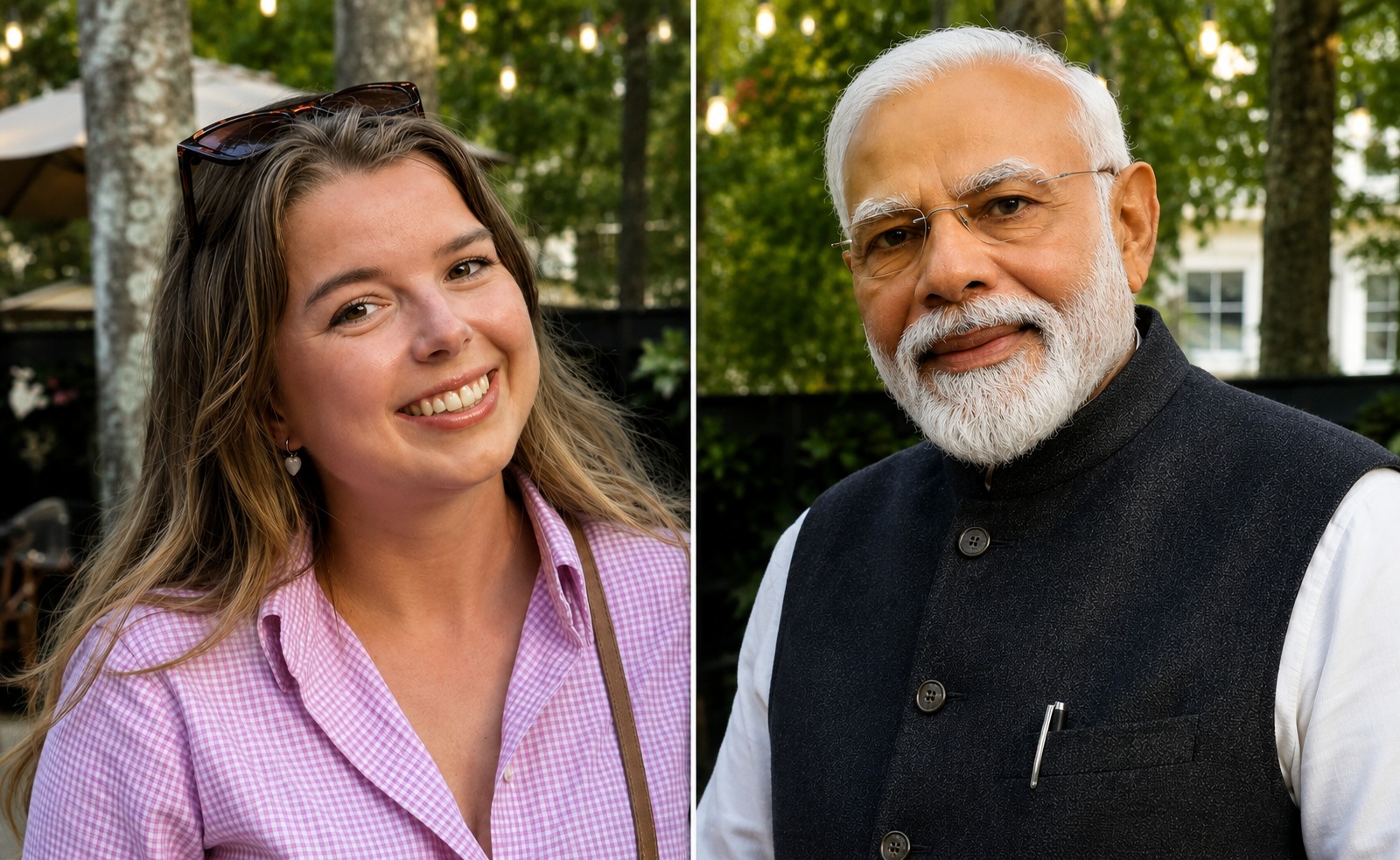
At the centre of the controversy is Norwegian journalist Helle Lyng Svendsen, who unexpectedly became a global headline after publicly questioning Prime Minister Narendra Modi during his recent visit to Norway.
“Prime Minister Modi, why don’t you take some questions from the freest press in the world?” she asked as Modi exited a joint media appearance alongside Norwegian Prime Minister Jonas Gahr Støre in Oslo. Modi walked away without responding.
The moment, captured on video, spread rapidly across social media and Indian television networks, turning the relatively unknown Norwegian reporter into a central figure in a heated global political discussion. In an interview with The Telegraph, Svendsen said she was surprised by the scale of the backlash that followed.
The journalist, who works for the Oslo-based newspaper Dagsavisen, said she had not expected the exchange to become such a major political flashpoint in India. She described how the reaction escalated within hours of Modi leaving Norway, with online criticism quickly turning personal.
According to Svendsen, her Instagram and Facebook accounts were suddenly suspended shortly after the incident. She claimed the timing felt suspiciously coordinated, although she admitted she had no direct evidence linking the suspensions to the controversy. The accounts, she said, were repeatedly restored and taken down again over subsequent days.
The episode has since become entangled in India’s already intense political ecosystem. Supporters of the BJP accused the journalist of attempting to provoke a viral confrontation for publicity, while opposition voices amplified the incident as evidence of what they describe as the Prime Minister’s reluctance to face unscripted questions from the press.
Svendsen rejected accusations that the exchange was orchestrated for attention. She insisted that asking difficult questions of powerful leaders is a fundamental responsibility of journalism in democratic societies. In commentary later published in Norway, she argued that a free press must challenge political authority rather than merely participate in “controlled” media events.
The journalist also pushed back against suggestions circulating on Indian social media that she was politically aligned with India’s opposition parties or acting as part of a larger international campaign against the Modi government. During her interview with The Telegraph, she laughed off accusations describing her as a “Congress proxy”, a “foreign spy”, or a “George Soros-funded agent”.
The controversy deepened further after Svendsen later questioned senior Indian diplomat Sibi George about India’s human rights situation during another media interaction in Norway. George responded with a lengthy defence of India’s democratic traditions, civilisational history and global standing — remarks that themselves went viral online and reignited debate around India’s global image and press freedom record.
In her interview, Svendsen said she would have asked Modi additional questions about human rights concerns, criticism from international organisations and whether he would begin engaging more directly with independent journalists in India. She also stressed that she believed Modi had clearly heard her original question in Oslo.
The incident has reopened broader conversations about media access under the Modi government. Critics have repeatedly pointed out that Modi has not held a traditional unscripted domestic press conference during his twelve years as Prime Minister, relying instead on interviews, speeches and controlled media formats. Supporters of the government, however, argue that Modi communicates extensively through public rallies, digital outreach and direct voter engagement.
The debate quickly spilled onto online forums and Reddit discussions, where opinions sharply diverged. Some users praised Svendsen for asking a question many Indian journalists allegedly avoid, while others accused her of grandstanding and exploiting anti-Modi sentiment for global visibility.
The political opposition in India also seized on the episode. Congress leader Rahul Gandhi shared the video online, claiming it showed a Prime Minister “panicking and running away” from media scrutiny. Svendsen later publicly reached out to Gandhi seeking an interview about Modi’s Norway visit and the controversy surrounding it.
Despite the online abuse, Svendsen said she also received thousands of supportive messages from Indians both within the country and abroad. She repeatedly emphasised that she did not view herself as a hero, describing Indian journalists working under far more difficult conditions as the people doing the “real heavy lifting”.
The controversy has now grown beyond a single shouted question in Oslo. It has evolved into a wider argument over democracy, media freedom, political communication and the relationship between governments and critical journalism in an era increasingly shaped by viral moments and digital outrage.
For Svendsen, however, the issue remains simpler than the political storm surrounding it.
“It was just one question,” she said.