The Supreme Court on Monday stayed the Madras High Court's order that had effectively imposed a state-wide prohibition on the slaughter of cows and calves in Tamil Nadu after the state government, led by Chief Minister Vijay, challenged the ruling before the apex court.
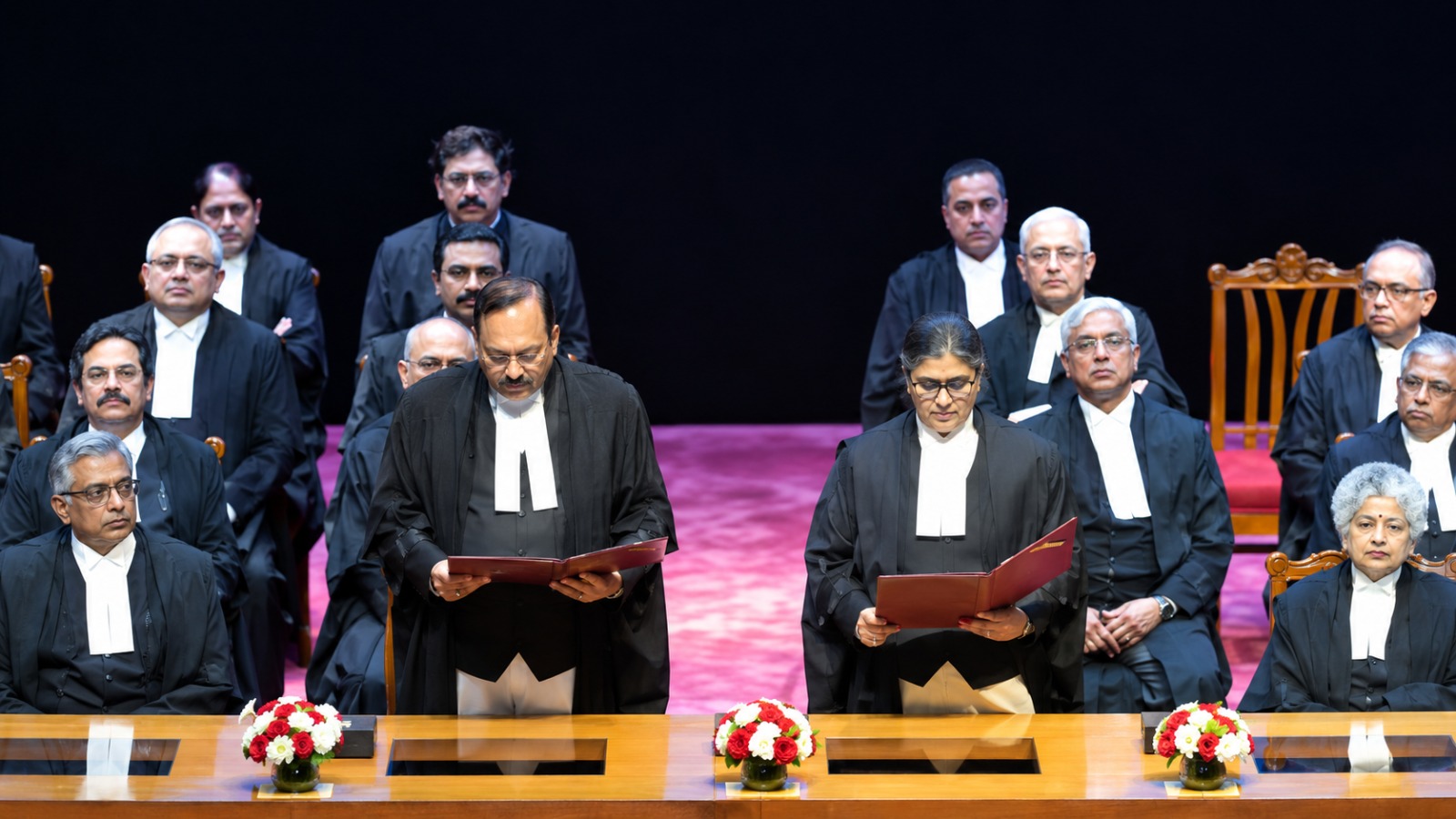
A Bench comprising Justices Vikram Nath and Sandeep Mehta issued an interim stay while hearing a Special Leave Petition filed by the Tamil Nadu government. The court also issued notice on the petition.
During the hearing, the Bench observed that the concluding portion of the High Court's order appeared to require "correction". Referring specifically to the direction imposing a blanket ban on cow and calf slaughter across the state, the Supreme Court said the final paragraph warranted reconsideration and consequently stayed its operation.
The challenge was filed by the Tamilaga Vettri Kazhagam (TVK)-led government against a Madras High Court order dated May 27, which had directed the state to enforce an August 1976 government order prohibiting the slaughter of cows throughout Tamil Nadu.
In its plea, the state government argued that the High Court's directions were inconsistent with the existing statutory framework. It contended that while the Tamil Nadu Animal Preservation Act permits the slaughter of a specific category of cattle under prescribed conditions, the judicial direction imposed an absolute prohibition that was contrary to the law.
According to the state, the High Court had correctly held that animal slaughter should take place only in authorised slaughterhouses. However, it simultaneously directed that no cow or calf should be slaughtered anywhere in Tamil Nadu on the eve of Bakrid or "on any other day", creating what the government described as contradictory directions.
The state further submitted that the Tamil Nadu Animal Preservation Act, 1958, expressly permits the slaughter of cows above the age of ten years if they are no longer fit for work or breeding, subject to certification by the competent authority. It argued that the High Court's blanket prohibition effectively overrode the provisions of the legislation.
The impugned order had been delivered by a Division Bench of Justices G.R. Swaminathan and V. Lakshminarayanan while hearing a public interest litigation filed by K. Surya Prasanth, General Secretary of the Hindu Makkal Katchi.
The petition had primarily sought directions to ensure that animal slaughter was carried out only at designated slaughterhouses. However, the High Court went further and directed the Chief Secretary and the Director General of Police to ensure that no cow or calf was slaughtered anywhere in the state, either on the eve of Bakrid or thereafter.
Justice G.R. Swaminathan, who authored the judgment, had relied upon a 1976 government order that prohibited cow slaughter in the interest of milk production and the rural economy.
The judge also referred to Article 48 of the Constitution, observing that it obliges the State to take steps towards prohibiting the slaughter of cows, calves and other milch and draught cattle.
Highlighting the constitutional philosophy behind the provision, Justice Swaminathan noted that, during the Constituent Assembly debates, it had been emphasised that "the cow was a revered animal" and had "been associated with our civilisation from the time of Lord Krishna."
The Tamil Nadu government, however, maintained that the state's existing legal framework already regulates where and under what conditions animals may be slaughtered, without imposing a complete ban. It argued that the High Court's directions could not supersede the statutory provisions enacted by the legislature.
The issue also drew attention to long-standing religious practices in the state. Traditionally, Muslims perform animal sacrifices during Bakrid at private premises and community gatherings in accordance with local regulations. Several Hindu temples in Tamil Nadu similarly conduct ritual animal sacrifices during annual festivals.
Community representatives have argued that restricting all such sacrifices exclusively to licensed slaughterhouses is impractical, particularly during festivals, as many facilities do not have the capacity to handle the surge in demand.