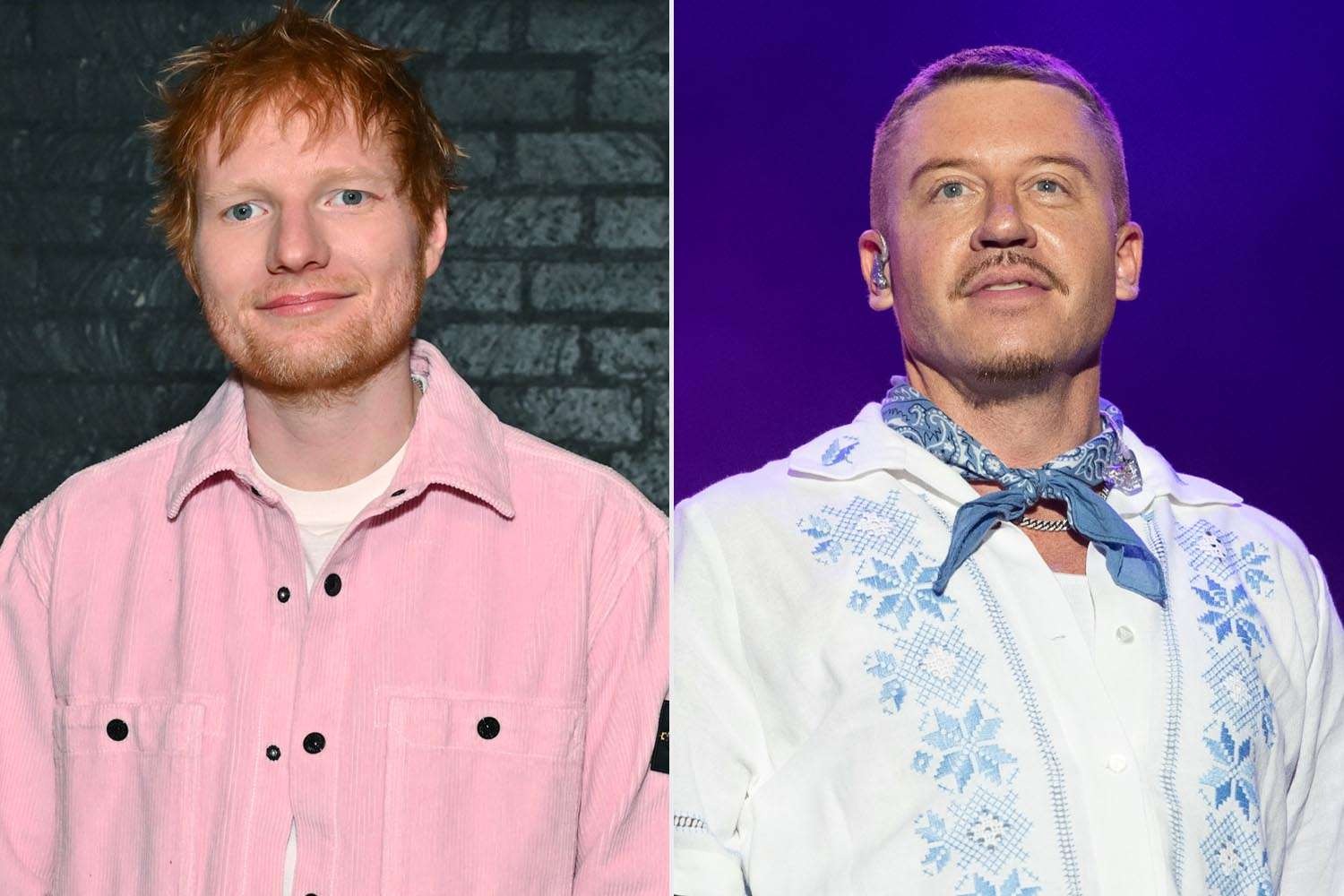
Ed Sheeran’s North American Loop Tour has been thrown into controversy after rapper Macklemore was removed from the tour following pro-Palestinian remarks made during his opening performances in New Jersey, a decision that has since prompted Sheeran’s other supporting acts and members of his touring band to withdraw in solidarity. The controversy began on 4 September, when Macklemore performed as one of the opening acts for Sheeran at MetLife Stadium in New Jersey.
The dispute has drawn in Ed Sheeran, Macklemore, tour promoter Messina Touring Group, New England Patriots owner Robert Kraft and a number of other musicians, while raising questions about political expression, artistic freedom and the role of wealthy venue owners in determining what performers can say on stage.
How the controversy began
During his set, Macklemore delivered a speech in which he expressed support for Palestinians and called for a free Palestine while introducing his protest song Hind’s Hall. The rapper told the audience that one of the reasons he wanted to join Ed Sheeran’s tour was to use the opportunity to speak from stages and stadiums across the United States about Palestine. He said he wanted people in Gaza and the occupied West Bank to know that they had not been forgotten.
Macklemore returned to the subject during his second MetLife performance on 5 September. Addressing Jewish members of the audience, he said that criticism of Israel, opposition to apartheid and opposition to what he described as genocide were not criticisms of Jewish people. He described his message as one of peace, love and equal dignity for all people.
The remarks quickly generated backlash. The Israeli-American Council launched a petition calling for Macklemore to be removed from the tour. Singer Pink also criticised his remarks, although she subsequently faced criticism herself over her comments and clarified her position.
Macklemore is removed from the tour
On 14 September, Macklemore announced that he had been removed from the remaining dates of Sheeran’s US tour. The rapper said the decision followed discussions involving Sheeran, stadium owners and the tour's promoter. According to Macklemore, New England Patriots owner Robert Kraft had told Sheeran that Macklemore would not be permitted to perform at Gillette Stadium, where Ed Sheeran was scheduled to perform later in September. Macklemore further claimed that Kraft had spoken to other stadium owners and that Sheeran had been told the tour could face cancellations if he remained on the bill.
Messina Touring Group, the promoter of Ed Sheeran’s US tour, subsequently confirmed that Macklemore would no longer perform on the remaining support dates. In a statement, the promoter said it had been informed by venues on the upcoming tour dates that they would not allow concerts to take place with Macklemore on the line-up. It said this would have resulted in the cancellation of the tour and affected hundreds of thousands of fans. The promoter said that, following discussions with stakeholders, Macklemore would therefore not perform at the remaining dates.
Macklemore, however, maintained that the issue was fundamentally about his political expression. He questioned why his statements had become a problem now, pointing out that he had publicly supported Palestinian rights for years. He argued that the difference was that he was now expressing those views from the stage of a major tour and in some of America's largest stadiums.
Robert Kraft confirms his involvement
Robert Kraft, whose organisation owns Gillette Stadium, subsequently confirmed that he had been involved in the decision concerning Macklemore's appearance. In a statement, Kraft said the decision was based on Macklemore's recent remarks as well as what he described as a broader history of antisemitic rhetoric and imagery that he believed had been deeply offensive and hurtful to the Jewish community.
Kraft also referred to Macklemore's controversial 2014 appearance in which the rapper wore a costume featuring stereotypical Jewish imagery. Macklemore apologised at the time and said the costume had not been intended to impersonate a Jewish person. Kraft said the decision was not intended to diminish the suffering of Palestinians or deny anyone the right to advocate on their behalf. He argued that support for Palestinians and opposition to Hamas, antisemitism and hate were not mutually exclusive. Macklemore has rejected accusations that his advocacy for Palestinians is antisemitic and has argued that criticism of the Israeli government's actions should not be conflated with hostility towards Jewish people.
Ed Sheeran says the decision was not his
Ed Sheeran initially remained relatively quiet about the dispute before issuing a lengthy statement on Instagram on 15 September. The singer said it was important for him to establish what he described as the facts surrounding Macklemore's departure.
According to Sheeran, Macklemore had asked to join the tour the previous year and Sheeran had agreed because he respected him as an artist. He said his supporting acts were allowed to choose their own set lists. Sheeran said that following Macklemore's performances in New Jersey, venues hosting upcoming tour dates told the promoter that they would not allow the concerts to proceed if Macklemore remained on the bill.
He said he had spent the week attempting to find a solution and had spoken directly with venue owners, promoters and activists on both sides of the debate. Ultimately, however, Ed Sheeran said the decision belonged to the promoter and venues. “Macklemore coming off tour was the promoter’s decision, it was not mine,” Sheeran wrote.
He also rejected the suggestion that his silence on the conflict meant that he was indifferent to the suffering in Gaza. Ed Sheeran said he was “appalled” by the conflict between Israel and Palestine and described the suffering and pain on both sides as a human tragedy. However, he said he had chosen not to publicly discuss his personal political views because audiences attending his concerts did not expect them to function as political forums. “I am not complicit,” Sheeran wrote, adding that he respected Macklemore's determination to speak about what he believed in. He said there could be different approaches towards achieving peace and described his own approach as using his platform as a place of safety, sanctuary and diplomacy.
The other artists begin withdrawing
Ed Sheeran's attempt to distance himself from the decision did little to contain the controversy. Within hours, the remaining supporting acts began announcing that they would no longer participate in the tour.
Finneas, the singer and producer and brother of Billie Eilish, announced that he was withdrawing from his forthcoming dates. “Artists must not be silenced when they speak up for the oppressed,” Finneas said, adding that he stood with Palestine and its people.
Danish band Lukas Graham also withdrew, saying that money should not determine who gets to speak or which suffering can be acknowledged. Irish singer-songwriter Aaron Rowe, meanwhile, said he could not stand by while billionaires used their positions to silence people speaking about Palestine.
Ed Sheeran's backing band Beoga also withdrew. The Irish group said its members understood the history of colonialism and remained committed to activism for justice.
The withdrawals meant that all four supporting acts connected to the remaining dates had pulled out in the wake of Macklemore's removal.
Macklemore says he is donating his tour earnings
The controversy took another turn on 16 September when Macklemore announced that he would donate his entire net earnings from his time on Sheeran's Loop Tour to organisations supporting Palestinians. The rapper said the amount was approximately $1 million and would be divided between six organisations working on humanitarian assistance. He said the decision was intended to shift attention away from the dispute surrounding him and back towards Palestinians affected by the conflict.
Macklemore also directly challenged Kraft to match his donation. “Whatever we disagree about, perhaps we can agree on this: Palestinian lives are worth protecting,” he said. He said the donation was not intended to portray him as a victim, arguing that his position was fundamentally different from that of Palestinians experiencing displacement, violence and deprivation.
Kraft says Ed Sheeran had already asked him to donate $2 million
Kraft responded by saying that he had already agreed to a larger humanitarian contribution after a conversation with Ed Sheeran. According to Kraft, Sheeran contacted him before Macklemore's public challenge and asked him to commit $2 million towards humanitarian assistance in the region.
Kraft said he had dedicated much of his life to building bridges between communities and believed that all lives were worth protecting. He also said he had supported initiatives intended to create opportunities for Palestinians and bring Palestinians and Israelis together.
The funds are expected to support organisations including the Palestinian Children's Relief Fund, HEAL Palestine, Gaza Soup Kitchen, Medical Aid for Palestinians, the United Nations Relief and Works Agency and ANERA.
The development effectively shifted part of the dispute from the question of Macklemore's removal towards humanitarian aid, with both sides emphasising the protection of Palestinian civilians despite their disagreement over Macklemore's participation in the tour.
A wider debate over free speech and the concert industry
The fallout has now developed into a broader debate over the limits of political expression at commercial concerts. Macklemore has argued that artists should be able to use their platforms to speak about issues they believe in, while Sheeran has maintained that his concerts are intended to provide audiences with an escape from political conflict.
The dispute has also highlighted the influence wielded by stadium owners over major touring productions. Ed Sheeran's US tour is dependent on some of the largest stadiums in the country, and the promoter has said venues threatened not to host shows if Macklemore remained part of the line-up.
Kraft's involvement has consequently become a central part of the controversy. Macklemore has portrayed his intervention as an attempt by a wealthy stadium owner to prevent him from speaking publicly about Palestine, while Kraft has framed his position as a response to what he regards as antisemitic rhetoric and concerns about the impact of Macklemore's statements on Jewish audiences.
Ed Sheeran, meanwhile, has sought to position himself separately from the decision, saying that he attempted to mediate between the different sides but ultimately did not control the promoter's decision.
What happens to the tour now?
Ed Sheeran's Loop Tour is scheduled to resume in Philadelphia on 19 September, with subsequent dates planned at major stadiums across the United States. The immediate controversy surrounding Macklemore's removal has therefore not resulted in the cancellation of the tour. However, the withdrawal of the supporting acts has significantly altered the line-up and placed the singer at the centre of a dispute he had largely sought to avoid.
The episode has also brought an artist known for maintaining a relatively apolitical public image into an increasingly contentious debate over the Israel-Palestine conflict, artistic freedom and the responsibilities of performers and venues.
For now, Sheeran has maintained that his priority is continuing the tour and providing audiences with what they expect from his concerts, while Macklemore has said his focus will remain on Palestinian rights and humanitarian assistance.
The dispute remains unresolved, but the latest developments have moved the story well beyond a disagreement between two musicians: it has become a confrontation involving artists, promoters, stadium owners and competing views about how political speech should be handled on some of the world's biggest concert stages.