The Bharatiya Janata Party's impressive performance in Rajasthan's urban local body elections has failed to produce a similar electoral outcome in the countryside. The latest Panchayati Raj election results have exposed a significant gap in the ruling party's rural support base, with the Congress making substantial gains across the state's Zila Parishads and Panchayat Samitis.
The results offer an important political signal for the BJP government led by Chief Minister Bhajan Lal Sharma. Despite the party's success in urban civic elections in September, its performance in rural Rajasthan has been considerably weaker. The Congress, meanwhile, has used the opportunity to demonstrate that it retains a strong organisational and electoral presence beyond the state's cities.
According to the reported results, the Congress won 794 of the 1,271 Zila Parishad seats, compared with 357 secured by the BJP. At the Panchayat Samiti level, the Congress also emerged ahead, winning 3,758 of the 7,520 seats, while the BJP secured 2,213. The Rashtriya Loktantrik Party (RLP) also made a notable impact, particularly in rural constituencies.
The contrast with the urban elections is striking. In September, the BJP secured a stronger position in urban local bodies, creating an impression that the ruling party enjoyed a clear electoral advantage across the state. The rural verdict, however, suggests that political support in Rajasthan cannot be measured through urban results alone.
Ministers and political heavyweights face rural setbacks
One of the most significant aspects of the election results has been the setbacks suffered by several prominent BJP leaders in their areas of influence.
The BJP faced defeats in constituencies associated with Deputy Chief Minister Premchand Bairwa, Health Minister Gajendra Singh Khinvsar and Agriculture Minister Kirodi Lal Meena. The results indicate that the influence of senior political leaders and their positions in government did not necessarily translate into support for party candidates at the grassroots level.
Overall, 17 state ministers and three Union ministers reportedly failed to secure the political ground they had sought to defend.
Such setbacks raise questions about the BJP's organisational machinery in rural Rajasthan. The results also suggest that the popularity of a government at the state or national level may not automatically guarantee electoral success in local contests, where voters often assess candidates through their accessibility and their ability to address everyday problems.
For the BJP, the challenge is no longer limited to defending its urban political advantage. It must also examine why several of its prominent leaders struggled to retain influence in their own constituencies.
Congress finds an opportunity to rebuild
For the Congress, the rural election outcome represents a significant political opportunity after its relatively weaker showing in the urban local body elections.
The party has managed to convert rural dissatisfaction into electoral gains, strengthening its position in local governance institutions. The results also provide fresh momentum to its state leadership as it looks towards the 2028 Assembly elections.
Congress leaders have interpreted the outcome as a rejection of the BJP government's performance. Former Chief Minister Ashok Gehlot argued that the rural electorate had expressed dissatisfaction with the ruling party's handling of issues affecting villages.
The Congress has also sought to link its performance to concerns over rural welfare, public services and the government's approach to local governance.
However, an electoral victory does not automatically translate into a sustained political revival. The Congress will have to maintain its organisational momentum, manage internal differences and demonstrate that its renewed rural support can be converted into effective governance at the local level.
Rural Rajasthan sends a different political message
The difference between urban and rural voting patterns is perhaps the most important takeaway from these elections.
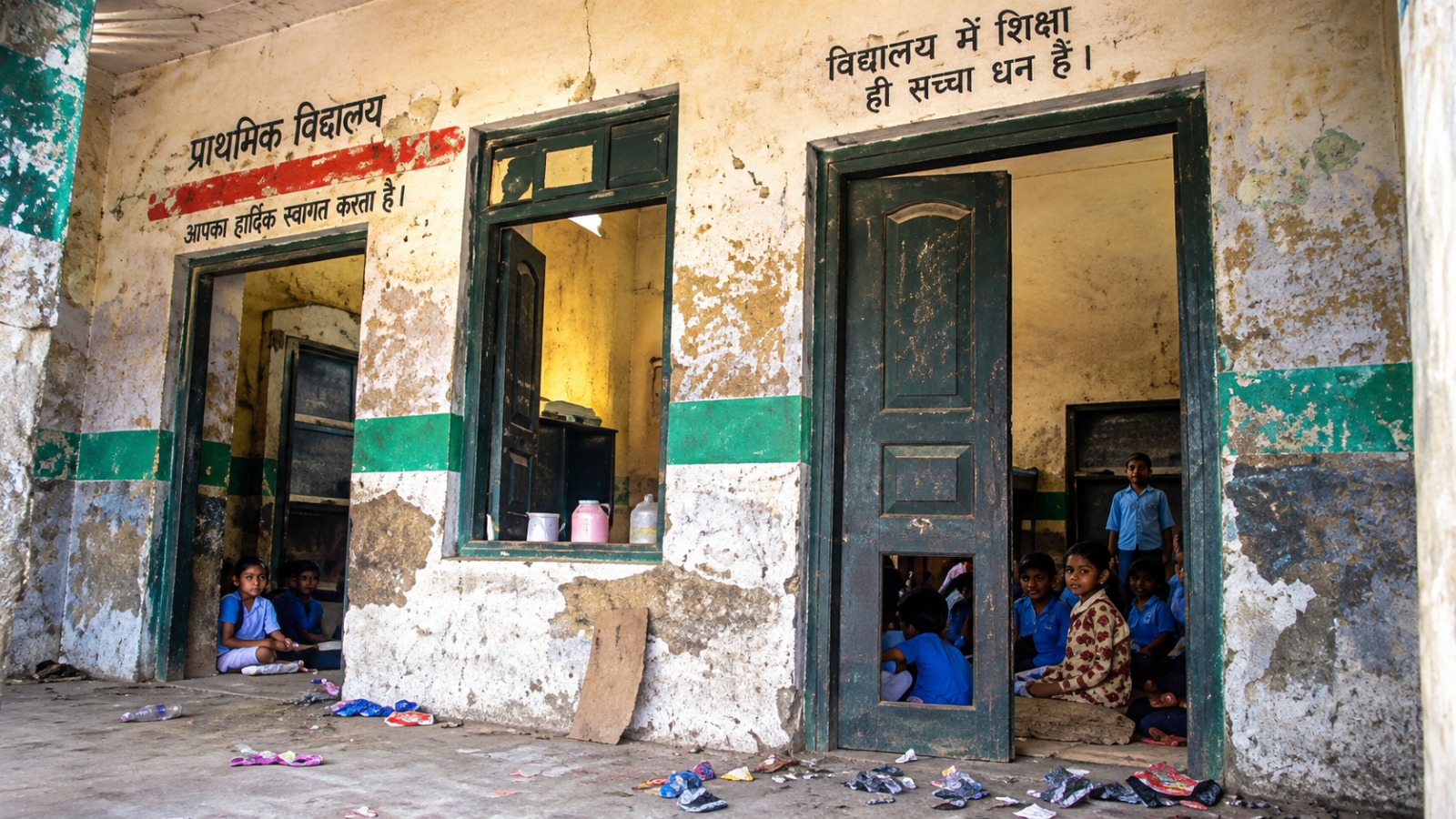
Rural voters frequently assess political parties through issues that directly affect their daily lives. Access to drinking water, electricity, roads, agricultural support, local employment and the functioning of public institutions can carry greater weight than broader political messaging.
The BJP's urban success may have reflected its appeal among city voters and the party's organisational strength in municipal areas. But the panchayat results suggest that the same political narrative has not generated an equally strong response in villages.
Local leadership, community equations, candidate selection and the accessibility of elected representatives can also play a decisive role in panchayat elections.
Political analyst Manish Godha, commenting on the results, observed that Rajasthan has traditionally witnessed a distinction between urban and rural voting patterns.
"The BJP had performed better in the urban local body elections, but the Congress has retained its traditional rural advantage," he said.
He further noted that the Congress had performed considerably better than in the previous panchayat elections, adding that the results were "certainly not good news for the BJP" as the government approaches its third anniversary.
Regional parties add another dimension
The performance of smaller political parties has also emerged as an important feature of the rural verdict.
Hanuman Beniwal's Rashtriya Loktantrik Party (RLP) secured a notable number of seats in both Panchayat Samitis and Zila Parishads. The Bharat Adivasi Party (BAP) also strengthened its presence, particularly in tribal areas.
The performance of these parties indicates that rural Rajasthan's political landscape is not exclusively a contest between the BJP and Congress. Regional political forces continue to retain influence in areas where local identities, community concerns and regional leadership shape electoral choices.
Independent candidates have also secured a significant number of seats, underlining the importance of local political equations in rural contests.
This fragmented political landscape could become particularly important when elected representatives choose Pradhans and Zila Pramukhs. In areas where no party has secured a clear majority, regional parties and independents could influence the formation of local governing bodies.
A warning for BJP ahead of 2028
The results are likely to trigger serious introspection within the BJP. The party has time to address organisational weaknesses, strengthen its rural network and reconnect with voters before the next Assembly election.
The challenge is to understand whether the setbacks reflect dissatisfaction with the state government's performance, local leadership problems, organisational shortcomings or a combination of these factors.
The BJP's state leadership has indicated that it will review the results and identify areas where the party fell short. State president Madan Rathore, meanwhile, criticised the Congress's campaign, accusing it of relying on "lies and a fake narrative".
For the Congress, the bigger responsibility is to ensure that the rural victory does not remain a temporary electoral development. Its ability to maintain unity and build a stronger grassroots organisation will determine whether it can turn this momentum into a serious challenge to the BJP in 2028.