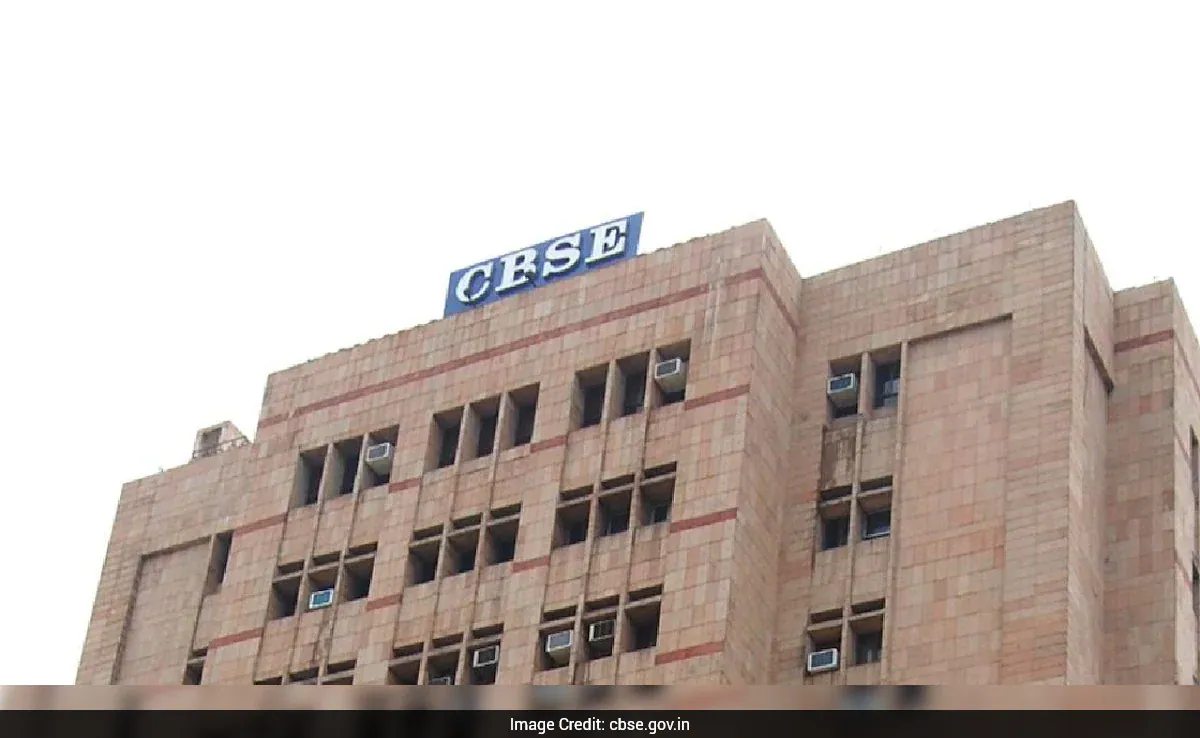
The Central Board of Secondary Education (CBSE) has postponed the launch of its portal for verification and re-evaluation of Class 12 answer sheets, delaying the process by three days. The portal, originally expected to go live on May 29, will now become operational from June 1, 2026.
In a statement shared on X on Friday, CBSE said the postponement was aimed at ensuring a smooth, transparent and technically robust process for students seeking post-result review of their answer books. “To ensure a transparent and glitch-free process for verification and re-evaluation of answer books of students who intend to submit their applications on the Post-Result Activities portal, it has been decided that the designated portal will now be operational from 1st June 2026. This is to ensure the highest standards and protocols of evaluation,” the board said.
The board also urged students facing any confusion or difficulties to reach out through its support channels, including the CBSE Tele-Counselling Helpline and a dedicated email address for result-related queries.
The upcoming phase of the process will be open only to students who have already applied for and received scanned copies of their evaluated answer books. Under the revised post-result mechanism, these candidates will be allowed to challenge marks awarded to specific questions if they believe discrepancies exist.
Education Ministry officials said the reopening of the portal marks the next stage of CBSE’s post-result review process conducted under the newly implemented On-Screen Marking (OSM) system. “The portal will reopen for the objections round. Students can challenge specific questions where they are not satisfied with the marks awarded. These questions will then be evaluated again and any change in marks, if warranted, will be notified subsequently,” an Education Ministry official said.
Unlike earlier years, students will no longer seek a blanket review of their answer scripts. Instead, objections will have to be raised question-wise, allowing candidates to contest individual markings after comparing their responses with the official marking scheme. Officials explained that once objections are submitted, subject experts will re-examine only the contested answers through the digital OSM platform. If any discrepancy is identified, revised marks will be reflected and communicated to students accordingly.
CBSE has advised candidates to carefully compare their responses with the official marking scheme available on the board’s website alongside question papers. Students must clearly identify instances where marks may not have been awarded despite answers substantially matching the prescribed marking criteria. The board has also asked applicants to ensure that their objections are presented clearly and systematically to facilitate efficient evaluation.
Under the existing framework, students seeking verification of marks are required to pay ₹500 per answer book, while re-evaluation requests attract a fee of ₹100 per question. The revised review system was introduced following concerns raised by sections of students and teachers after this year’s Class 12 results, which were assessed entirely through the expanded On-Screen Marking mechanism. In response to criticism, the Ministry of Education and CBSE had earlier announced a major reduction in post-result charges and assured candidates that fees would be refunded if marks increased following review.
Education Ministry Secretary Sanjay Kumar had said the move was intended to ensure that “no child feels, for any reason whatsoever, that they have received lower marks than they deserve.”
As part of the revised fee structure announced earlier this month, the cost of obtaining scanned copies of answer sheets was slashed from ₹700 to ₹100 per subject. Verification fees were similarly reduced from ₹500 to ₹100, while the cost of re-evaluation was brought down from ₹100 to ₹25 per question. Authorities also promised full refunds if marks improved after reassessment.
The new process marks a departure from the earlier system, where students first applied for verification and only later obtained copies of their answer books. Under the OSM model, candidates first receive scanned answer scripts, compare them against official marking schemes and then submit targeted objections for expert review.
The changes come amid wider debate over the impact of digital evaluation after the Class 12 pass percentage dropped sharply to 85.20 per cent this year, down from 88.39 per cent in 2025, the steepest fall recorded in seven years.
The decline triggered concerns among students and teachers, some of whom questioned whether the expanded OSM system had altered marking standards. CBSE and Education Ministry officials, however, have strongly defended the digital evaluation process, insisting that answer sheets were assessed exclusively by trained teachers and not by artificial intelligence. According to CBSE Chairperson Rahul Singh, nearly 77,000 teachers participated in the evaluation exercise after undergoing extensive training.
Officials have also argued that the OSM system improves transparency by digitising answer scripts, eliminating errors in totalling and enabling cross-regional evaluation of answer books. Despite the controversy, CBSE has indicated that the digital evaluation framework is likely to remain in place for future board examinations.