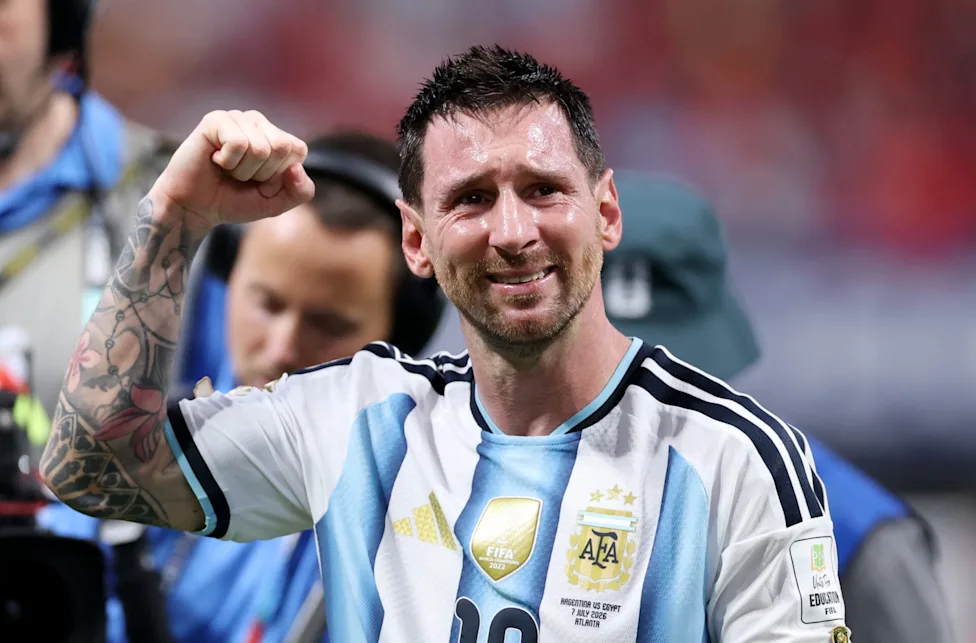
Lionel Messi, widely regarded as one of the greatest footballers ever, has confirmed he will no longer play for Argentina. The 39-year-old posted a handwritten note on Instagram on Monday, August 31, 2026, saying the decision “hurts deep in my soul” but that the moment had arrived.
The announcement came six weeks after Argentina lost the 2026 World Cup final to Spain. That match was Messi’s last in the famous sky-blue-and-white jersey. He had written the farewell two days after the final, on July 21, and published it after the death of his father, Jorge Messi, on August 8. “Today, after what happened with my dad, I am even more convinced than before,” he added.
Messi made his senior debut for Argentina in 2005. Over 207 appearances he scored 125 goals, becoming the country’s most-capped player and all-time leading scorer. He captained the side to the 2022 World Cup in Qatar, ended a 28-year Copa América drought in 2021, and won the tournament again in 2024. The 2026 tournament was his sixth World Cup; he is one of the few players to appear in three men’s World Cup finals.
In his message he told fans he had given everything for the shirt - not only in the trophy-laden final years but throughout the earlier struggles. Time was short, he wrote, chapters were closing, and this one hurt. He said he had emptied himself and had nothing left to give, while a new generation of talented players deserved their chance. He thanked supporters for 20 years of love, said he would miss hearing them from the pitch, and promised to cheer from the stands “through thick and thin.” He also thanked his family, coaches, teammates and staff, and closed with gratitude to God for making him Argentine and the familiar “Vamos Argentina.”
The retirement applies only to international duty. Messi remains under contract with Inter Miami through the 2028 MLS season. Days before the announcement he scored four goals in a 7-1 win over CF Montreal and leads the league in scoring. Stepping away from national-team travel could, in theory, help extend his club career.
"Time is running short, chapters come to a close, and this is one that hurts me deeply. I love, have loved, and will always love being part of the national team. I've given everything I had; I have nothing left to give, and besides, there are some great young players coming up who deserve to be here.
"Thank you for all the affection over these past 20 years. I will miss hearing you from the pitch so much. Now I'll be just one of you, cheering and supporting from the outside (through the good times and the bad -- especially the bad). Thank you to my family for always being there, for accompanying me on this journey -- so beautiful, yet so difficult. Thank you to every coach, teammate, and official I've shared this path with. I take with me unforgettable memories and moments. I leave with the peace of mind and pride of having given you -- alongside my teammates -- moments we once only dreamed of. It was an incredible experience to live this with you all. I love you!”
For many supporters the news was expected after the World Cup final and the personal loss that followed, yet it still marks the close of an era. Messi leaves as the player who finally delivered the World Cup Argentina had waited 36 years to win and who restored the national team’s place among the elite. He will now watch from the outside—still wearing pink for Miami, but no longer the No. 10 for La Albiceleste.
The next Copa América is scheduled for 2028, when Messi would be 41; the 2030 World Cup would find him 43. Those tournaments will belong to the next wave. Messi’s international story, written across two decades of brilliance, frustration, and eventual glory, is complete.