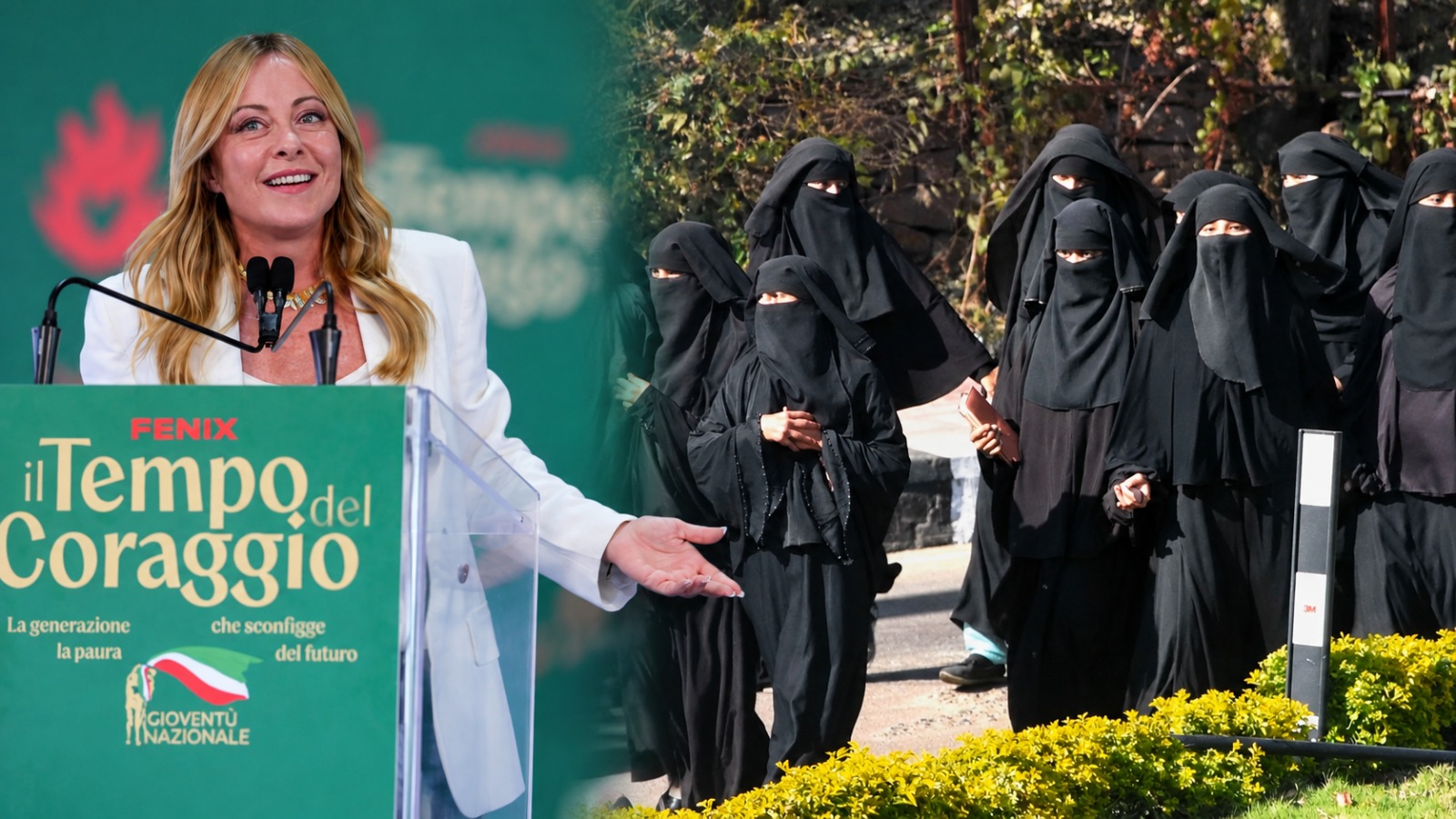
Italian Prime Minister Giorgia Meloni has announced plans to ban the wearing of burqas and niqabs in schools, alongside a proposed legal limit on the number of foreign students in individual classrooms.
Speaking at the annual youth festival of her Brothers of Italy party in Rome on September 20, Meloni said a draft measure would soon be placed before the Cabinet. The proposal would also require parents of foreign students facing what she described as “serious difficulties integrating into the school system” to learn Italian.
“A measure will soon be presented to a Cabinet meeting to legally establish a maximum number of foreign students per class,” Meloni said, according to Reuters. She added that the package would include the language requirement for certain parents as well as the ban on burqas and niqabs.
Meloni invokes gender equality
Defending the proposed restrictions on face coverings, Meloni linked the issue to gender equality and the requirement for students to attend school with their faces visible.
“Because you go to school with an uncovered face,” she said, adding that “no one, in the name of a real or presumed tradition, can decide that a young woman must hide herself.”
“Gender equality is non-negotiable—not on our streets, and not in our schools,” Meloni said.
The proposed package goes beyond students' clothing. Parents of foreign pupils experiencing serious integration difficulties would be required to learn Italian.
Meloni said the government's approach was based on language, cultural understanding and compliance with Italian laws.
“For us, anyone who comes to Italy and wants to build their future here must learn our language, know our culture, and respect our rules. It is the only serious way to welcome people,” she said.
Meloni has not disclosed the exact number of foreign students that would be permitted in each classroom. The proposal is still at the government stage and would need parliamentary approval before becoming law.
The announcement comes as immigration and integration remain prominent issues in Italian politics. The proposed school measures bring questions of language, classroom composition, religious dress and integration into the centre of the government's education policy debate.