A novel male contraceptive pill that could offer men an on-demand birth control option is moving closer to human testing, after Weill Cornell Medicine received an $8.2 million grant from the US National Institute of Child Health and Human Development (NICHD).
The four-year grant will fund the development and testing of an experimental pill designed to temporarily stop sperm from moving, potentially preventing pregnancy without affecting male hormones or long-term fertility.
The research is being led by Dr Jochen Buck and Dr Lonny Levin, professors of pharmacology at Weill Cornell Medicine, along with Dr Peter Meinke, who has contributed expertise in drug discovery and medicinal chemistry.
The researchers say the proposed pill would be taken shortly before sexual intercourse and could provide a temporary window of contraceptive protection.
“We’ve developed an on-demand contraceptive pill that men would take 30 minutes before having sex,” Buck said. “The pill provides a six-to-eight-hour window of protection from pregnancy, and afterwards, fertility returns to normal.” The researchers said the latest funding will help them carry out the toxicology and safety studies required before the drug can be tested in humans.
How does the experimental pill work?
Unlike conventional hormonal contraceptives, the experimental pill is designed to work by blocking an enzyme called soluble adenylyl cyclase (sAC).
The enzyme plays a crucial role in sperm movement. By inhibiting sAC, the researchers aim to temporarily render sperm immobile, preventing them from swimming towards and fertilising an egg.
The approach could provide an alternative to hormonal methods, which often require regular use and may be associated with side effects.
The research team’s earlier findings, published in the journal Nature Communications in 2023, showed that blocking the enzyme rendered sperm immobile and prevented pregnancies in preclinical models.
The latest grant is the third in a series of funding awards supporting the project.
The first grant, awarded in 2020, helped establish proof of concept. A second round of funding supported the refinement and testing of compounds to identify a suitable candidate for human use.
“The clinical stage of the drug discovery process is very expensive, so you want to make sure you have a fantastic compound that checks all the boxes,” Levin said.
First human trial on the horizon
The next stage involves preparing for a Phase 1, placebo-controlled clinical trial involving healthy men.
Researchers will develop an oral formulation, establish manufacturing protocols and evaluate the drug’s safety.
Participants will receive either the experimental drug or a placebo and will be monitored for side effects.
The researchers will also analyse sperm samples to measure motility — the percentage of sperm that can swim and how effectively they move forward.
The trial will examine whether the drug can temporarily suppress sperm movement and whether the effect wears off as intended.
“The current grant brings us to the first human trial of our compound and will allow us to evaluate its long-term potential,” Levin said.
He added that sperm motility provides a useful biomarker for predicting the drug’s future effectiveness.
Why male contraception needs more options
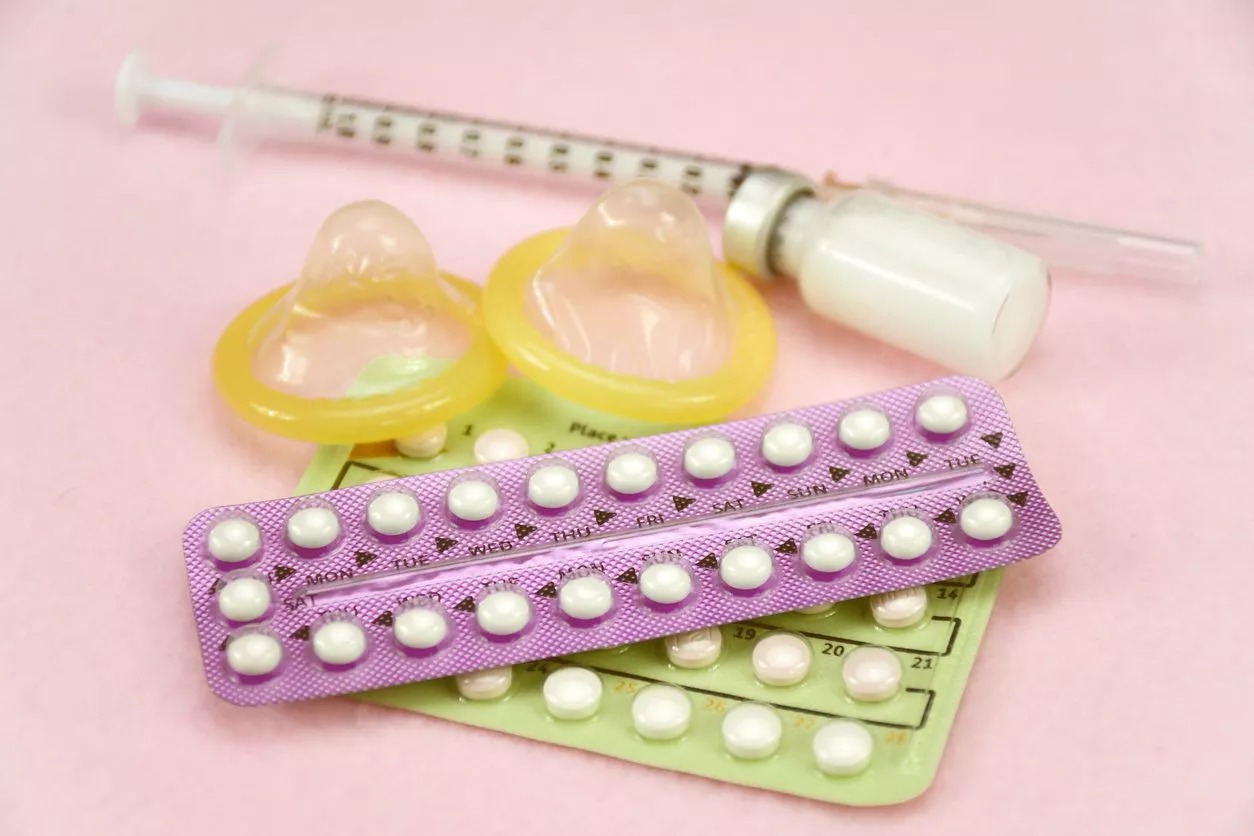
Currently, the main contraceptive options available to men are condoms and vasectomy.
The researchers say the limited choices mean the responsibility for contraception often falls disproportionately on women, many of whom rely on long-term hormonal contraceptives.
About half of pregnancies worldwide are estimated to be unplanned, according to the research team.
Several other male contraceptive candidates are being developed, including daily pills, gels and long-acting injections. However, these approaches may require regular use or take weeks to become effective.
The experimental pill aims to offer a different approach: a short-acting contraceptive that men could take when needed, with its effects wearing off within hours.
‘Contraception is unusual’
The researchers stressed that developing a contraceptive for healthy men requires particularly stringent safety standards.
“Contraception is unusual in that you’re giving a medicine to healthy people, often in their prime, so the requirements for efficacy and safety are particularly stringent,” Meinke said.
“You need a molecule that is fast-acting, potent, safe and which is active for hours in the male but also continues to prevent sperm from swimming inside the drug-free female.”
The team said the drug must be effective during the period of intended protection while allowing fertility to return after its effects wear off.
Could male contraception become a shared responsibility?
Surveys cited by the researchers suggest that around half of men in the United States and between 50% and 75% of men globally would consider using a male contraceptive.
An on-demand option was reportedly the most appealing among the methods surveyed.
Levin said he hoped the development of male contraceptives would eventually make family planning a shared responsibility.
“I hope someday family planning becomes a shared responsibility where men or couples can go to the local pharmacy to get male contraceptives,” he said.
“This gives couples another option to discuss what is best for them.”
Still experimental, not yet available
The researchers cautioned that the pill remains experimental and has not yet been tested in human clinical trials.
Its safety, effectiveness in preventing pregnancy and reversibility will need to be established through further testing.
The development effort is being supported by Sacyl Pharmaceuticals, a company co-founded by Buck, Levin and Meinke to translate the research into a potential drug.
The company has licensed technology related to the research from Weill Cornell Medicine, and the researchers hold equity and patents connected to the company and technology.
If the planned clinical studies prove successful, the experimental pill could eventually expand the range of contraceptive choices available to men — though regulatory approval and further testing would still be required before it could be made available to the public.