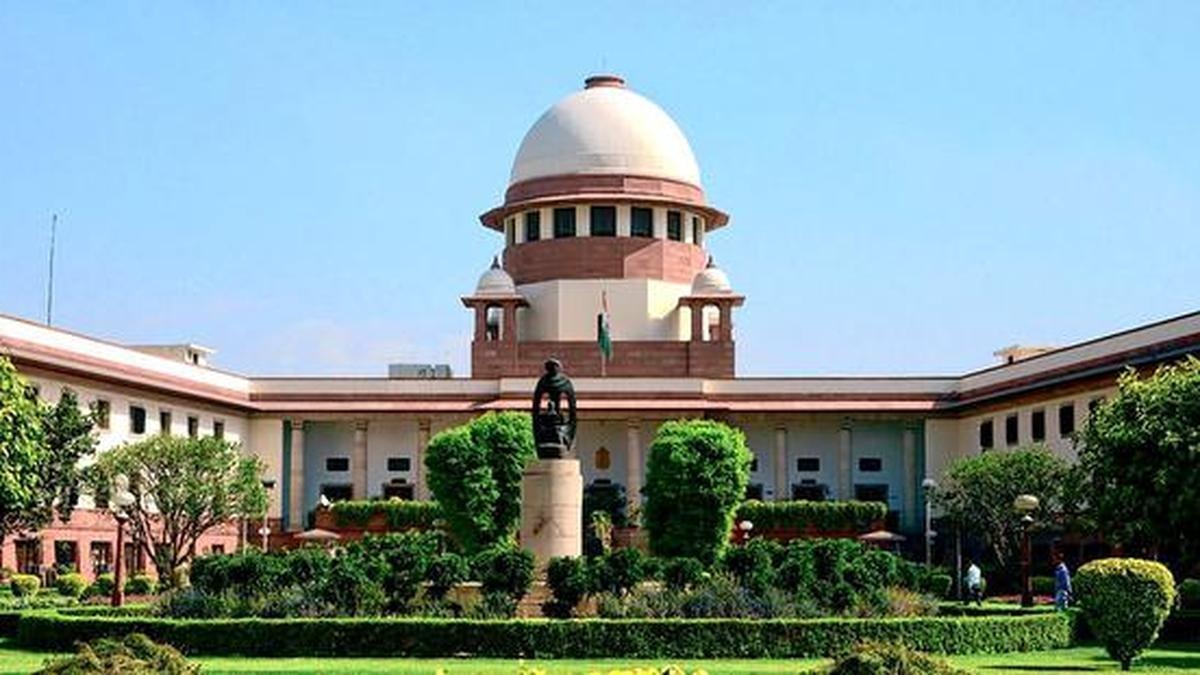
The Supreme Court on Tuesday, October 27, sought a response from the Centre on a petition challenging provisions of India’s digital privacy law, with news publishers arguing that the legislation could threaten press freedom, weaken investigative journalism and expose confidential sources.
A three-judge bench headed by Chief Justice of India Surya Kant issued notice to the government on a plea filed by the Digital News Publishers Association (DNPA), which represents a group of 21 news organisations.
The petition challenges provisions of the Digital Personal Data Protection Act, 2023, and the Digital Personal Data Protection Rules, 2025, arguing that the absence of specific exemptions for journalistic activities could significantly affect the functioning of newsrooms.
The association has also sought an interim stay on the challenged provisions. The matter is scheduled to be heard next on November 17.
Publishers flag concerns over investigative journalism
The publishers have argued that the privacy law, introduced to protect individuals’ digital personal data, could impose restrictions on reporting that involves investigating public officials, corporations and other powerful individuals.
According to the petition, the law could require journalists to seek consent from individuals whose personal information is being used in an investigation.
The association has warned that such a requirement could alert the subjects of an investigation, allowing them to destroy evidence, intimidate witnesses or otherwise interfere with the reporting process.
The petition said the provisions could “render investigative journalism a benign and neutered recorder of events”.
It further described the provisions as “pre-censorship which is anathema to any democracy worth its name”.
Concerns over confidential sources
A key concern raised by the publishers is the potential exposure of journalists’ confidential sources.
The law allows authorities to seek information from organisations handling personal data. The petitioners have argued that such powers could enable the government to access information held by newsrooms, including details that could identify confidential sources.
The association has also warned that the provisions could discourage whistleblowers from sharing information about corruption, corporate wrongdoing and electoral malpractice with journalists.
The petition argues that this could weaken the ability of the media to report matters of public interest.
Consent and deletion provisions under scrutiny
The publishers have also raised concerns over provisions that allow individuals to withdraw consent and seek the deletion of their personal data.
According to the petition, such provisions could compel news organisations to remove or substantially alter published reports, even when the information is relevant to the public interest.
The association has argued that the law does not adequately protect journalism from such demands and could interfere with the preservation of the public record.
No specific exemption for journalism
The DNPA has contended that the legislation does not provide a specific exemption for journalistic activities, unlike data protection frameworks in several other jurisdictions.
The association has said that government assurances about protecting press freedom are insufficient without explicit safeguards in the law.
It has argued that the legislation grants broad exemptions to the government while failing to provide corresponding protection to the press.
The petition seeks the quashing of several provisions that the publishers say could restrict reporting and undermine freedom of expression.
Law to take effect in 2027
The challenged provisions are expected to come into effect from May 2027.
The legal challenge comes amid a broader debate over the balance between an individual’s right to privacy and the media’s ability to investigate and report matters of public interest.
The Supreme Court’s notice to the Centre marks a significant step in the legal challenge. The government’s response and the court’s subsequent consideration of the matter will determine how the concerns raised by the publishers are addressed.