India's post-Diwali air pollution crisis has intensified, with several cities recording alarming Air Quality Index (AQI) levels following widespread firecracker use. While Delhi-NCR continued to battle hazardous pollution levels, cities across Maharashtra, Uttar Pradesh, Haryana and Tamil Nadu also witnessed a deterioration in air quality.
The deterioration was particularly pronounced on Monday, November 9, a day after Diwali, when monitoring stations across the country recorded elevated concentrations of particulate matter. The pollution spike has once again highlighted the impact of firecrackers against an already deteriorating winter pollution backdrop.
Delhi-NCR: Capital wakes up to a thick blanket of smog
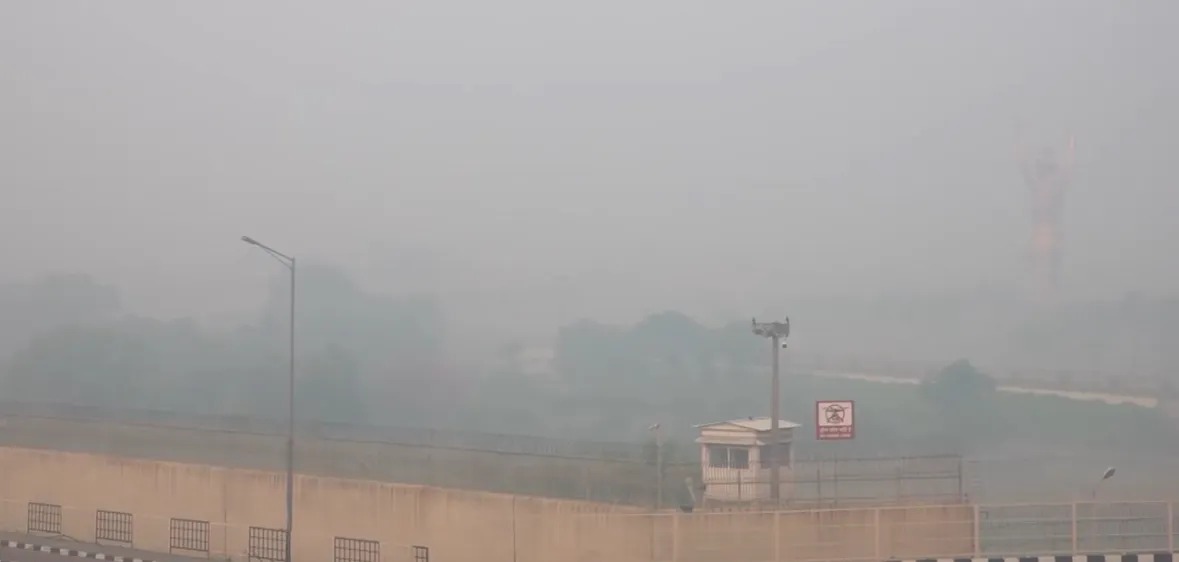
Delhi remained among India's most polluted urban centres after Diwali, with a thick layer of smog hanging over the national capital on Monday morning. According to Central Pollution Control Board (CPCB) data, Delhi's average AQI stood at 368 at 7 am on November 9, placing it in the 'very poor' category. Of the 54 monitoring stations reporting valid readings, 50 recorded AQI levels above 300, while 15 entered the 'severe' category.
Burari Crossing and Sonia Vihar recorded an AQI of 441 each, followed by Vivek Vihar at 437. Delhi Technological University registered 434, while North Campus and Jahangirpuri both recorded 433. The spike was also reflected in fine particulate pollution, with PM2.5 levels in Akshardham reportedly reaching 760.99 micrograms per cubic metre at 11 pm on Sunday.
Despite restrictions on firecrackers, fireworks continued to be burst across several neighbourhoods beyond the permitted hours. The pollution crisis extended across the National Capital Region (NCR), with Noida recording an AQI of 340, Faridabad 334, Gurugram 316, Ghaziabad 366 and Manesar 338. Bahadurgarh registered 389.
The Commission for Air Quality Management (CAQM) had already invoked Stage III of the Graded Response Action Plan (GRAP) across Delhi-NCR on November 6, following a deterioration in air quality.
Haryana, Uttar Pradesh and Punjab: Pollution spreads beyond the capital
Several parts of Haryana, Punjab and western Uttar Pradesh also experienced a sharp deterioration in air quality. According to CPCB data covering 288 cities with valid readings at 7 am on November 9, Khora in Uttar Pradesh recorded an AQI of 400.
Mandi Gobindgarh in Punjab and Bahadurgarh in Haryana both recorded 389, while Rohtak registered 379, Bhiwani 377 and Khairthal in Rajasthan 376.
Haryana was particularly badly affected, with several cities entering the 'severe' category. The deterioration extended beyond NCR districts to locations including Karnal, Ambala, Kurukshetra, Kaithal, Sirsa and Panipat.
The pollution surge also renewed concerns over agricultural residue burning in Punjab and Haryana. Farm fires, vehicular emissions, industrial activity and construction dust have traditionally compounded the seasonal pollution crisis across the Indo-Gangetic plains.
Maharashtra: Inland cities fare worse than Mumbai
Maharashtra presented a striking contrast, with Mumbai remaining in the 'moderate' category while several inland cities recorded significantly higher pollution levels.
According to CPCB data at 4 pm on November 9, Pimpri-Chinchwad recorded an AQI of 301, entering the 'very poor' category. Nanded followed at 296, Pune at 288, Malegaon at 273 and Nagpur at 268. Other cities reporting elevated pollution included Jalna (266), Parbhani (246), Jalgaon (243), Nashik (234), Akola (230) and Chhatrapati Sambhajinagar (211).
Mumbai, meanwhile, recorded an AQI of 172, considerably better than several inland locations. Scientists attributed the difference partly to meteorological conditions. Mumbai's coastal location and sea breezes helped disperse pollutants, while inland cities such as Pune and Nagpur lacked the same natural ventilation.
Kolkata: Firecrackers push pollution to alarming levels
Kolkata witnessed a sharp deterioration in air quality during Kali Puja and Diwali celebrations, with widespread firecracker use continuing well beyond permitted hours.
The city experienced a dramatic spike in fine particulate pollution between 9 pm and 11 pm on Sunday. According to data reported by The Times of India, Ballygunge's PM2.5 reading jumped from 74 at 9 pm to 409 at 11 pm. In Salt Lake, it surged from 115 to 444, while Rabindra Bharati University's reading rose from 137 to 450 during the same period.
The CPCB recorded an average AQI of 154 on Monday, while the West Bengal Pollution Control Board reported an average of 167. The pollution spike came despite restrictions allowing only green crackers between 8 pm and 10 pm. Firecrackers continued to be burst across several neighbourhoods well beyond midnight.
Kolkata Police received 434 complaints, while the West Bengal Pollution Control Board recorded 84 noise-related complaints by 1 am. Police arrested 205 people and seized around 240 kg of illegal fireworks.
Chennai, Bengaluru and Hyderabad: Southern cities also feel the impact
Southern India was not entirely spared from the post-Diwali pollution spike, although the severity varied between cities.
Chennai recorded an AQI of 247 on Monday, placing it in the 'poor' category. Smoke also affected visibility around Chennai airport, resulting in delays to 26 flights. An IndiGo flight travelling from Raipur to Chennai was diverted to Bengaluru.
Bengaluru's AQI increased from 53 on Saturday to 129 on Monday, moving from the 'satisfactory' to the 'moderate' category. Hyderabad performed relatively better, with its AQI recorded at 185 in one comparative assessment.
How did other Indian cities fare?
A comparative assessment published by Moneycontrol on November 9 highlighted differences in air quality across eight major metropolitan cities. New Delhi recorded an AQI of 356, followed by Kolkata at 157 and Chennai at 150. Mumbai registered 112, while Pune recorded 100. Bengaluru stood at 94, Ahmedabad at 89 and Hyderabad at 82.
Meanwhile, several cities in northeastern and southern India recorded considerably cleaner air. Aizawl in Mizoram recorded an AQI of 19, the lowest among 288 cities with valid readings in the CPCB's 7 am dataset. Madikeri in Karnataka recorded 39, while Brajrajnagar in Odisha registered 50.
Why does air pollution worsen after Diwali?
While firecrackers contribute significantly to the immediate post-Diwali pollution spike, experts point out that the deterioration cannot be attributed to fireworks alone. Vehicular emissions, industrial pollution, construction dust and agricultural residue burning all contribute to India's annual winter pollution crisis.
Firecrackers release substantial quantities of fine particulate matter, particularly PM2.5, which can remain suspended in the atmosphere and penetrate deep into the respiratory system.
The problem becomes particularly severe during winter, when falling temperatures, reduced wind speeds and atmospheric inversion conditions restrict the vertical movement of pollutants. In northern India, these conditions allow emissions from multiple sources to accumulate close to the ground, creating dense layers of smog.
A recurring public health crisis
The latest pollution spike has once again brought India's annual air-quality crisis into focus. Despite restrictions on firecracker use, widespread violations across several cities have raised questions about the effectiveness of enforcement measures.
The health implications are particularly concerning. Prolonged exposure to elevated PM2.5 concentrations can increase the risk of respiratory and cardiovascular complications. Children, elderly people and those with pre-existing respiratory or cardiac conditions remain particularly vulnerable.
According to the World Health Organization, the recommended 24-hour average PM2.5 concentration is no more than 15 micrograms per cubic metre.
From Delhi's persistent smog to worsening pollution across Haryana and Maharashtra, and overnight spikes in Kolkata and Chennai, the latest figures underline the scale of India's air pollution challenge.
Experts and environmental campaigners have repeatedly stressed that seasonal restrictions alone cannot address a crisis rooted in multiple sources of emissions. Sustained action against vehicular and industrial pollution, construction dust and agricultural burning remains essential.