
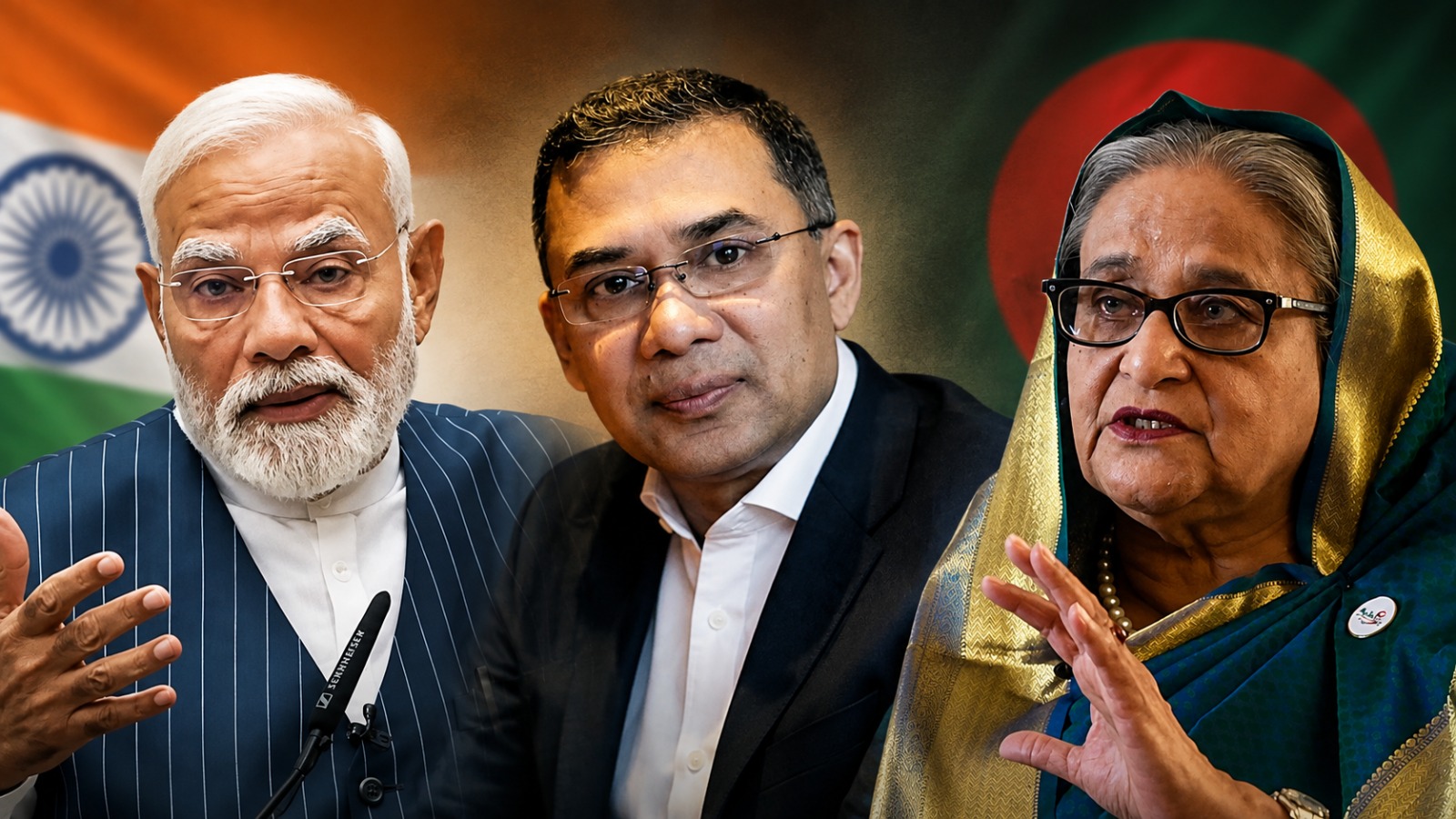
Prime Minister Narendra Modi wants Bangladesh Prime Minister Tarique Rahman’s proposed visit to India to be “memorable”, Indian High Commissioner Dinesh Trivedi has said, signalling New Delhi’s interest in renewed high-level engagement with Dhaka despite continuing tensions between the two neighbours.
Rahman is expected to visit New Delhi for the BRICS Summit on September 12-13, although uncertainty surrounds the proposed trip amid fresh strains in India-Bangladesh relations, particularly over Dhaka’s demand for the extradition of former prime minister Sheikh Hasina.
Speaking at a reception hosted by the Indian High Commission in Dhaka for Bangladeshi business leaders and a visiting Confederation of Indian Industry (CII) delegation, Trivedi said Modi had stressed the importance of a meeting with Rahman.
“Prime Minister Modi just mentioned one thing. We need to meet.” Trivedi said Modi had also assured that Rahman would receive an appropriate welcome if he travelled to India.
“You can tell them on my behalf that you have the prime minister of India's assurance that when the honourable prime minister of Bangladesh visits India, he will have such an honourable reception as he deserves,” he said.
‘Ultimately, the benefit will go to people and businesses’
The Indian envoy described stronger engagement between the two leaders as important for both countries, particularly for economic and business ties.
“Ultimately, the benefit will go to people and businesses. Business people all over the world have a big role to play in bridging this gap,” Trivedi said.
The remarks come at a sensitive point in bilateral relations. India and Bangladesh have sought to manage differences over the political transition in Dhaka, while the issue of Hasina’s presence in India remains a major point of contention.
Trivedi urged both sides to acknowledge their differences but avoid allowing them to prevent future cooperation.
‘This is a partnership of equals’
Trivedi said disagreements were inevitable between what he described as “vibrant democracies”, but maintained that dialogue and engagement remained the way forward.
“We deeply understand the concerns of brothers and sisters of Bangladesh. Definitely, there are concerns. But this is a partnership of equals,” he said.
He also emphasised mutual trust as the foundation for a stable bilateral relationship.
Invoking India’s “Neighbourhood First” policy, the envoy said the two countries had experienced “hiccups” but should not allow differences to undermine their longstanding ties.
“We have shared history, we have shared culture, and this is where we need to foster.”
Business ties seen as a bridge
Trivedi called for greater participation by the private sector in strengthening bilateral relations, arguing that trade and investment could help create jobs and economic opportunities in both countries.
The CII delegation’s visit to Dhaka is aimed at exploring opportunities for expanded trade, investment and industrial cooperation. New Delhi sees stronger commercial and people-to-people links as an important component of its broader engagement with Bangladesh.
The envoy said economic cooperation could help build greater understanding and contribute to a more stable and mutually beneficial relationship.
Hasina extradition remains a major sticking point
Rahman’s proposed India visit comes against the backdrop of a recent deterioration in bilateral ties following a virtual media interaction by Sheikh Hasina from New Delhi on August 5.
Dhaka reacted strongly to the event, saying Hasina’s remarks had hurt public sentiment in Bangladesh and could affect efforts to improve relations with India.
India’s Ministry of External Affairs has said it had no role in organising Hasina’s media interaction and did not endorse comments made at the forum about the Bangladesh government.
Hasina was ousted in August 2024 following violent student-led protests and subsequently fled to India. In November 2025, she was sentenced to death in absentia by a special tribunal in Bangladesh over alleged “crimes against humanity” during the crackdown on protesters.
Dhaka has since sought her extradition from India. New Delhi has maintained that the request is being examined in accordance with applicable law and established legal procedures.
Against this backdrop, Rahman’s proposed visit could provide an important opportunity for India and Bangladesh to restore high-level political engagement.