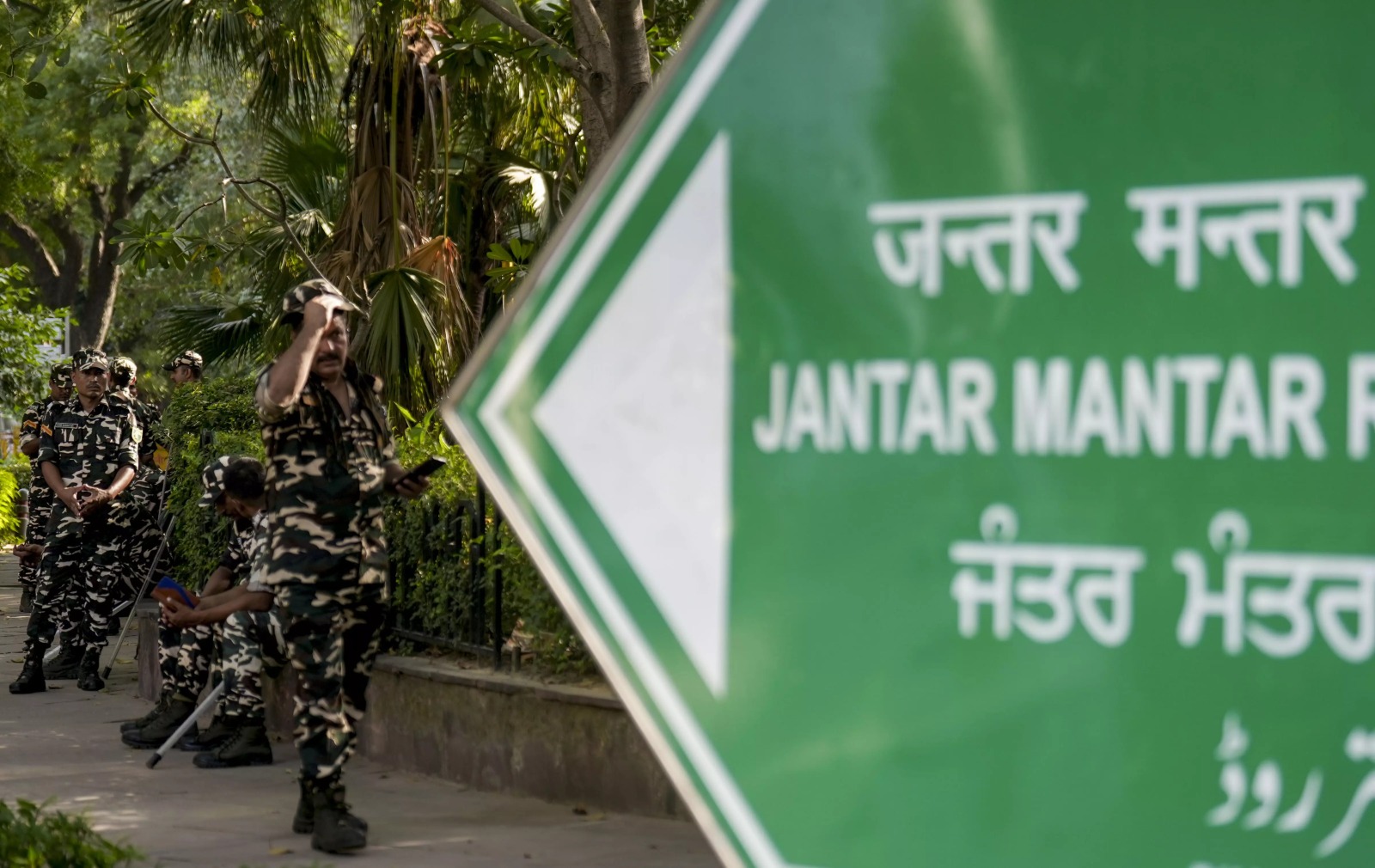
With the Delhi Police withdrawing Jantar Mantar’s status as a designated protest venue, organisers will have to turn to three alternatives: Ramlila Ground, Burari Ground and CBD Ground in Shahdara. However, the cost of booking these venues, existing commitments and permission requirements could pose fresh hurdles for groups seeking to organise demonstrations. The revised standard operating procedure (SOP) for protests at the three sites is yet to be issued, leaving questions over the precise procedure for securing permission.
Ramlila Ground: Booking costs over ₹1.2 lakh a day
The 12-acre Ramlila Ground, which can accommodate around 50,000 people, is managed by the Municipal Corporation of Delhi (MCD). Booking the venue costs ₹50,000 per day, apart from a refundable security deposit of ₹55,000. Including taxes, the initial outlay comes to approximately ₹1.21 lakh. A small section can reportedly be used for gatherings of up to 150 people without charge, but larger demonstrations require booking the main venue.
Organisers must obtain a no-objection certificate (NOC) from the Delhi Traffic Police before the MCD approves the booking. Applications are handled by the civic body’s horticulture department. Availability is another concern. According to reports, only December 29, 30 and 31 remained available for booking in 2026, with the ground already committed to other events for most of the intervening period.
CBD Ground: Nearly ₹1.9 lakh for a day
The Delhi Development Authority (DDA)-owned CBD Ground in Shahdara spans approximately 12 acres. According to The Times of India, booking a plot of approximately 3,000 square metres costs ₹1.87 lakh per day, including ₹95,000 in security charges.
The ground is regularly used for weddings, religious celebrations and other events. An official quoted by the newspaper said it is often booked months in advance through event management companies, meaning protest organisers may have to work around existing commitments. The precise booking procedure and any special provisions for protests under the new police order remain to be clarified.
Burari Ground: Large capacity, but limited availability
Burari Ground, also known as Nirankari Ground, is another DDA-owned venue in north-west Delhi. Spread across approximately 50 acres, it can accommodate an estimated 80,000 to one lakh people. However, its size does not necessarily translate into easy access. The ground hosts religious events, including Ramlila celebrations, and was reported to have no available dates for other events over the following two-and-a-half months.
How did the Jantar Mantar booking process work?
Under the previous framework, organisers were required to seek prior permission from the Deputy Commissioner of Police (DCP), New Delhi District, ordinarily at least 10 days before the proposed demonstration.
Applications were considered on a first-come, first-served basis, subject to scrutiny by the Special Branch, traffic police and district police. Authorities assessed potential risks to public safety, traffic movement and public order.
Late applications could still be considered depending on space availability and whether sufficient time remained to make the necessary arrangements. The designated site had a capacity limit of 1,000 people; larger demonstrations were directed towards alternative venues, including Ramlila Ground. Unlike the newly designated grounds, Jantar Mantar did not require organisers to pay a comparable venue-hire fee, according to officials quoted by The Times of India.
Delhi Police Commissioner Anurag Kumar’s standing order, dated October 11, de-notified Jantar Mantar and designated the three alternative grounds for demonstrations. It also stated that detailed, revised SOPs would be issued separately. Until those guidelines are published, organisers will need to establish the applicable permission requirements, venue charges and available dates with the relevant authorities. The immediate question is whether the new arrangements will offer protest groups a practical alternative to Jantar Mantar, rather than simply shifting demonstrations to venues that may be more expensive, harder to book or further from central Delhi.