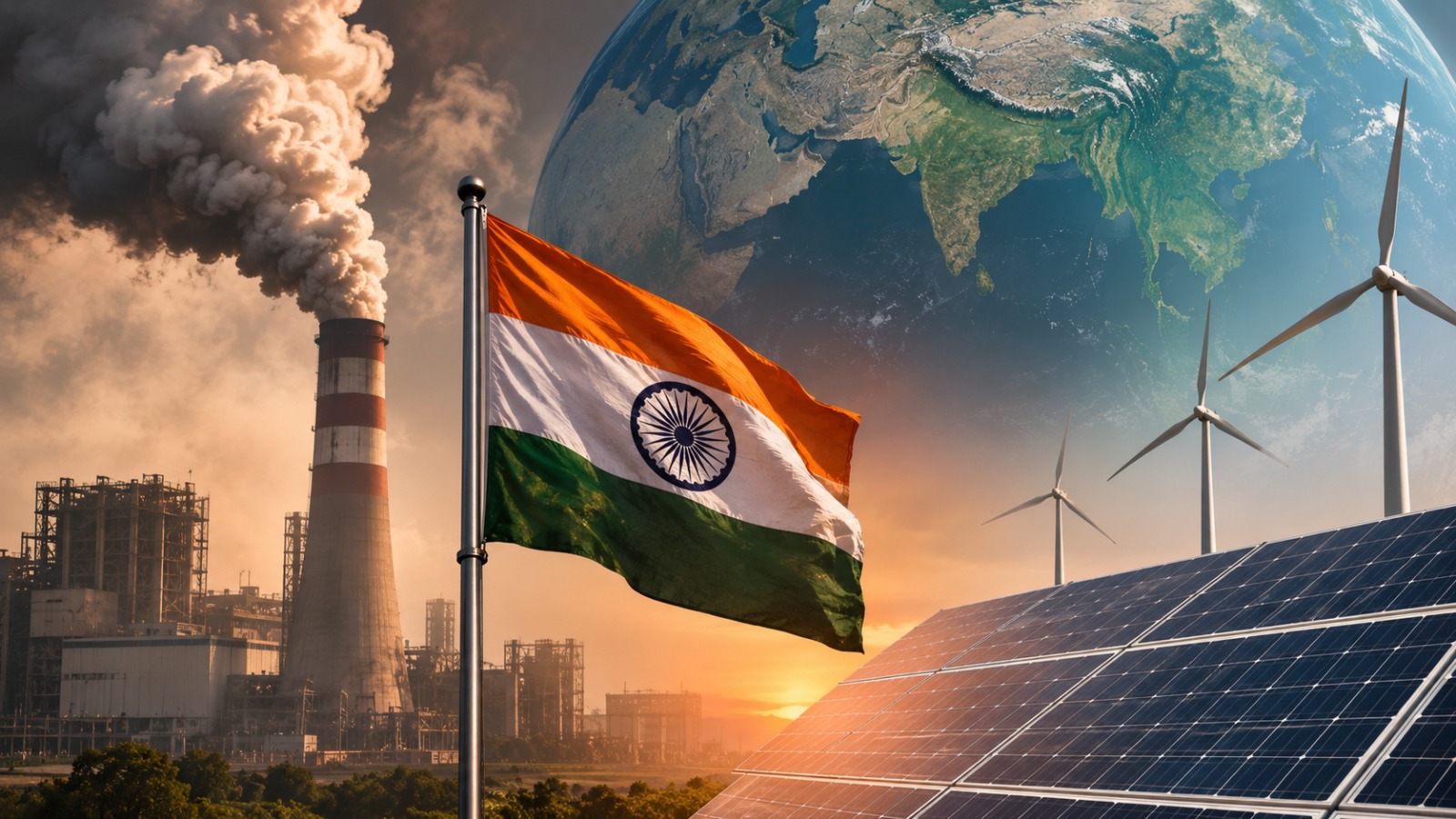
India has dropped five places to secure the 28th position in the Climate Change Performance Index (CCPI), reflecting challenges in its efforts to tackle climate change despite progress in expanding renewable energy capacity. The latest rankings were released on the sidelines of the 2026 United Nations Climate Change Conference (COP31) in Antalya, Turkey, on Wednesday.
The index, which has tracked climate mitigation efforts since 2005, assesses 64 countries and the European Union (EU), together accounting for more than 90 per cent of global greenhouse gas emissions.
India retained its overall 'Medium' rating, with its performance assessed across four key parameters: greenhouse gas emissions, renewable energy, energy use and climate policy. Among the four categories, India ranked 13th in climate policy, 33rd in energy use, 40th in renewable energy and 31st in greenhouse gas emissions.
While the report acknowledged India's expansion of renewable energy capacity, it flagged shortcomings in energy storage, transmission and distribution infrastructure. It noted that the country's renewable energy growth had outpaced the development of the infrastructure required to utilise it effectively.
Citing estimates by energy think tank Ember, the report said India curtailed 2.3 terawatt-hours (TWh) of solar power generation between late May and December 2025 to maintain grid security. The development highlighted operational constraints, including limited flexibility in conventional power generation.
The report called for coordinated investments in electricity grids, energy storage and demand flexibility to ensure that the expansion of renewable energy translates into greater clean electricity generation and reduced dependence on fossil fuels.
It also recognised India's progress in electric vehicle adoption, industrial energy-efficiency programmes and appliance standards. The Carbon Credit Trading Scheme has assigned emissions-intensity targets to 490 industrial entities since January 2026.
India's non-fossil fuel sources accounted for 50 per cent of its cumulative installed electricity capacity in June 2025, achieving the previous 2030 target five years ahead of schedule. This figure includes nuclear power and refers to installed capacity, rather than the actual share of electricity generated.
Under its 2031-2035 Nationally Determined Contributions (NDCs), India has set a target of reducing the emissions intensity of its Gross Domestic Product (GDP) by 47 per cent from 2005 levels. It has also committed to sourcing around 60 per cent of its cumulative installed electricity capacity from non-fossil fuel sources by 2035.
Meanwhile, the first three positions in the global index were left vacant, as no country secured a sufficiently high score to qualify for an overall 'Very High' rating. Denmark emerged as the highest-ranked country, securing fourth place with 84.05 points. Lithuania followed in fifth position with 74.03 points, while Luxembourg ranked sixth with 72.03 points. The European Union stood at 19th.