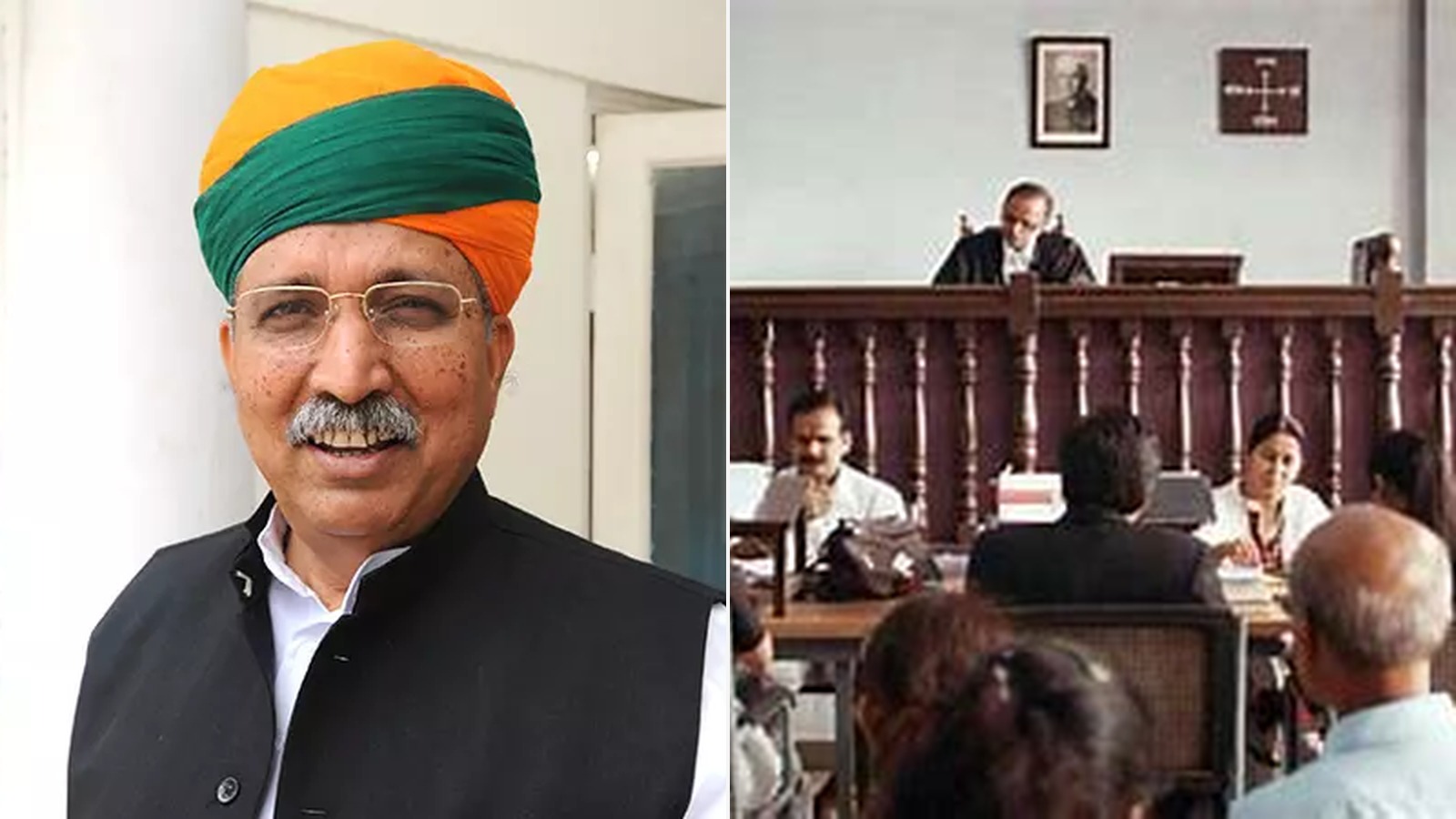
In a significant move to address India's mounting judicial backlog, the Centre is preparing to introduce evening courts on a pilot basis in Delhi, Bihar and Andhra Pradesh. The initiative aims to accelerate the disposal of pending cases by extending court working hours beyond the usual daytime schedule.
Union Minister of State for Law and Justice (Independent Charge) Arjun Ram Meghwal announced the proposed initiative in an interview with The New Indian Express, outlining the government's efforts to reduce litigation and improve access to timely justice.
Under the proposed arrangement, courts that currently function during regular daytime hours will continue their sittings for a few additional hours in the evening, allowing more cases to be heard and disposed of.
"One major initiative is the introduction of evening courts as a pilot project in collaboration with certain high courts," Meghwal said.
He added that the government also intends to engage retired judges to preside over these additional sessions and help speed up the judicial process.
Delhi, Bihar and Andhra Pradesh to Lead Pilot Project
The Centre plans to roll out the initiative initially in three states and Union Territories — Delhi, Bihar and Andhra Pradesh — in coordination with the respective High Courts.
"The initiative is expected to begin soon. After assessing its performance, we will consider extending it to other states," the minister said.
The pilot project will be evaluated on the basis of its performance and the number of pending cases taken up and disposed of during the extended working hours. The government will consider expanding the arrangement to other parts of the country after reviewing the results.
Retired Judges to Help Clear Pending Cases
The proposed involvement of retired judges is expected to provide additional judicial capacity without placing the entire burden on the existing court workforce.
The move comes against the backdrop of persistent case pendency across India's judicial system, where prolonged litigation continues to affect individuals, families, businesses and institutions awaiting legal resolution.
By extending court hours, the government hopes to create additional opportunities for hearings and reduce delays in the delivery of justice.
Apart from evening courts, Meghwal highlighted the government's focus on alternative dispute resolution mechanisms, including Lok Adalats and Alternative Dispute Resolution (ADR).
The minister said these mechanisms could help resolve disputes outside the conventional courtroom process and reduce the pressure on an already burdened judiciary.
The government is also looking at pre-mediation as a means of resolving disputes before they develop into prolonged litigation.