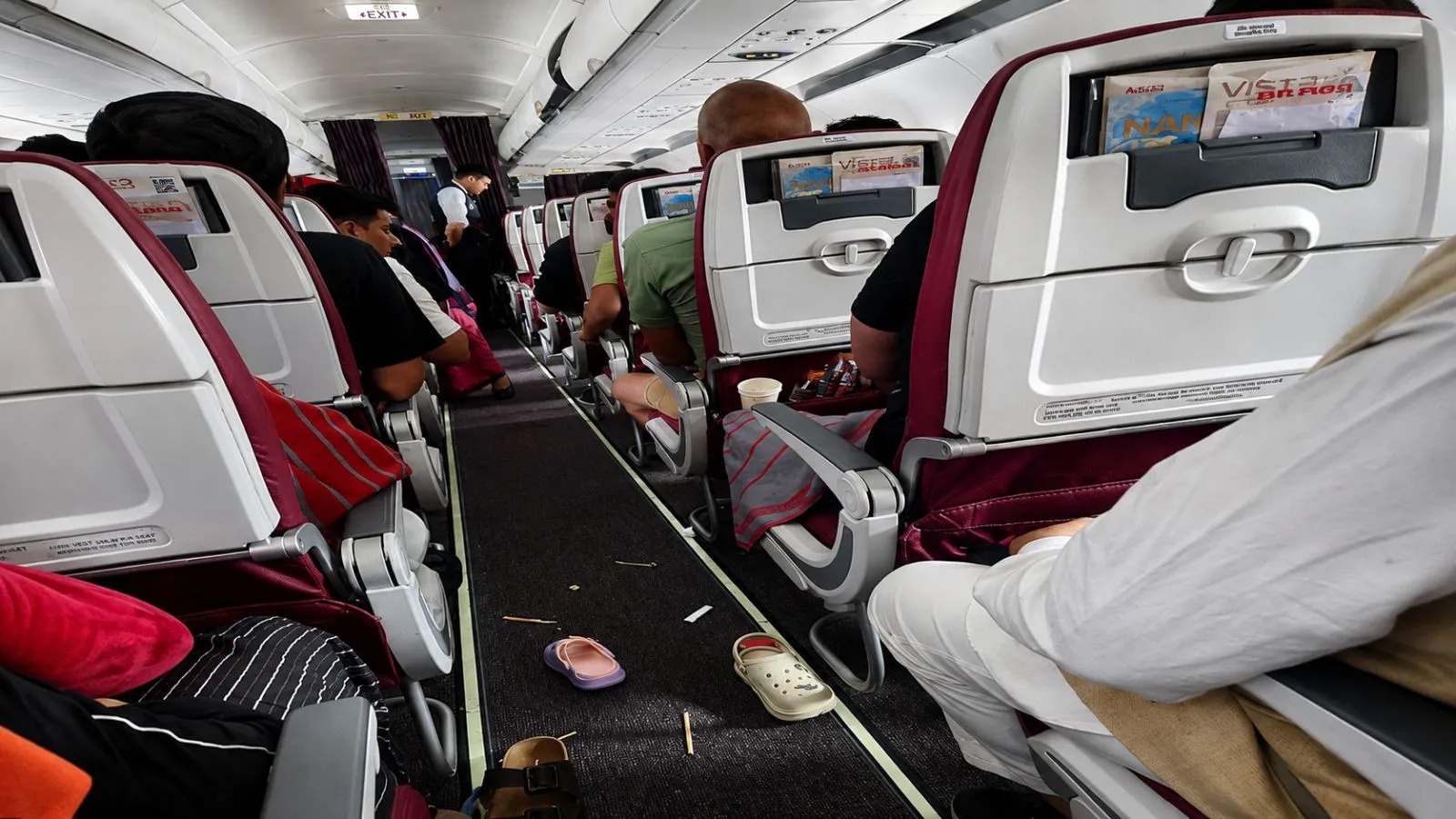
The Aircraft Accident Investigation Bureau (AAIB) has released its preliminary report into the Air India Phuket-Delhi flight that suffered a sudden altitude upset on August 4, leaving at least 24 people injured.
The Airbus A320neo was cruising at 36,000 feet when all three hydraulic systems reportedly failed within seconds of one another. The failure triggered a stall warning and a sharp change in altitude before the systems recovered and the aircraft returned to normal operation.
However, former pilots say the preliminary report does not establish why the three hydraulic systems failed almost simultaneously. Capt Sharath Panicker, a former Dreamliner pilot, said investigators must establish what caused the systems to shut down within four seconds. “Once all three hydraulic systems fail, effectively the aircraft is without power to the control surfaces,” he said.
The aircraft, carrying 137 passengers, took off from Phuket at 7.11am IST without any reported abnormality. At 9.32:43am, the flight-control system detected a loss of the green hydraulic system. Four seconds later, at 9.32:47am, the blue and yellow systems also failed. The autopilot disengaged a second later, accompanied by a continuous repetitive chime.
At 9.32:51am, a stall warning sounded for around two seconds. During the altitude upset, the aircraft climbed 372 feet before subsequently dropping 292 feet from its assigned cruising level of FL360.
The blue hydraulic system recovered at 9.32:52am, followed shortly by the yellow and green systems. The flight-control surfaces subsequently recovered and the aircraft returned to normal operating conditions.
Investigators are now examining hydraulic components and fluid samples recovered from the aircraft. They are also analysing fuel and oil samples, maintenance and operational records, and air traffic control data from Delhi and Kolkata. The investigation is continuing, with the precise cause of the near-simultaneous hydraulic failures and the aircraft’s sudden altitude changes yet to be established.