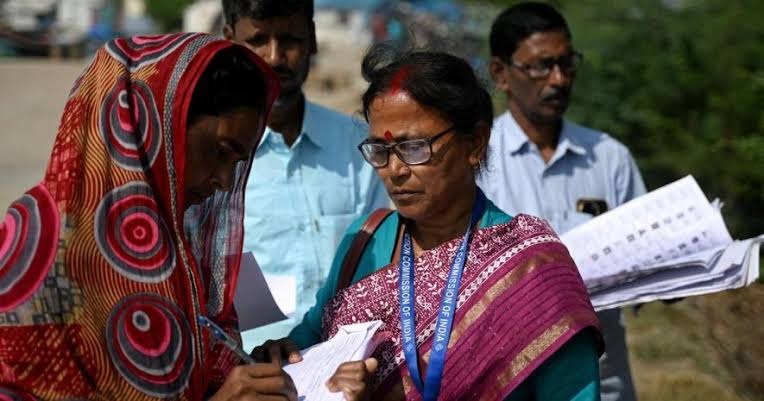

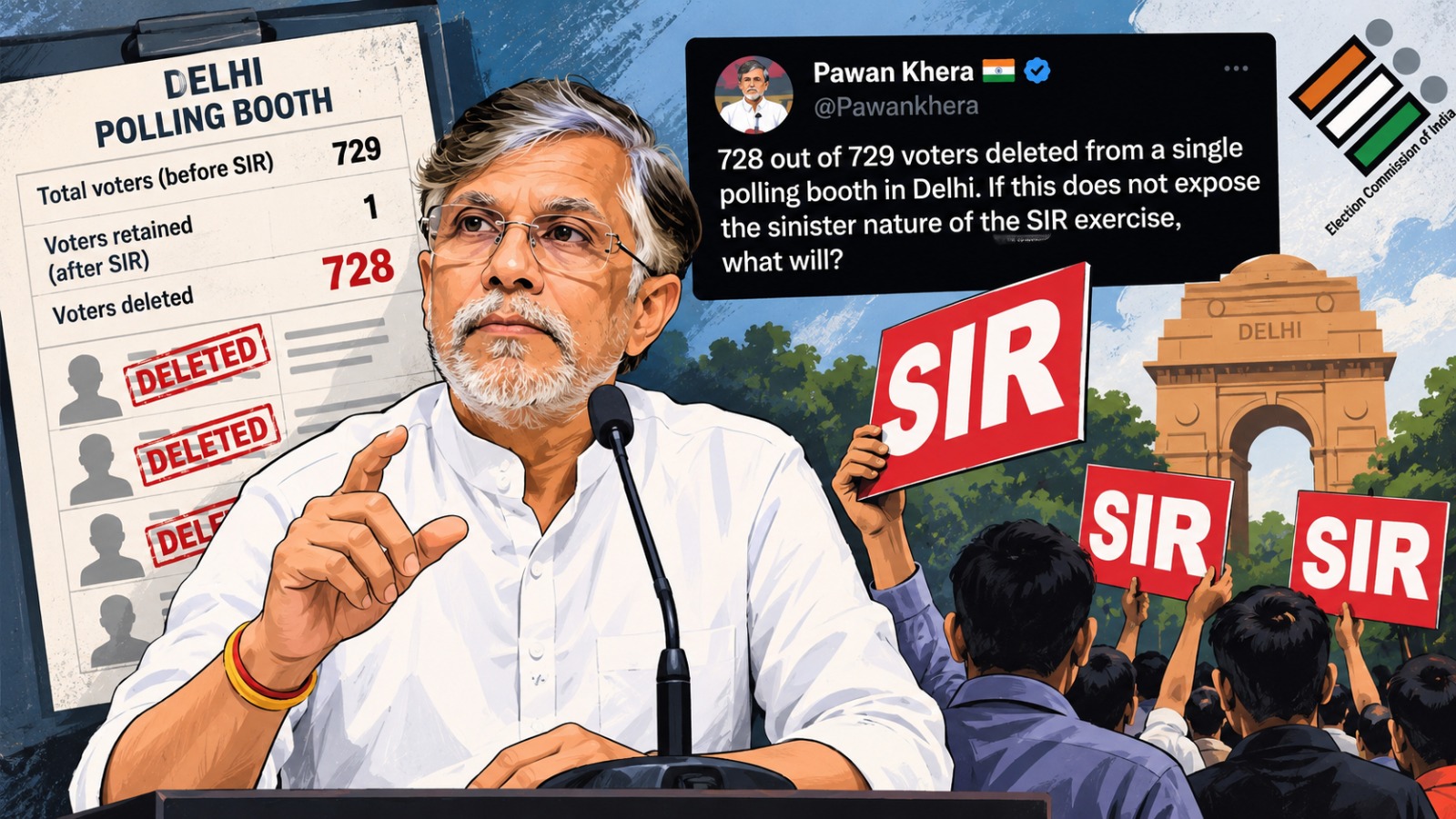
A controversy has erupted over the deletion of voters from a polling booth in Delhi’s Bela Estate, where 728 of the 729 voters listed before the Special Intensive Revision (SIR) were reportedly left out of the draft electoral roll.
The development has drawn sharp criticism from Congress leader Pawan Khera, who alleged that the exercise could disproportionately affect poor, migrant and marginalised communities.
According to a report on the deletions, the polling booth in the Bela Estate area had 729 registered voters before the SIR exercise. The draft roll reportedly retained only one name, resulting in the exclusion of nearly the entire electorate at the booth. 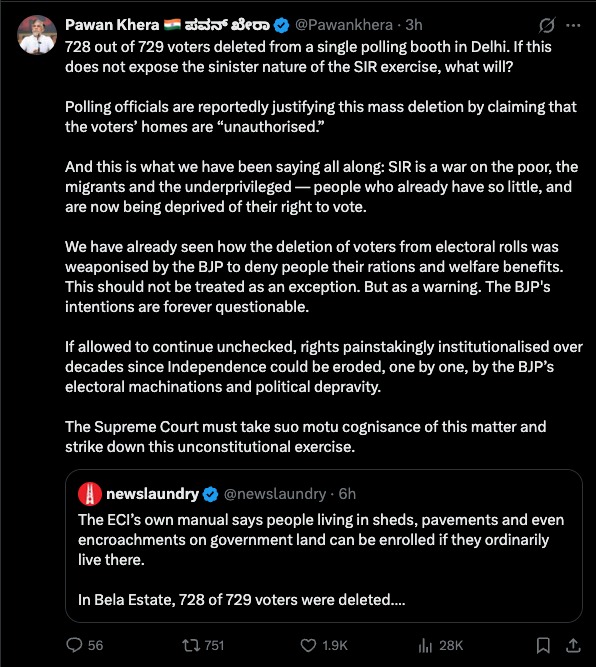
‘War on the poor’
Khera described the incident as an indication of what he called the “sinister nature” of the SIR exercise.
“SIR is a war on the poor, the migrants and the underprivileged,” Khera said.
He argued that the Election Commission's own guidelines allow people who ordinarily reside in places such as informal settlements, sheds or even encroachments to be enrolled as voters, provided they meet the relevant eligibility requirements.
Khera also warned against treating the Bela Estate case as an isolated instance. He claimed that deletion from electoral rolls could have consequences beyond voting, alleging that people had previously faced difficulties accessing welfare and ration benefits after their names were removed.
“This should not be treated as an exception. But as a warning,” he said.
The Congress leader further called upon the Supreme Court to take suo motu cognisance of the matter and challenged the constitutional validity of what he described as the ongoing exercise.
Delhi SIR under scrutiny
The controversy comes amid growing concerns over the scale of voter exclusions in Delhi's SIR. The Election Commission's draft electoral roll released after the exercise excluded around 47.6 lakh names, or roughly 32.8 per cent of the electorate on which the revision was based.
The exclusions have been attributed to categories including voters who were reported as permanently shifted, absent or untraceable, deceased, or enrolled at more than one location.
Independent analysis has also raised questions about the impact of the exclusions. A study examining the Delhi SIR found that the number of voters not carried forward to the draft roll was greater than the winning margin in 68 of the capital's 70 Assembly constituencies in the 2025 election.
Complaints from voters
Concerns have also emerged from residents who say they continue to live at their registered addresses but have nevertheless found their names missing from the draft roll.
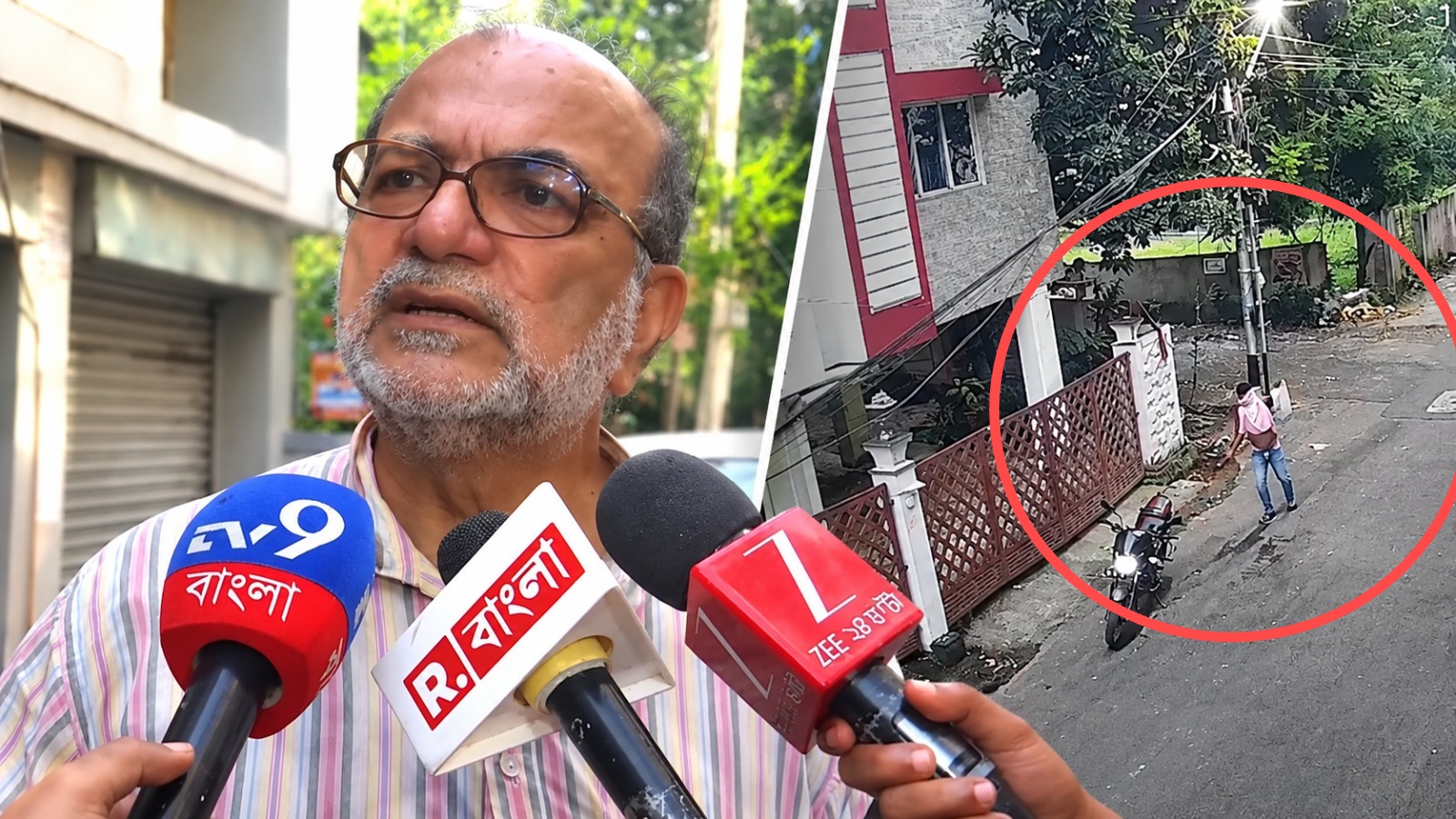
In Mangolpuri, for example, residents appearing at a public hearing alleged that voters had been classified as deceased, absent or otherwise excluded despite continuing to reside at the same addresses. One resident said his name had been marked as “dead” even though he was alive and had not received an enumeration form.
The Election Commission has provided a claims and objections window for voters whose names do not appear in the draft roll. Those affected have been advised to seek inclusion or correction through the prescribed electoral procedures.