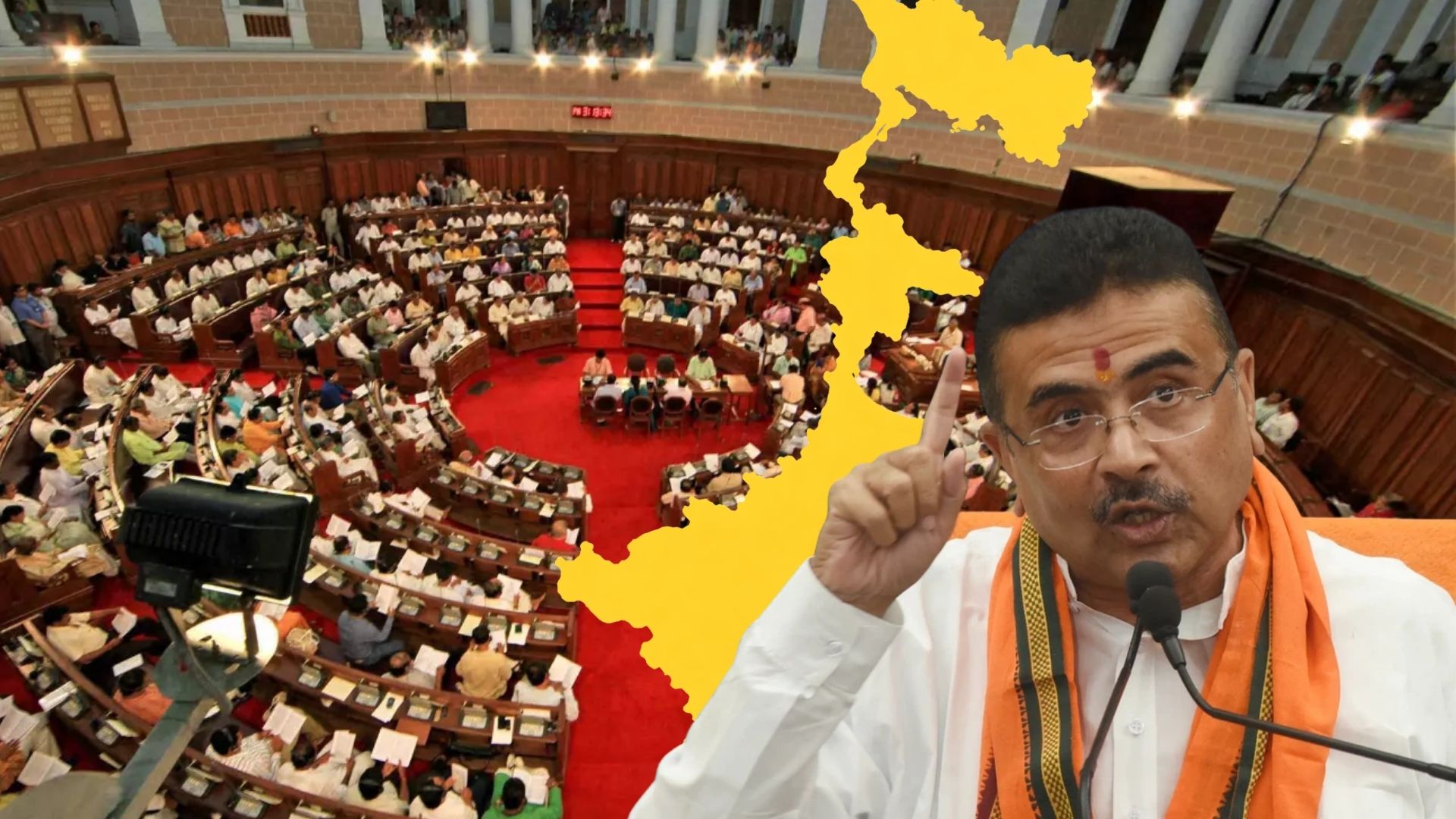
The West Bengal Legislative Assembly is poised to introduce and likely pass the West Bengal Public Safety and Control of Anti-Social Activities Bill, 2026 on Monday, marking a significant shift in the state’s approach to law and order under the new BJP led government.
Chief Minister Suvendu Adhikari’s administration has notified the bill through a special Kolkata Gazette edition earlier this week. It is modelled on similar “goonda” and organised crime prevention laws in Uttar Pradesh and Gujarat. A companion legislation - the West Bengal Maintenance of Public Order (Amendment) Bill, 2026 is also expected to be tabled alongside it.
The bills respond to recurring incidents of organised violence, attacks on police stations and government offices, vandalism during protests, extortion, land grabbing, illegal mining, sand smuggling, and public disorder in parts of the state. Officials say existing laws under the Bharatiya Nyaya Sanhita and older state acts have proven inadequate for swift preventive action against repeat and organised offenders.
The government argues the new framework will deter criminal syndicates and politically backed muscle power, particularly in districts affected by illegal mining and forest-related offences. CM Adhikari has publicly stated that with these laws in place, “people will think five times before taking the law into their hands.”
Outline of the Public Safety and Control of Anti-Social Activities Bill, 2026
The legislation introduces several far-reaching provisions:
- Expansive Definitions
“Anti-social activity” is broadly defined to include any act that causes or is likely to cause alarm, danger, fear, or insecurity among people; poses widespread threat to life or property; disturbs public order; obstructs business, trade or professions; involves unlawful dispossession of property; or results in substantial damage to public or private assets. It also covers illegal mining, quarrying, sand extraction, and activities involving forest produce or wildlife that cause substantial loss to the public exchequer. A “goonda” includes habitual offenders, persons charge-sheeted for organised or petty organised crime under Sections 111 and 112 of the Bharatiya Nyaya Sanhita, those involved in offences under the Arms Act, Explosives Substances Act, Immoral Traffic (Prevention) Act or NDPS Act, and even individuals “generally reputed to be desperate and dangerous to the community.”
- Preventive Detention up to 12 Months
The state government or authorised officers can detain a person for up to one year without trial if satisfied that the individual is engaged in or likely to engage in anti-social activities. Detention orders are subject to review by a three-member Advisory Board (headed by a serving or retired High Court judge). Fresh detention orders can be issued even after revocation or expiry of an earlier order. Grounds of detention may be withheld on grounds of public order, safety, or national security. Detention orders enjoy protection even if some grounds are later found defective.
- Externment Powers
District Magistrates, Police Commissioners, or authorised officers can direct a “goonda” to leave a specified area for up to one year.
- Enhanced Police Powers
The bill provides for stronger search, seizure, and attachment of properties linked to anti-social activities. Offences are largely cognisable and non-bailable. It also criminalises harbouring or assisting persons detained under the Act.
- Advisory Board and Representation
Detainees have the right to make representations against their detention. Proceedings before the Advisory Board (except its final opinion) are confidential, and lawyers may appear only with permission.
The companion Maintenance of Public Order (Amendment) Bill, 2026 focuses on recovery of compensation for damage to public and private property during riots, unlawful assemblies, violent protests, or public commotion. It establishes Claims Commissions whose awards are final with no appeal to courts. Liability can extend to organisers, financiers, instigators, and logistical supporters. Non-payment can lead to attachment and auction of the offender’s property.
Controversial Aspects and Opposition
The proposed law has immediately triggered strong criticism from the Trinamool Congress (TMC), Left parties, and civil liberties advocates on several grounds:
1. Preventive Detention Without Trial
Allowing detention for up to 12 months without formal charges or judicial trial is seen as a serious departure from established criminal jurisprudence in West Bengal. Critics argue it violates Articles 21 (right to life and personal liberty) and 22 of the Constitution.
2. Vague and Subjective Definitions
The broad wording of “anti-social activity” and especially the “generally reputed to be desperate and dangerous” clause for defining a goonda leaves wide room for subjective interpretation and potential misuse. Legal experts note this mirrors provisions in the Uttar Pradesh Gangsters and Anti-Social Activities (Prevention) Act, which faces a constitutional challenge in the Supreme Court.
3. Excessive Executive Discretion
Powers to withhold grounds of detention, protect partially defective orders, and limit judicial oversight in externment and property matters are viewed as tilting the balance heavily towards the executive.
4. Risk to Legitimate Protest and Dissent
Opposition leaders, including TMC MP Mahua Moitra, have described the twin bills as “among the most stringent in decades,” warning they could criminalise political dissent, social activism, and mass mobilisation under the broad umbrella of public order. CPIM leader and senior advocate Bikash Ranjan Bhattacharya has cautioned that the law could be used against those opposing government policies such as eviction drives and has indicated it will face legal challenges.
5. Limited Safeguards
While an Advisory Board exists, proceedings are largely confidential, and the overall framework is considered to provide fewer checks than even some national security laws. With the BJP holding a comfortable majority (approximately 207 of 294 seats), passage of both bills is considered almost certain. They will then be sent to Governor R.N. Ravi for assent.
Political Context
Supporters view it as a necessary tool to restore public confidence in law enforcement. Detractors see it as a move to consolidate executive power and reshape the state’s tradition of robust street-level political mobilisation. Legal challenges are widely expected once the bills become law, potentially testing their constitutional validity in the Calcutta High Court and ultimately the Supreme Court.