The roads leading to Belerpur in South 24 Parganas are unusually silent. Days before Bakri Eid, this stretch in Bhangar would typically be packed with small trucks carrying cattle, traders negotiating prices and buyers moving from one market to another. But this year, one of Bengal’s largest seasonal cattle markets appears subdued, almost hesitant. The silence is not merely economic. It is political too.
For the first time, Bakri Eid is approaching under a BJP government in Bengal. Soon after assuming power on May 9, the state government announced strict enforcement of the Animal Slaughter Control Act, 1950 - a law that permits slaughter only of cattle aged fourteen years or older and only after certification by civic authorities and government veterinary surgeons. On paper, it is a legal exercise. On the ground, traders say confusion and fear have frozen business.
“Come visit every house here. Every house has cattle stacked up and there are no buyers,” said Nurain Mondal, a bystander, as we enquired about Shaksahar Market. In that brief moment of seeking directions, at least ten people came forward to share their stories. But several others quietly retreated after noticing the press sticker on our car. That unknown fear was visible across the village.
Many traders lowered their voices while speaking. Some refused to speak altogether. Others glanced around nervously before answering questions.
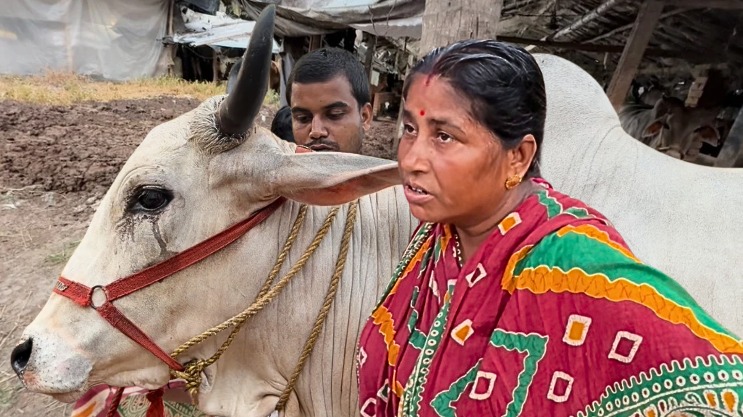
Inside Shaksahar Bazaar, a century-old market historically linked to cattle trading, there was an eerie silence. Bapi Molla, 47, was among the few traders still waiting inside the market since morning - hoping some miracle would happen and he would find buyers. He had brought just two cows as samples. But unlike previous years, he had not found anyone expressing interest.
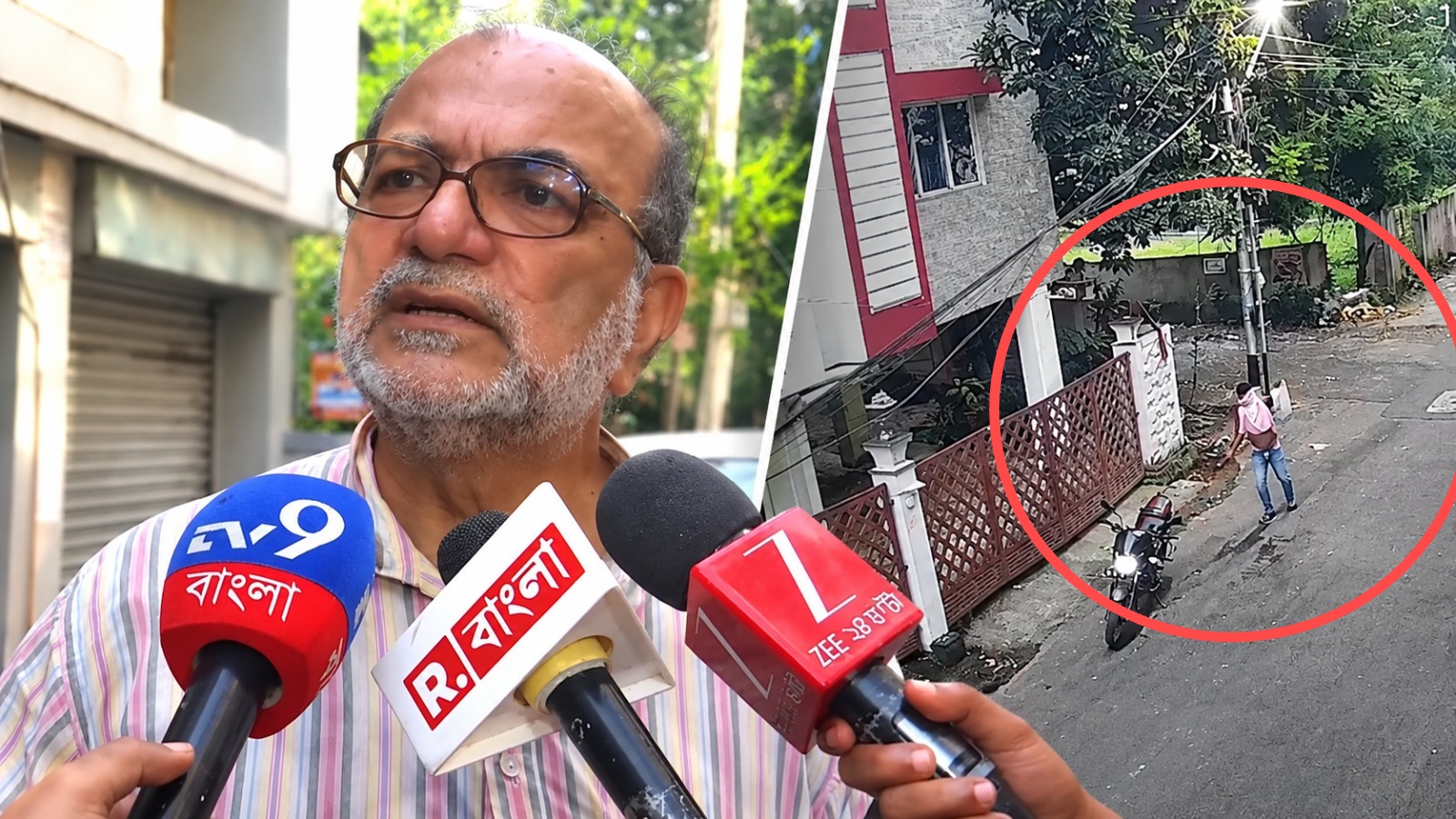
The fifty-five-kilometre stretch between the market and Kolkata has recorded at least eight incidents of alleged vigilantism over the past week — something rarely seen in Bengal before - where trucks carrying cattle were intercepted by right-wing groups for scrutiny of documents. Traders alleged they were asked to produce clearance papers proving the cattle were not meant for slaughter. That triggered panic and further discouraged buyers from travelling that far for cattle.
“I have 50 cows at home. I borrowed money and invested almost one lakh rupees on each animal. Now I have a debt of over twenty lakhs hanging over me. How will I repay it? The lenders will not give us any buffer time…may be we will be left no other choice but to end our lives,” said Bapi Molla. As a car approached the market, Bapi suddenly shouted, “Buy one, get one free” - like a supermarket salesman - sounding both desperate and exhausted.
Local police have visited the market multiple times. While they have not officially prohibited cattle trade, several traders claimed they were repeatedly questioned over documentation and trade licences. “Where are we supposed to get birth certificates for cows from?” asked Saharul Molla, 38, who had also been sitting idle in the punishing afternoon heat. “When we buy a cow, nobody from the municipality or panchayat gives us official papers. Does the Prime Minister know how to determine the age of a cow? Maybe the new Chief Minister can explain it to us. I certainly don’t know how to figure out a cow’s age just by looking at it.”
But perhaps the biggest surprise emerging from Bengal’s cattle markets is this: the distress is not limited to Muslims alone.
The market itself tells a larger story. Nestled within it are two small Hindu temples, standing quietly beside spaces where cattle trade has taken place for decades. Here, religion and economy have long coexisted in practical ways often ignored in political rhetoric. For years, Hindu and Muslim traders alike participated in the pre-Eid cattle economy. Many Hindu dairy farmers sold ageing cattle once they stopped producing milk profitably. The proceeds were then used to purchase younger calves, sustaining the cycle of milk production and rural livelihoods.
That cycle now appears under strain. “Go visit the Ghosh Para,” someone from the crowd shouted. The adjacent village belongs largely to the Ghosh community - Hindus historically associated with dairy and cattle trade.
“A cow gives milk properly only for a few years,” explained Rabin Ghosh, a cattle owner and BJP supporter from Ghosh Para. “People think we make huge profits from milk alone. We don’t. We invest lakhs in buying and raising cattle. Once the milking phase is over, we sell the animal and buy younger cattle. That is how the business survives.” But now, he says, the market has stalled. “If we cannot sell old cattle, how do we buy new ones?” he asks. “Keeping non-milking animals means more expense - fodder, shelter, maintenance. We are stuck.” Rabin pointed towards two cows he had unsuccessfully taken to the market.
“I bought them for fifty thousand rupees each three years ago. Both have stopped producing milk and they never will again. But to keep them alive at the shelter means I must spend three hundred rupees every day on each one. When they produced milk, that business generated enough money to sustain them. But now they have become liabilities.”
“We don’t enjoy selling them to slaughterhouses. But what can we do? This is business. This is survival.”
His wife, Sangeeta Ghosh, echoed the uncertainty. Their family has been involved in the trade for generations. They supported the BJP during the elections, hoping for political change and better governance. Instead, they now say they feel blindsided. “We wanted Suvendu Adhikari as our Chief Minister. We call him Dada. We still want Dada to decide what is best for all of us,” she said with folded hands.
Several residents in Ghosh Para initially refused to speak on camera. Some had already spoken to visiting media teams and now feared social backlash. Others appeared conflicted - caught between ideological loyalty and economic survival. That contradiction now runs through much of rural Bengal’s cattle economy.
In states like Uttar Pradesh, Gujarat and Haryana, strict restrictions on cow slaughter have long existed under BJP governments. But Bengal historically functioned differently, with economic realities often overriding ideological boundaries. “People outside may see this only as a religious issue,” said Jaya Ghosh, another Hindu trader from Bhangar. “But for us, this is livelihood.”
“Only when we sell an old cow can we buy a new calf with the proceeds. If we are forced to keep ageing cattle in our sheds, where will we keep the younger ones? And where will the money come from? Yes, we are Hindus and this is our business. We have no hesitation in admitting that. If all these ageing animals are abandoned, there will be more accidents on the roads. Milk from these farms sustains sweet shops and dairy businesses. If we stop buying calves and raising them to the milking stage, where will milk production come from?”, she asked and added “It is a cycle. Disrupt it once, and the entire chain begins to collapse. We are BJP supporters. But politics alone will not feed us.”
The growing uncertainty has already triggered legal challenges. At least five petitions were filed before the Calcutta High Court seeking relief from the restrictions. While the court urged the government to consider possible exceptions, it stopped short of granting major relief, observing that animal sacrifice itself is not integral to the festival. One of the petitioners, Arijit Ghosh, is himself an outspoken BJP supporter. Yet today, he openly questions the administration’s approach. “This is not just about religion,” he said. “This is about an entire rural economy.”
“We voted for the BJP so that the state could move ahead on the path of development. They do not need to create this religious divide. According to Hindu mythology, divinity exists in every living being. So will the entire state now become vegetarian? If they stop us from selling cattle, we will go on strike and stop sending milk to Kolkata. That would mean complete disruption.”
Back in Belerpur, the empty roads continue to speak louder than slogans. The fear here is no longer confined to one community. It has spread across markets, villages and households tied to Bengal’s deeply intertwined cattle economy. And for many families who voted for political change, the uncertainty now feels deeply personal. The uncertainty is now influencing even those intending to buy animals for sacrifice during Bakri Eid. Several Muslim families and buyers in the region say they have decided not to purchase cattle this year altogether - not necessarily out of choice, but out of fear. With little clarity on documentation, certification and possible legal consequences, many worry that even an unintentional violation could land them in trouble under the new administration that came to power riding on the slogan: “No Fear, Only Faith.”