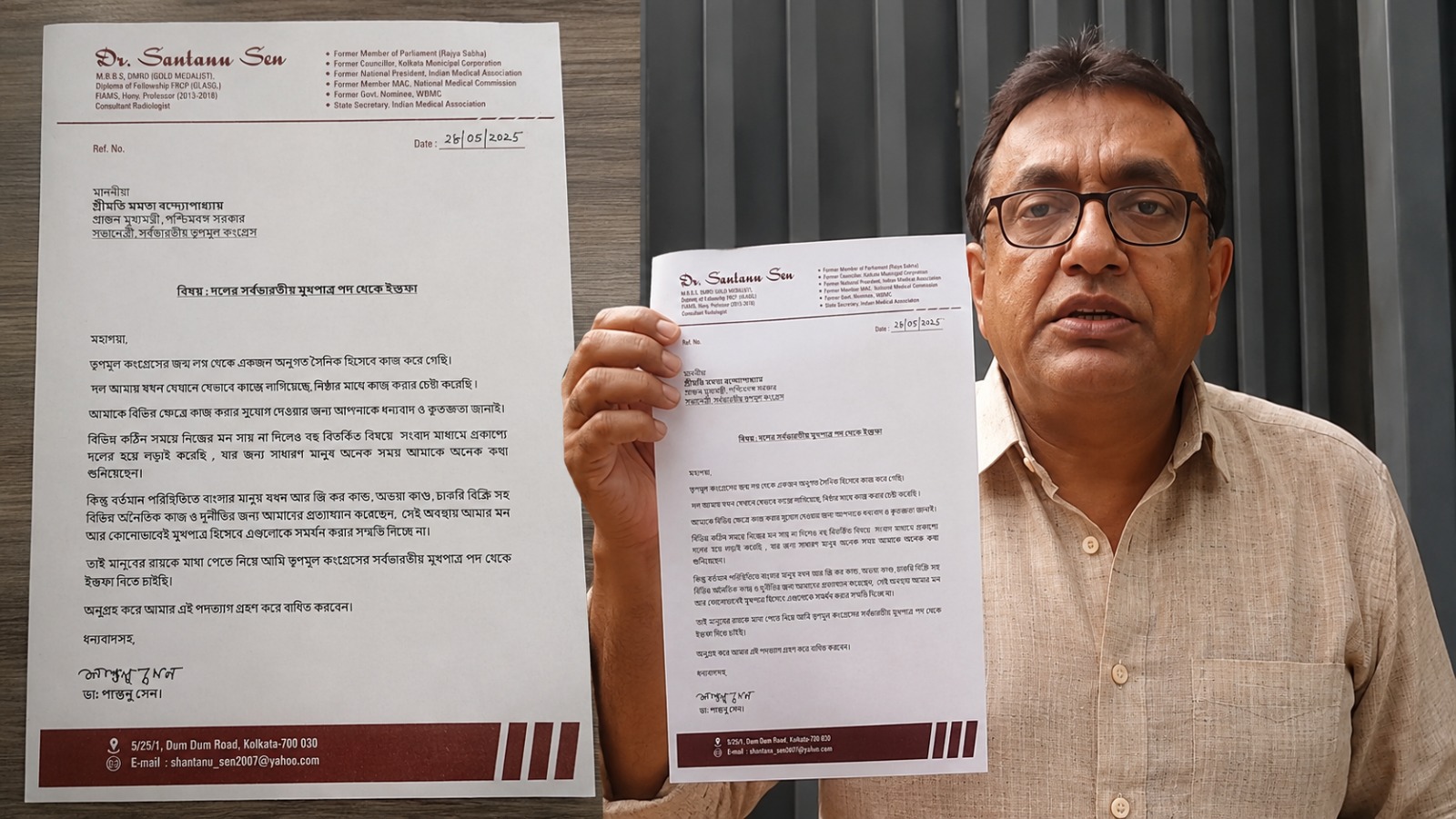
The Trinamool Congress appears to be facing a deepening internal crisis as former Rajya Sabha MP Dr Santanu Sen resigned from his position as the party’s national spokesperson, delivering yet another political setback to Mamata Banerjee’s organisation in the aftermath of its electoral defeat in West Bengal.
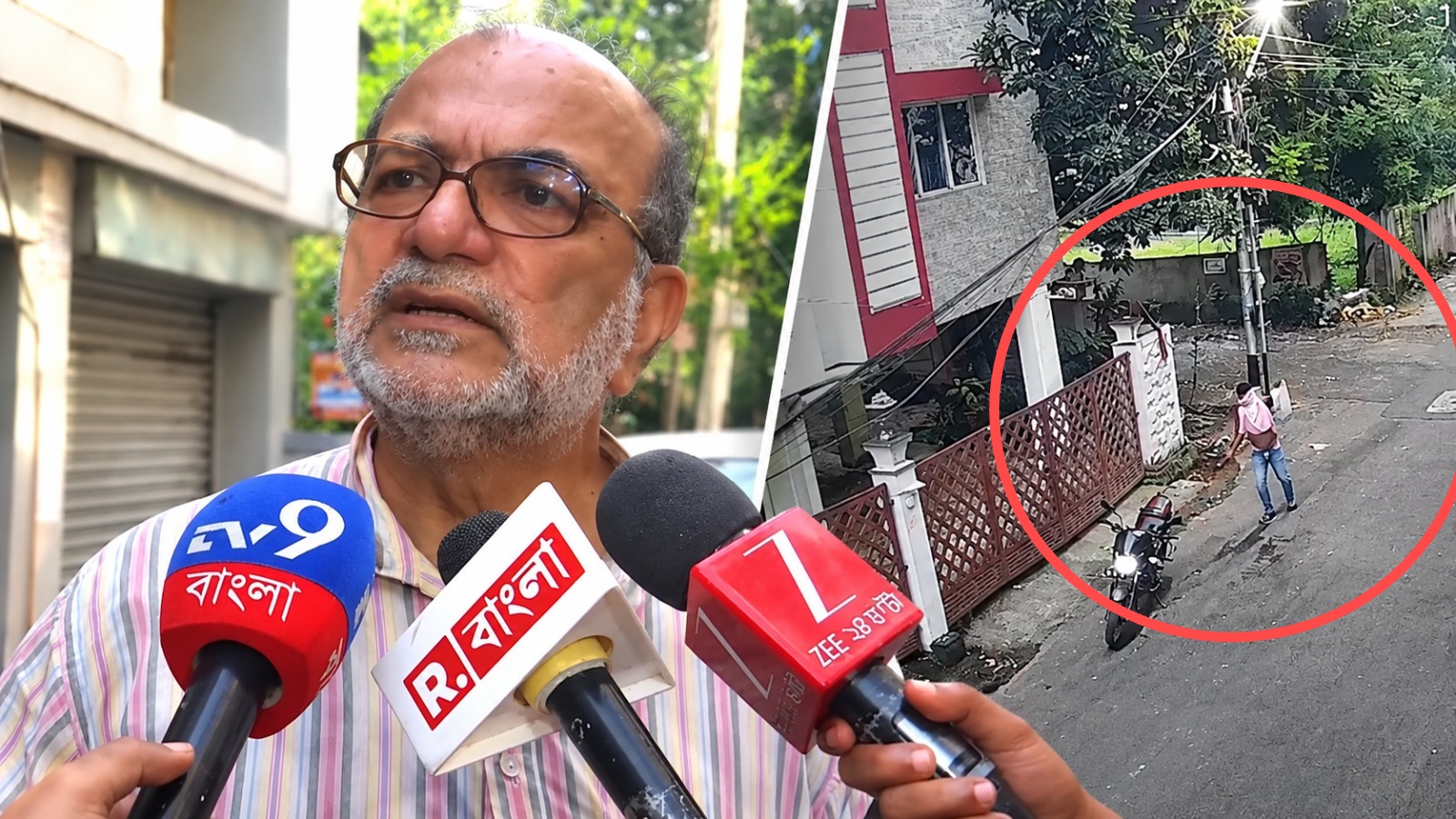
In a strongly worded resignation letter addressed to Mamata Banerjee, Santanu Sen said he could no longer defend what he described as the party’s “immoral acts” and corruption allegations. His resignation comes barely a day after senior TMC leader Kakoli Ghosh Dastidar stepped down from all organisational posts, signalling widening cracks within the party structure.
Santanu Sen, a doctor-turned-politician and former Rajya Sabha MP, has long been regarded as one of the Trinamool Congress’s articulate public faces. Known for aggressively defending the party on television debates and political platforms, his exit from the spokesperson’s role carries symbolic and political significance at a time when the party is battling criticism over corruption allegations, organisational unrest and post-election introspection.
According to reports, Sen cited multiple controversies — including the RG Kar rape-murder case, the Abhaya case and alleged “cash-for-jobs” corruption — as reasons behind his decision. In his resignation note, he reportedly stated that the people of Bengal had “rejected” the party because of these issues and that his conscience no longer allowed him to continue defending them publicly.
The resignation is being interpreted as more than just an individual protest. Political observers believe it reflects a larger mood of discomfort and frustration inside sections of the Trinamool Congress following the party’s poor electoral performance and the growing perception that corruption allegations have damaged its credibility among voters.
Sen’s comments were particularly striking because of the directness of his criticism. He reportedly admitted that as the party’s spokesperson he had defended several controversial issues despite personally disagreeing with them. But after the verdict delivered by voters in the 2026 Assembly elections, he said it had become impossible for him to continue justifying those controversies in the public sphere.
The timing of the resignation has intensified speculation about widening factional tensions inside the party. Only a day earlier, veteran TMC MP Kakoli Ghosh Dastidar resigned from her organisational responsibilities and later accused fellow party MP Kalyan Banerjee of repeated “verbal abuse” and misogyny inside Parliament.
The developments have collectively fuelled perceptions of an increasingly turbulent atmosphere within the Trinamool Congress. Reports of multiple resignations from civic and organisational posts across Bengal have further reinforced the impression that the party is entering a phase of internal instability after years of uninterrupted political dominance in the state.
Adding to the pressure are continuing controversies surrounding corruption allegations involving local TMC leaders. Recent reports regarding the recovery of crores of rupees allegedly buried near the residence of a TMC-linked municipal leader in Bengal have once again provided ammunition to the opposition and intensified scrutiny on the ruling party.
The BJP has already seized upon Santanu Sen’s resignation to argue that even senior Trinamool leaders no longer have confidence in the party’s moral and political direction. Opposition leaders have linked the resignation to what they describe as growing public anger over corruption, law and order concerns and internal authoritarianism within the TMC.
For Mamata Banerjee, the resignations represent not only an organisational challenge but also a reputational one. The Trinamool Congress has traditionally projected itself as a tightly controlled political machine with strong central leadership. Public dissent from senior leaders — especially leaders who have spent years defending the party — threatens that image of unity and discipline.
Santanu Sen’s political journey within the Trinamool Congress makes his resignation especially notable. A former Rajya Sabha MP and ex-president of the Indian Medical Association, he had emerged over the years as one of the party’s most recognisable intellectual and media faces.
Despite resigning from the spokesperson’s post, there is still uncertainty about whether Sen will remain within the party or eventually sever ties altogether. Neither Mamata Banerjee nor the Trinamool Congress leadership has issued a detailed official response so far.
But politically, the message from Santanu Sen’s resignation is already resonating loudly: the crisis inside the Trinamool Congress is no longer being voiced only by opponents — it is now emerging from within the party itself.