NTT Desk
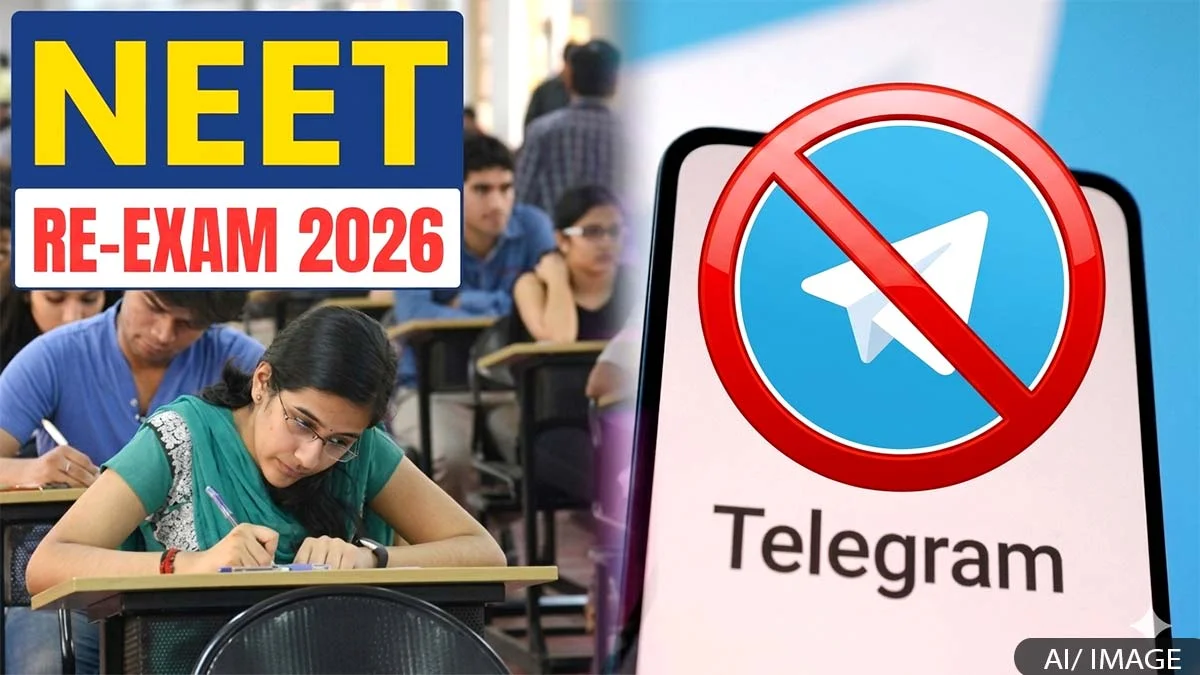
The National Testing Agency (NTA) has backed the Centre’s decision to temporarily restrict access to Telegram in India ahead of the NEET-UG 2026 re-examination on 21 June, describing the move as part of a wider effort to prevent cheating, misinformation and financial fraud targeting candidates.
The agency framed the decision around five key outcomes, saying the measures are intended to secure the examination process and curb manipulation surrounding allegations of paper leaks.
1. Temporary Telegram Restriction Until 22 June
According to the NTA, the Ministry of Electronics and Information Technology (MeitY) has imposed a temporary restriction on Telegram access in India during the examination period. The limitation will remain in place until 22 June, covering both the re-examination day and its immediate aftermath. The agency acknowledged the inconvenience caused to regular users but insisted the measure was necessary to safeguard the examination process. Calling it a “limited-duration intervention”, the NTA said the step had been introduced solely to protect candidates from fraud and misinformation during a sensitive period.
2. Message Editing Feature Suspended to Prevent Fake ‘Leak’ Claims
In a separate move, Telegram has reportedly been instructed to temporarily disable its message-editing feature in India until 30 June. The NTA claimed that organised groups had allegedly exploited the feature to create misleading evidence of examination paper leaks. Officials explained that administrators could allegedly alter older messages after an examination concluded, replacing attachments with actual question papers while retaining the original timestamp. Such edited posts, the agency said, were later circulated online as supposed proof that papers had been leaked beforehand. “The temporary restriction on editing is intended to prevent fabricated ‘paper leak’ claims,” the NTA said, adding that users would still be able to send and receive messages normally.
3. Crackdown on Fraudulent Telegram Networks
The agency alleged that several Telegram channels and bots had been used to deceive medical aspirants and their families through false promises of access to examination papers. According to the NTA, candidates were reportedly asked to pay amounts ranging from a few thousand rupees to several lakhs for supposed access to the NEET re-examination paper. The agency stressed that all such claims were fraudulent. “No NEET question paper exists outside the secured examination process,” the NTA said, warning students not to trust promises circulating on messaging platforms or social media.
4. Enforcement Agencies Intensify Action
The NTA credited multiple government agencies for coordinating efforts to tackle examination-related cybercrime. It specifically thanked the Ministry of Home Affairs, the Indian Cyber Crime Coordination Centre (I4C), the Central Bureau of Investigation (CBI), MeitY and state police departments for their intervention. Officials said several Telegram channels spreading misinformation had already been removed. The agency also pointed to recent enforcement measures across states. In Bihar, police issued public warnings cautioning students against fake paper leak claims. Meanwhile, the Ahmedabad City Cyber Crime Branch reportedly arrested members of an alleged inter-state cyber fraud syndicate accused of running multiple Telegram channels. Investigators claimed the group handled transactions worth approximately ₹1.5 crore and contacted nearly 1,000 mobile numbers within a month.
5. NEET Re-Examination to Proceed as Scheduled
Despite concerns and online speculation, the NTA reiterated that the NEET-UG 2026 re-examination will go ahead on 21 June as planned. The agency maintained that the security and integrity of the examination process remain intact. Acknowledging the inconvenience to genuine Telegram users, the NTA emphasised that the restrictions are temporary and targeted. Students were advised to rely only on official NTA communication channels and the agency’s website for updates. The agency also urged candidates to report any suspicious approaches or fraudulent claims to cybercrime authorities immediately. “The security and integrity of the examination remain intact,” the NTA said, reiterating that the temporary measures were designed to ensure a fair and transparent process for all candidates.