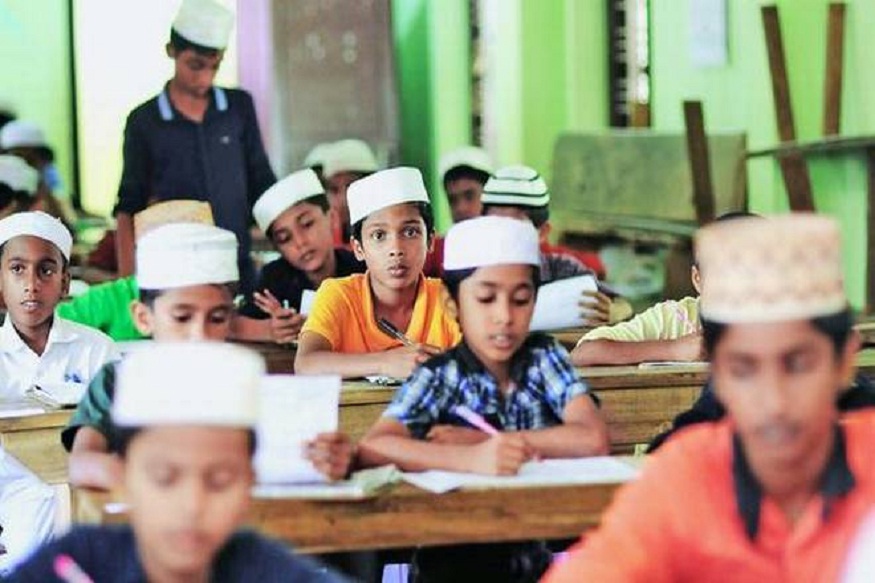
In a bid to promote “nationalistic values” in educational institutions, the West Bengal government under Chief Minister Suvendu Adhikari has issued a fresh directive making the singing of ‘Vande Mataram’ compulsory in all government-aided, recognised, and unaided madrasas across the state.
The order, issued by the Directorate of Madrasah Education on May 19, applies to government model madrasahs as well as aided and unaided ones. It explicitly overrides previous practices and requires the national song to be sung during morning assembly prayers before classes begin. Institutions have been directed to ensure full compliance and submit reports accordingly.
This move follows a similar directive issued earlier this month for all government and government-aided schools, which took effect from May 18. In those institutions, students are now required to participate in singing the song at the start of the school day.
‘Vande Mataram’, composed by Bankim Chandra Chattopadhyay in 1882, holds a revered place in India's freedom struggle and was adopted as the national song in 1950. Recently, the Centre has emphasised protocols that accord it heightened ceremonial respect, equivalent in dignity to the national anthem ‘Jana Gana Mana’. Traditionally, only the first two stanzas are sung on official occasions.
The decision has been welcomed by supporters as a means to foster patriotism and unity among students from diverse backgrounds. BJP leaders have described it as a restoration of cultural and national pride that was reportedly sidelined in previous years.
However, the extension to madrasas - institutions primarily focused on Islamic education - is likely to spark debate. Some Muslim community voices have historically expressed reservations about the song due to its lyrical imagery, though legal precedents, including Supreme Court observations, have generally upheld singing it as a non-coercive expression of national respect while allowing limited exemptions based on genuine conscience.
Prior to this change, madrasa assemblies often featured the national anthem or other devotional songs. Officials have emphasised that the policy aims at inclusive nation-building without altering the core religious curriculum of these institutions.
The Adhikari led BJP government, which assumed power recently on may 9, has positioned the initiative as part of broader efforts to strengthen patriotic ethos in Bengal's education system. Private schools have also been encouraged, though not mandated, to adopt the practice.