
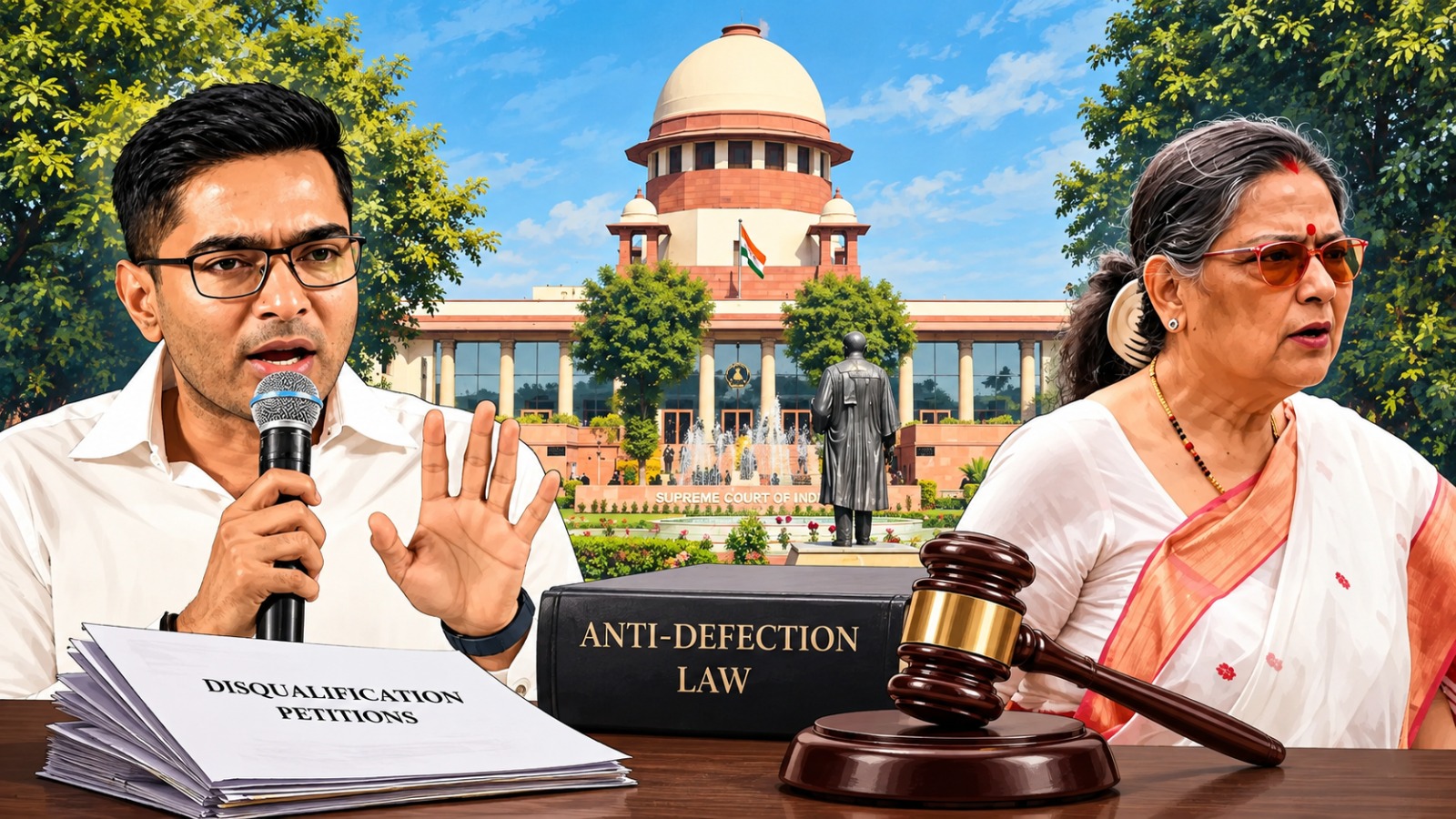
The Supreme Court on Wednesday said the Lok Sabha Speaker was expected to take an expeditious decision on petitions seeking the disqualification of 20 rebel Trinamool Congress MPs under the anti-defection law.
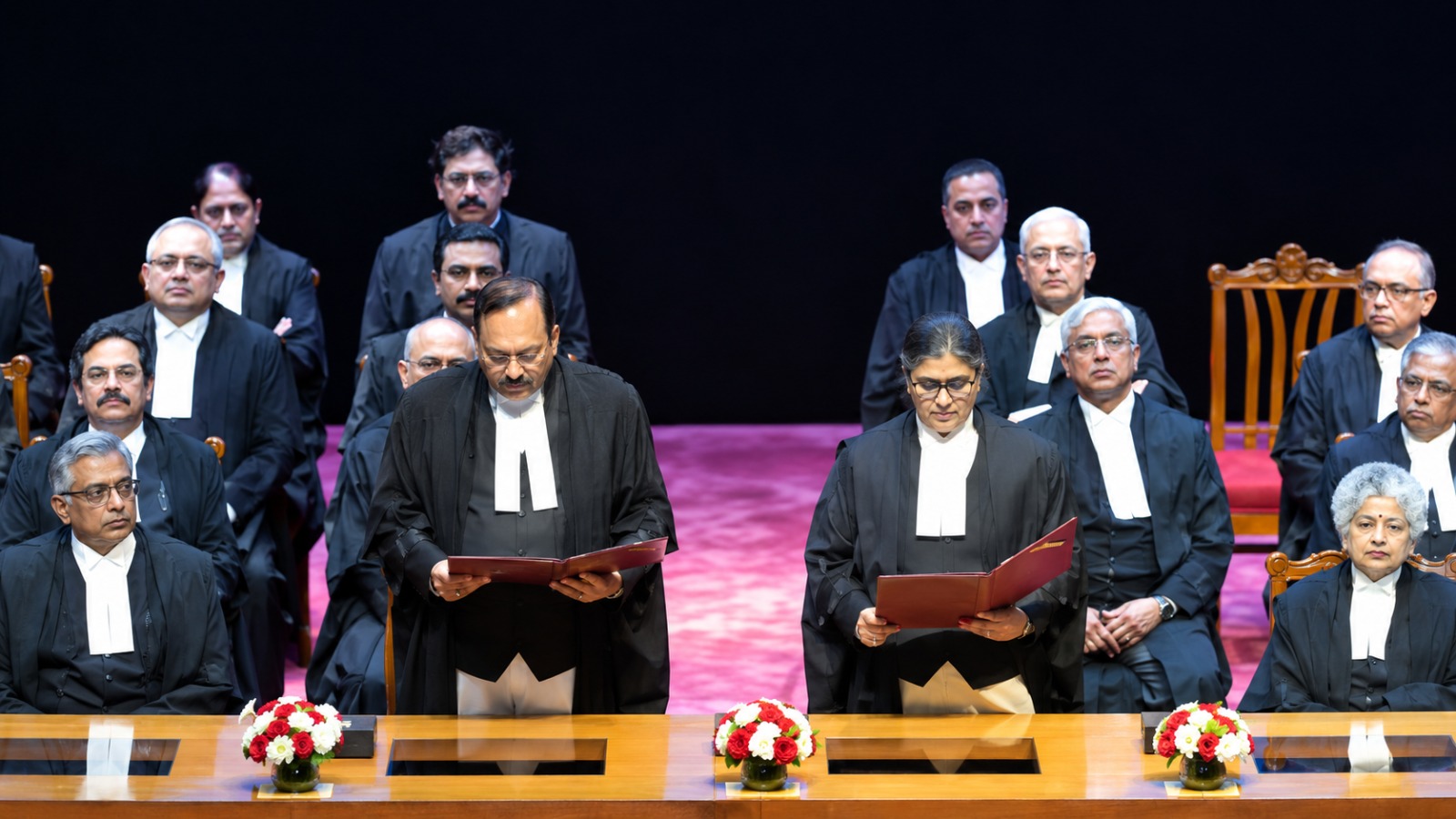
A Bench comprising Chief Justice of India Surya Kant and Justices Joymalya Bagchi and V. Mohana was hearing a petition filed by TMC general secretary and Lok Sabha leader Abhishek Banerjee, seeking a time-bound decision on the disqualification proceedings.
The petitions relate to 20 MPs who, according to the proceedings, have broken away from the TMC parliamentary group and aligned themselves with the Nationalist Citizens Party of India (NCPI). The rebel MPs have sought recognition as a separate group in the Lok Sabha.
‘We expect’ early decision, says Supreme Court
During the hearing, the court emphasised the need for an early resolution of proceedings under the Tenth Schedule of the Constitution.
“We will expect anything which is required to be decided expeditiously, the very nature of the lis...that demands early adjudication,” CJI Surya Kant said.
Justice Bagchi similarly reminded the constitutional authority of the need for an expeditious process, referring to the Supreme Court's earlier decision in Keisham Meghachandra Singh.
“We just remind the authority of ensuring expeditious resolution, keeping in mind the paramount importance of the 10th Schedule,” Justice Bagchi observed.
The court also indicated that it wanted a timeline for completion of the proceedings. “Mr SG, you come back and give us a timeline,” Justice Bagchi told Solicitor General Tushar Mehta, who was appearing for the Speaker.
Speaker has already issued notices
Mehta informed the Bench that the Speaker had already issued notices to the 20 MPs following the disqualification petitions.
The MPs had initially been given time to respond, but according to the petitioner's submissions, the deadline was subsequently extended and a further extension was sought. The rebel MPs' lawyers told the court that they would file their replies within four weeks.
The Solicitor General, however, opposed the idea of the court prescribing a specific schedule for the Speaker, arguing that the Speaker was performing a constitutional function and that the proceedings involved evidence and fact-finding.
“I will not make any commitment. I will explore...This court's monitoring may not be justified. I would urge not to fix Speaker's schedule,” Mehta said.
Court refers to three-month timeline
The Bench also referred to the Supreme Court's earlier ruling that disqualification petitions under the Tenth Schedule should ordinarily be decided within three months, barring exceptional circumstances.
Justice Bagchi noted that the three-month period referred to in the earlier judgment was approaching its end. The court said it did not want to put a constitutional authority “to ransom” but wanted the earlier judicial guidance on expeditious disposal to be kept in mind.
The lawyers representing the rebel MPs argued that there was no basis for judicial intervention at this stage, pointing out that the Speaker had already initiated the proceedings and that the MPs had sought only one extension.
The Supreme Court ultimately adjourned the matter after recording the statement that the rebel MPs would file their replies within four weeks. No direction fixing a specific deadline was issued by the court.