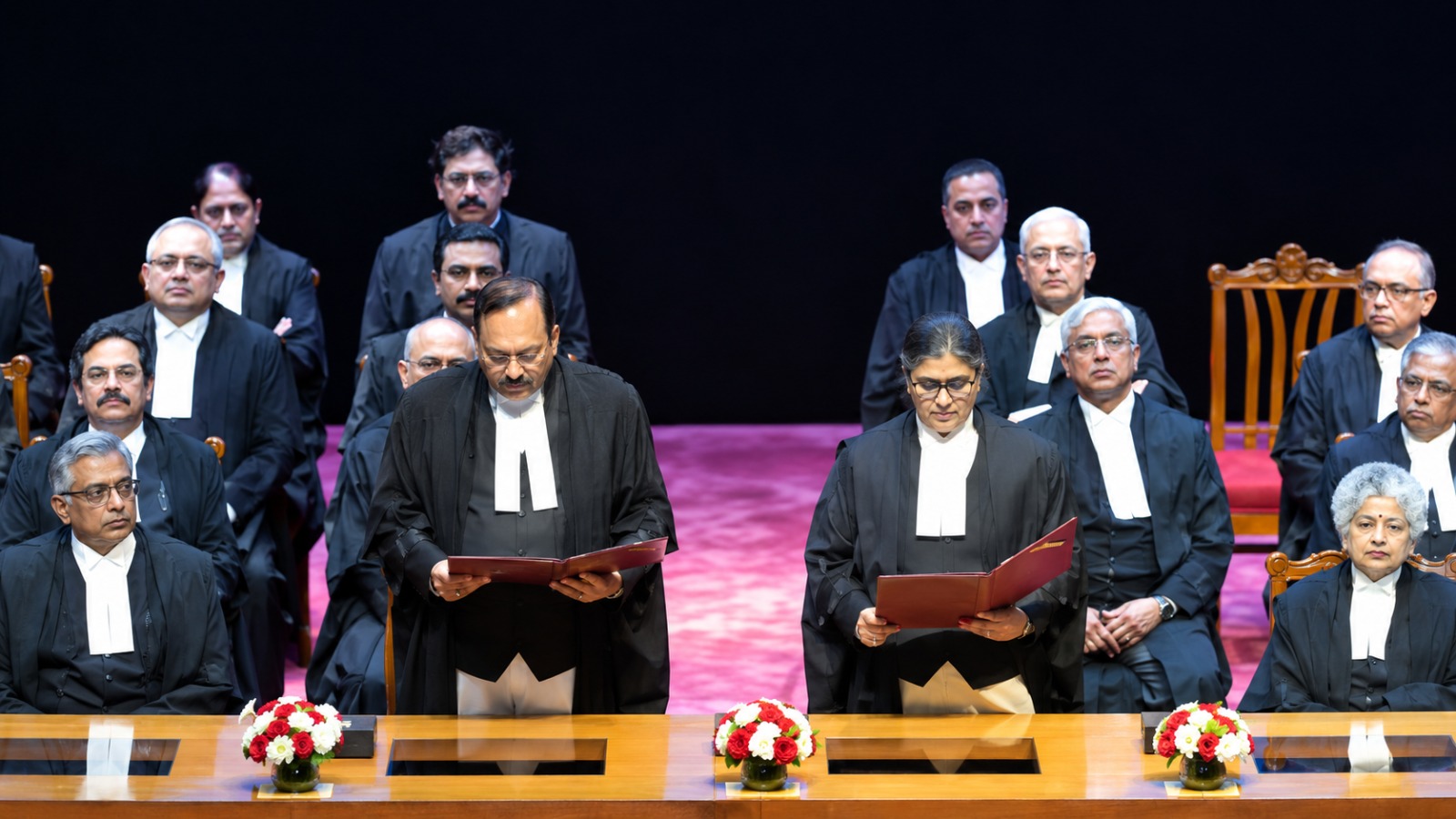
The Supreme Court has decided to shift to mandatory virtual hearings on Mondays and Fridays during partial working days in June and July, while also permitting a section of its staff to work remotely, as part of measures aimed at conserving fuel amid rising energy concerns. The decision was taken during a full court meeting chaired by Chief Justice of India Surya Kant on Friday morning, against the backdrop of soaring global crude oil prices linked to the prolonged geopolitical crisis in West Asia.
Under the new arrangement, all matters listed on miscellaneous hearing days, typically Mondays and Fridays, along with cases scheduled during partial court working days, will be conducted exclusively through video conferencing.
In an official circular issued by Supreme Court Secretary General Bharat Parashar, the court stated that proceedings on such days “shall be heard by video-conferencing only.” The circular further directed the registry to maintain uninterrupted digital infrastructure to ensure smooth functioning of virtual proceedings.
The registry has been instructed to provide stable video-conferencing facilities and “timely technical assistance so as to avoid any inconvenience to the Hon’ble Court,” the notification stated. In a parallel effort to reduce fuel consumption, judges of the apex court have also agreed to adopt carpooling arrangements. According to the circular, the judges “unanimously resolved to encourage car-pooling arrangements amongst themselves” to ensure “optimum utilisation of fuel.”
The Supreme Court has additionally introduced a limited work-from-home system for its administrative staff. Under the arrangement, up to 50 per cent of employees in each registry branch or section may work remotely for up to two days a week, with registrars tasked with preparing weekly rosters to ensure court functioning is not disrupted. However, the court clarified that staff members permitted to work from home must remain reachable and report physically whenever required.
The circular also empowered registrars to revise or suspend remote work arrangements if they are found to interfere with essential operations. The move comes as India grapples with mounting energy pressures following disruptions in global oil supply chains triggered by instability in West Asia.
Earlier this week, Prime Minister Narendra Modi urged citizens to adopt fuel-saving practices, including reducing petrol and diesel consumption, using public transport, carpooling and resuming work-from-home arrangements wherever possible. The Centre has repeatedly stressed the importance of conserving fuel amid rising import costs and volatility in global energy markets.
The Supreme Court’s measures also come on the same day oil marketing companies raised petrol and diesel prices by ₹3 per litre, amid mounting losses caused by higher international crude prices. India, which imports over 80 per cent of its crude oil requirements, remains particularly vulnerable to disruptions in supply routes passing through West Asia.