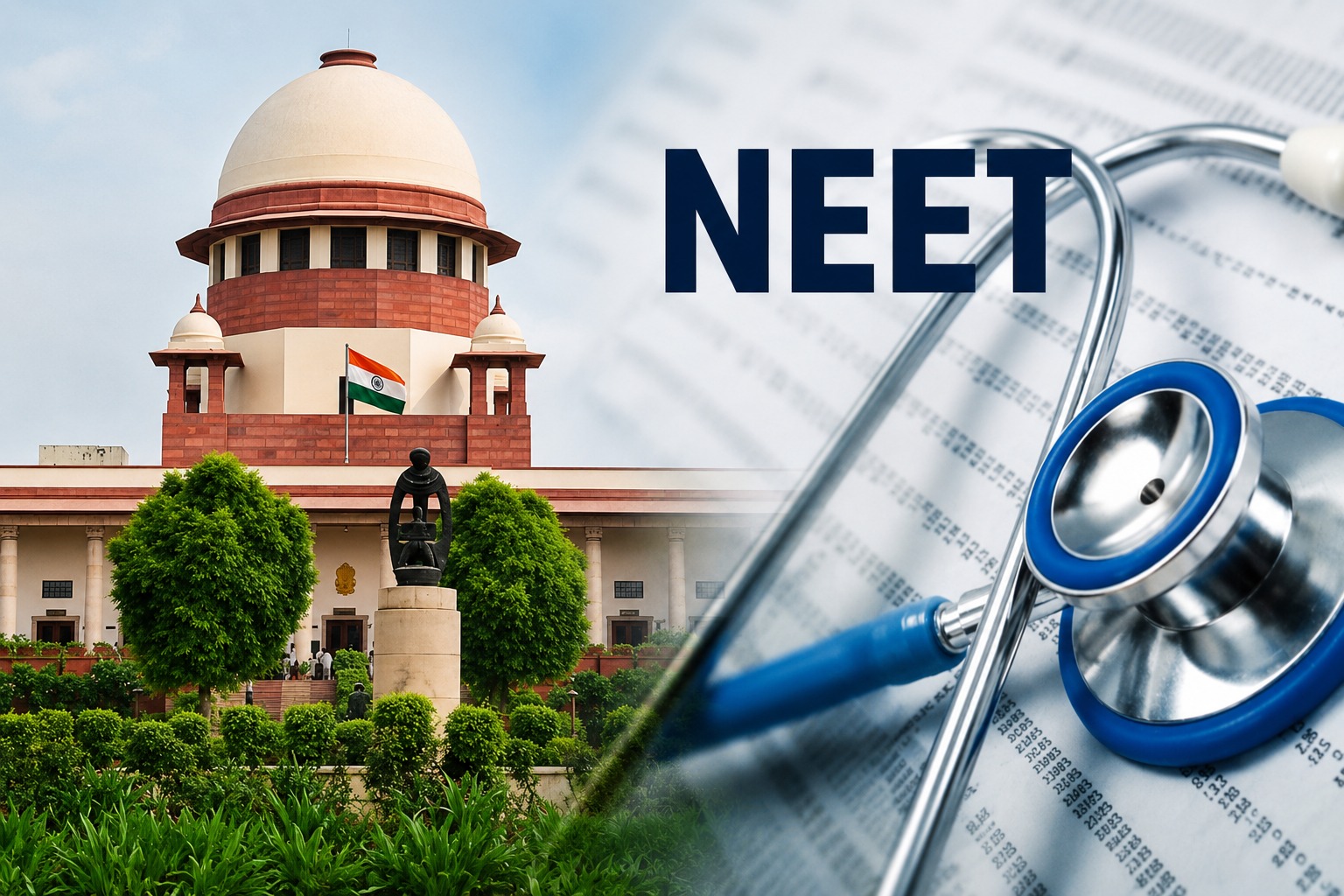
The Supreme Court came down heavily on the National Testing Agency (NTA) over the NEET-UG 2026 paper leak, observing that the agency had failed to draw lessons from the examination crisis that unfolded just two years ago.
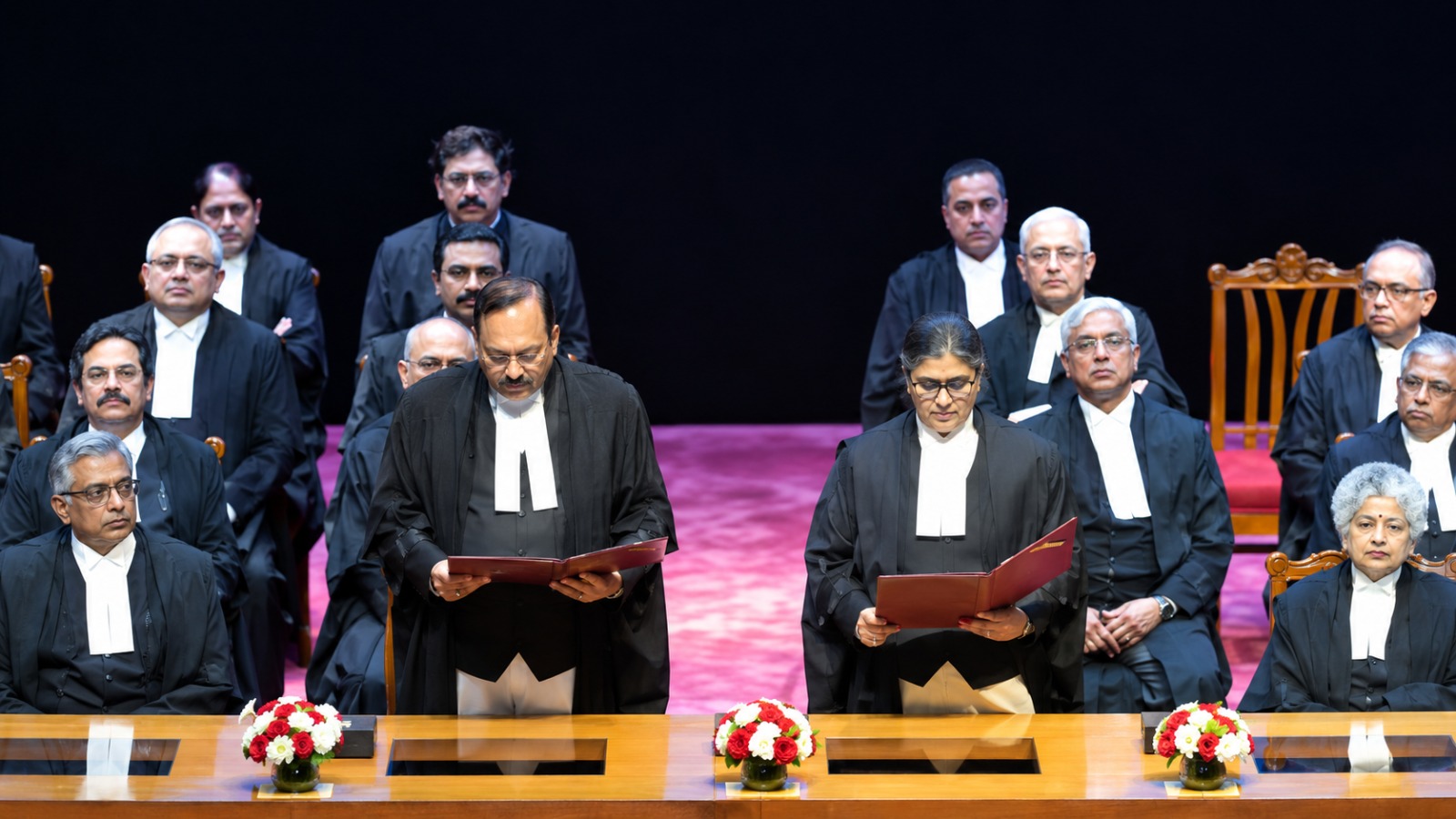
Expressing concern over yet another breach in one of India’s largest entrance examinations on Monday, the court said the careers and hard work of lakhs of students had once again been jeopardised. “It is so sad, really, that the NTA has not learnt its lesson,” Justice P.S. Narasimha, who headed a two-judge Bench, remarked during the hearing.
The Bench noted that the Supreme Court had extensively dealt with the fallout of the NEET-UG 2024 controversy, during which allegations of paper leaks and irregularities had triggered widespread concern over the integrity of the examination process. “We had with such difficulty heard the petitions in 2024 and passed orders… We had directed the constitution of a committee to give recommendations… Those recommendations, we believe, were accepted… a monitoring/high-powered committee was appointed,” Justice Narasimha observed.
The latest controversy erupted after reports emerged that the question paper for the National Eligibility cum Entrance Test (Undergraduate) 2026 had been leaked before the examination, throwing the future of nearly 23 lakh medical aspirants into uncertainty. Following the revelations, authorities cancelled the examination and ordered a CBI investigation into the alleged leak. A fresh examination has now been scheduled for 21 June 2026.
The court noted similarities between the present controversy and the events of 2024, when over 20 lakh candidates were affected by allegations of malpractice. At the time, the apex court had ultimately decided against cancelling the examination, holding that the leak appeared to be localised rather than systemic. However, it had simultaneously acknowledged the need for sweeping reforms in how the NTA conducted high-stakes national examinations.
The Bench was hearing petitions filed by the Federation of All India Medical Association (FAIMA) and the United Doctors Front, both of which sought structural changes in the functioning of the NTA. FAIMA urged the court to replace or fundamentally restructure the examination body, while the United Doctors Front argued that the agency’s repeated failures pointed to deeper institutional problems.
Describing the 2026 leak as part of a “recurring, systemic, and catastrophic failure”, the doctors’ body sought the conversion of the NTA from a registered society into a statutory institution created through an Act of Parliament. The petitioners argued that such a move would ensure greater constitutional oversight and accountability.
Unlike bodies such as the Union Public Service Commission (UPSC) or the Staff Selection Commission (SSC), the NTA is not directly accountable to Parliament, operating instead under the Ministry of Education. According to the petitioners, this structure shields the agency from mandatory parliamentary scrutiny and direct audits. “The recurrence proves that cosmetic administrative tweaks and expert committees like the K. Radhakrishnan Committee is inadequate without a fundamental legislative overhaul,” one of the petitions argued.
Seeking accountability, the Supreme Court issued notices to the Union Government, the Ministry of Education, the NTA, and other respondents named in the petitions. The court directed the NTA to submit an affidavit within three days, detailing steps taken to implement recommendations made by a high-powered committee formed after the 2024 NEET crisis.
The committee, headed by former ISRO chairman K. Radhakrishnan, had been tasked with recommending safeguards to make the examination process more secure and transparent.
The Bench specifically sought details on whether the NTA had acted on recommendations, including a proposed transition to a computer-based testing (CBT) system, aimed at reducing the risks associated with physical handling of question papers. Radhakrishnan has also been directed to independently inform the court about steps taken to ensure implementation of the panel’s recommendations. The matter has been listed for an urgent hearing later this week.
The petitions have also sought wider reforms to the conduct of national entrance examinations, including mandatory digital locking systems for question papers and a shift towards computer-based examinations to minimise vulnerabilities in the physical chain-of-custody process.
The doctors’ bodies argued that piecemeal reforms were insufficient and pressed for the dissolution of the NTA in its current form. They instead urged the Centre to establish a new testing authority through parliamentary legislation, arguing that only a legally empowered institution with direct accountability could prevent future examination crises.