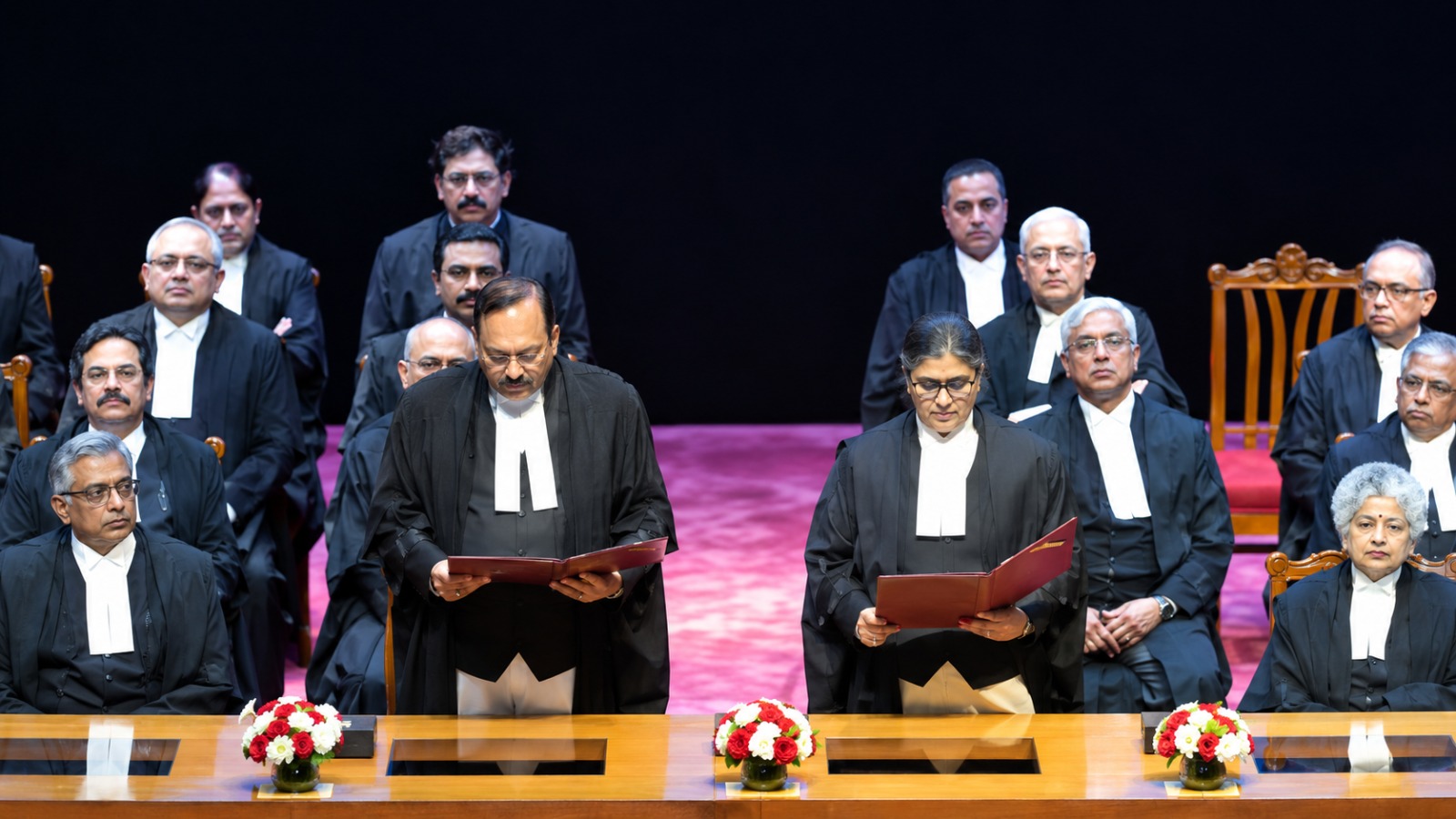

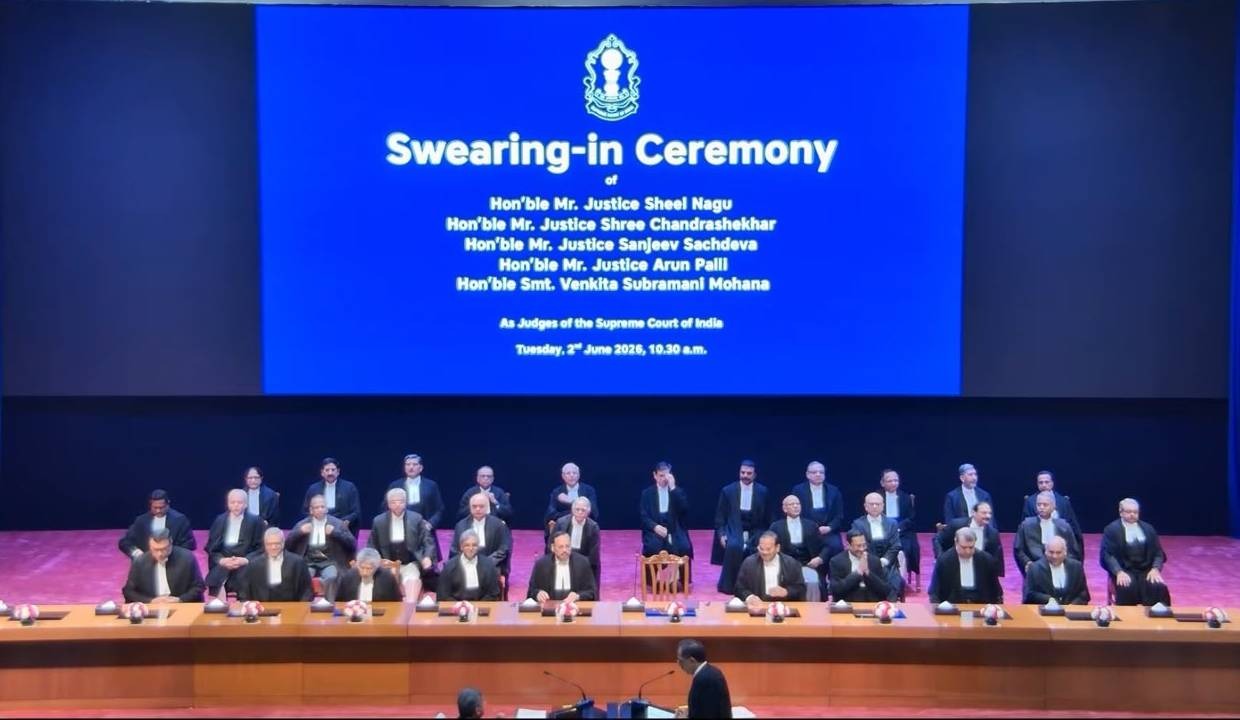
The Supreme Court of India moved closer to its full sanctioned strength on Monday as five newly appointed judges were sworn in, taking the Court’s working strength to 37 and leaving only one vacancy.
The oath of office was administered by Chief Justice of India Surya Kant at a ceremony in New Delhi.
The appointments, cleared by the Central Government following recommendations of the Supreme Court Collegium, include Justice Sheel Nagu, former Chief Justice of the Punjab and Haryana High Court; Justice Shree Chandrashekhar, former Chief Justice of the Bombay High Court; Justice Sanjeev Sachdeva, former Chief Justice of the Madhya Pradesh High Court; Justice Arun Palli, former Chief Justice of the High Court of Jammu & Kashmir and Ladakh; and senior advocate Venkita Subramani Mohana.
With the induction of the five judges, the apex court is now just one judge short of its newly expanded sanctioned strength of 38 judges, including the Chief Justice of India.
The expansion follows the enactment of the Supreme Court (Number of Judges) Amendment Act, 2026, which increased the sanctioned strength of the Court from 34 to 38 judges, including the CJI. The move was approved by the Union Cabinet earlier this year to address the growing workload of the country's highest court and improve the pace of judicial disposal.
Announcing the decision, the Centre had stated that the amendment was aimed at strengthening the institution's capacity to deal with rising litigation and mounting case pendency. The increase adds four judges to the Court's previous sanctioned strength of 33 judges, excluding the Chief Justice of India.
The latest appointments come at a time when the Supreme Court continues to grapple with a substantial backlog of cases. Legal observers view the expansion as a significant institutional measure that could help reduce delays, improve bench availability, and enhance the overall efficiency of the judicial system.
With only one vacancy now remaining, the Supreme Court is operating at its highest-ever strength, marking a significant development for the country's judiciary as it seeks to address increasing demands on the justice delivery system.