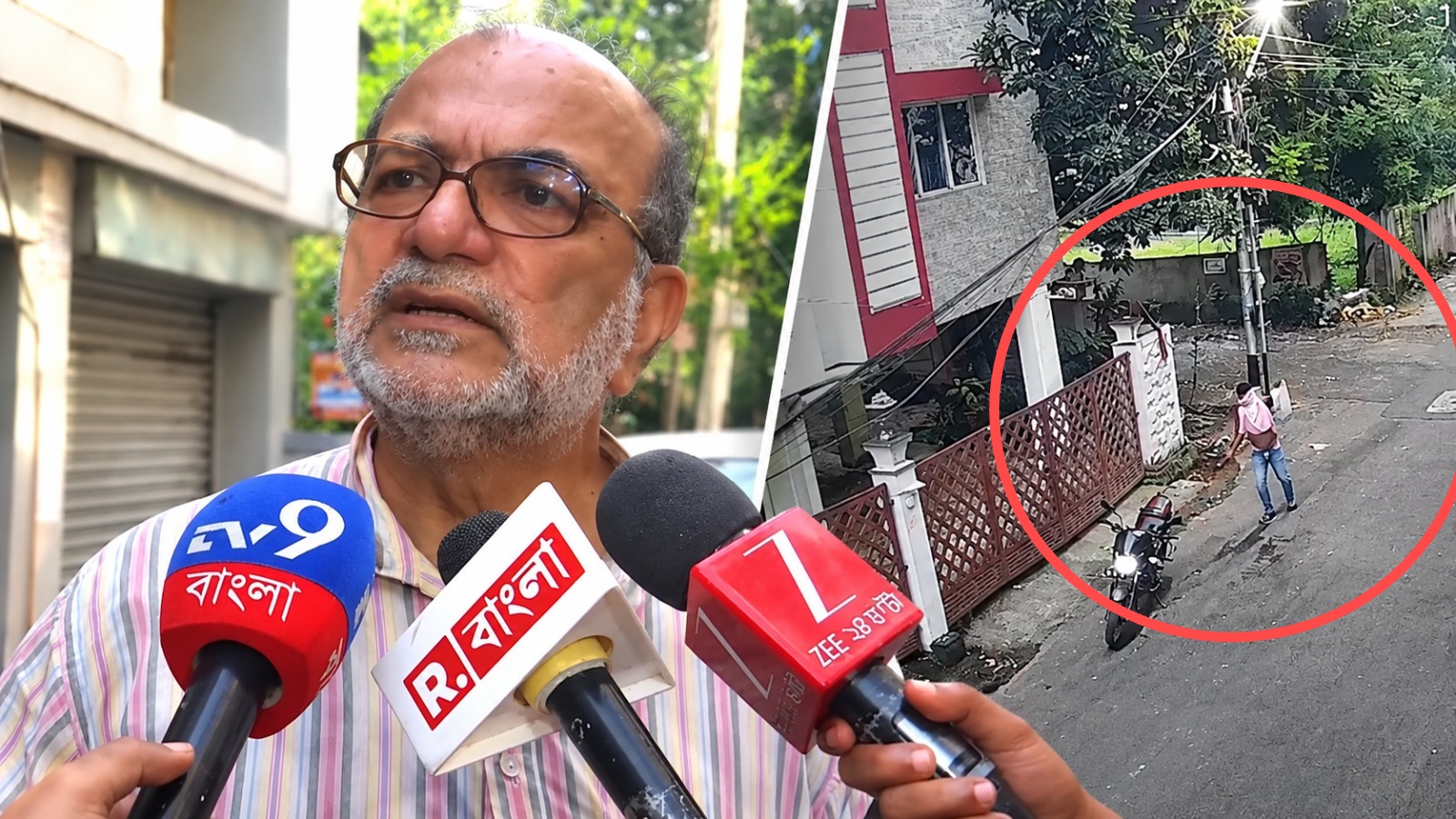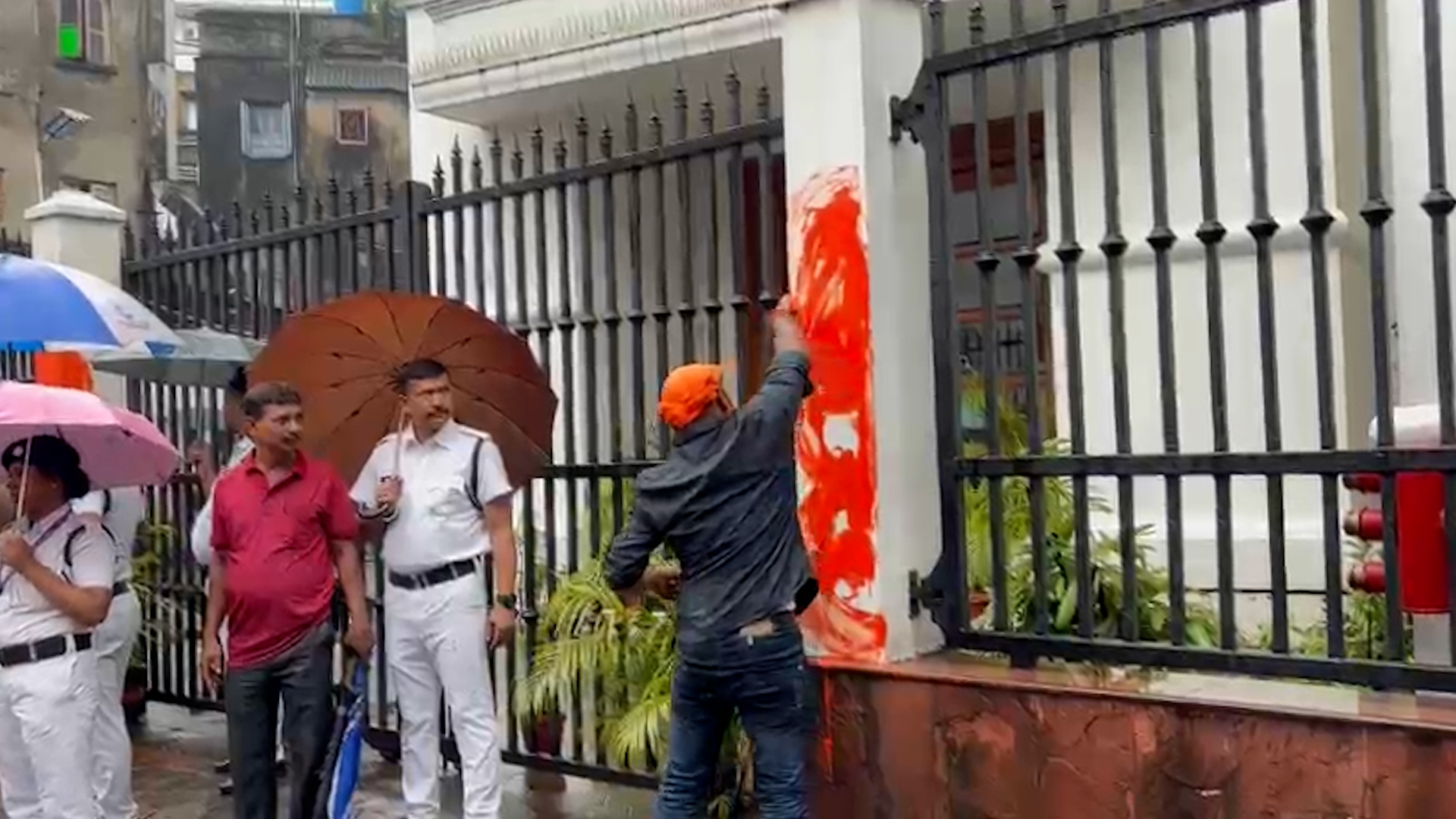
A group of men in saffron robes gathered outside the Anandabazar Patrika office near Chandni Chowk on Tuesday afternoon and painted two entrance pillars saffron, turning a newspaper headline into a street confrontation over colour, language and political power in post-election Bengal.
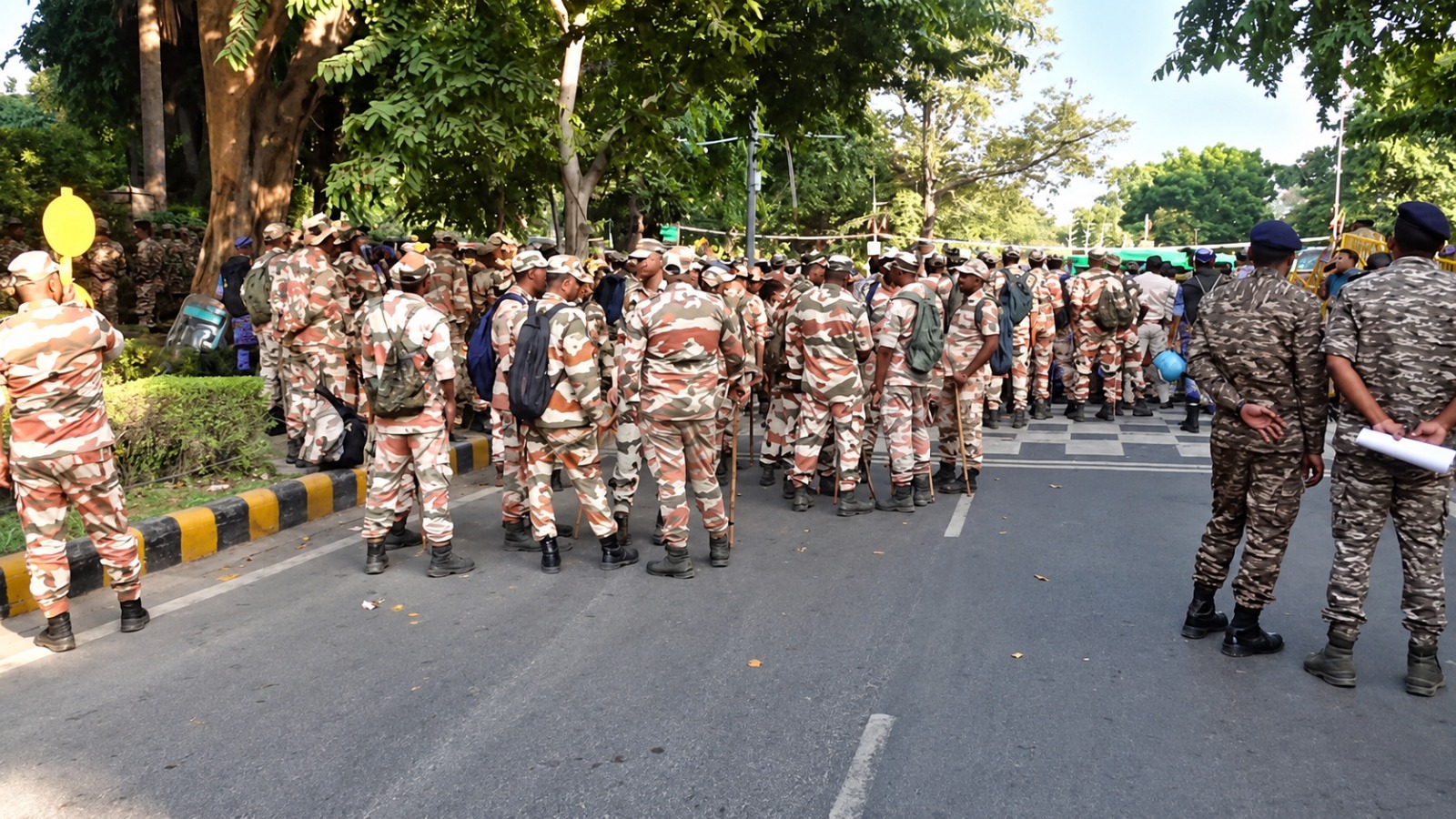
The demonstration began around 1.30 pm and lasted close to an hour. Videos from the spot show two men brushing paint onto the pillars while others chanted that an insult to bhagwa would not be tolerated, and that Anandabazar Patrika should be condemned. Police from Bowbazar station stood by; some officers filmed the scene on their phones. The group later addressed onlookers, claiming the land as that of Syama Prasad Mookerjee and Swami Vivekananda, and as “saffron.” They were then escorted away. Staff later painted the pillars white again. Editor Ishani Datta Ray posted a photograph of the restored wall with a line from Tagore’s Where the Mind Is Without Fear: উচ্চ যেথা শির - “where the head is held high.”
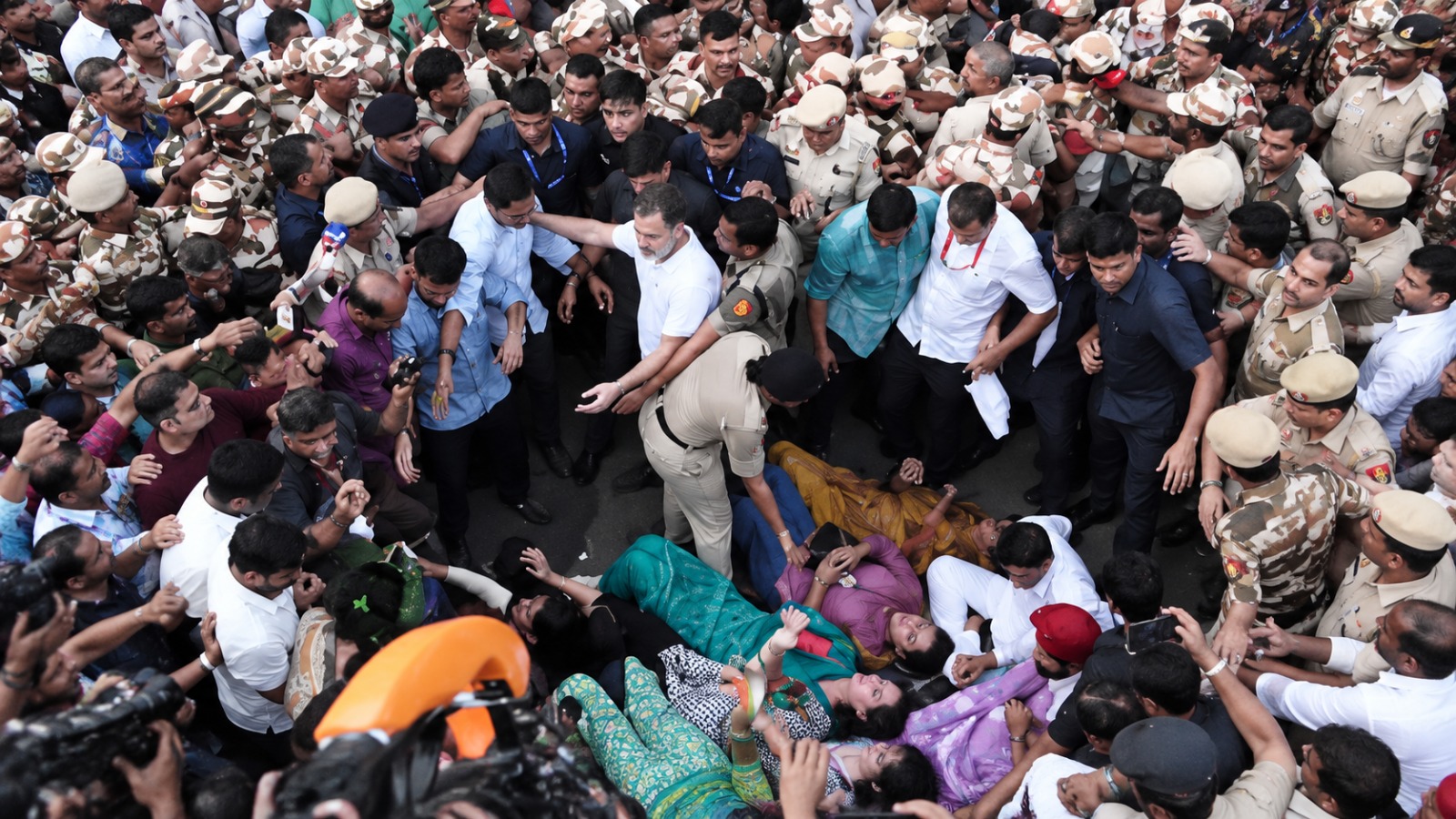
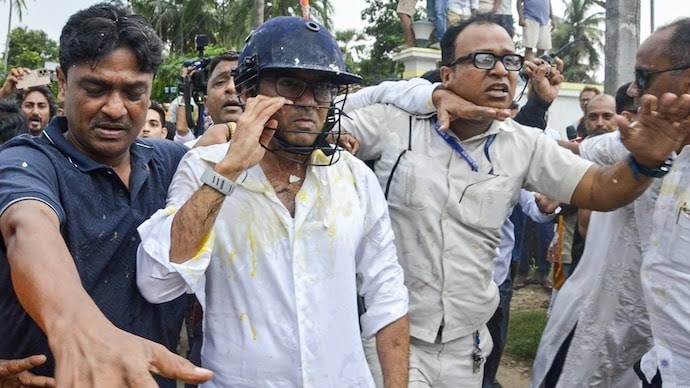
The paint job did not appear out of nowhere. It followed a chain that began on the Jadavpur University campus in the early hours of 20 August. That night, after a disputed engineering students’ union meeting, supporters of the Akhil Bharatiya Vidyarthi Parishad entered the campus. Rival Left-backed student groups were already present. Flags and posters were burned, buildings were damaged, students were injured. The next day, ABVP supporters again tried to force the locked Gate 4, throwing eggs, bottles and stones while Left groups gathered inside and the university’s gate emblem - designed by Nandalal Bose - was climbed on and broken. The university filed police complaints. An inquiry committee was set up. Both sides accused the other of bringing outsiders. No quick arrests followed.
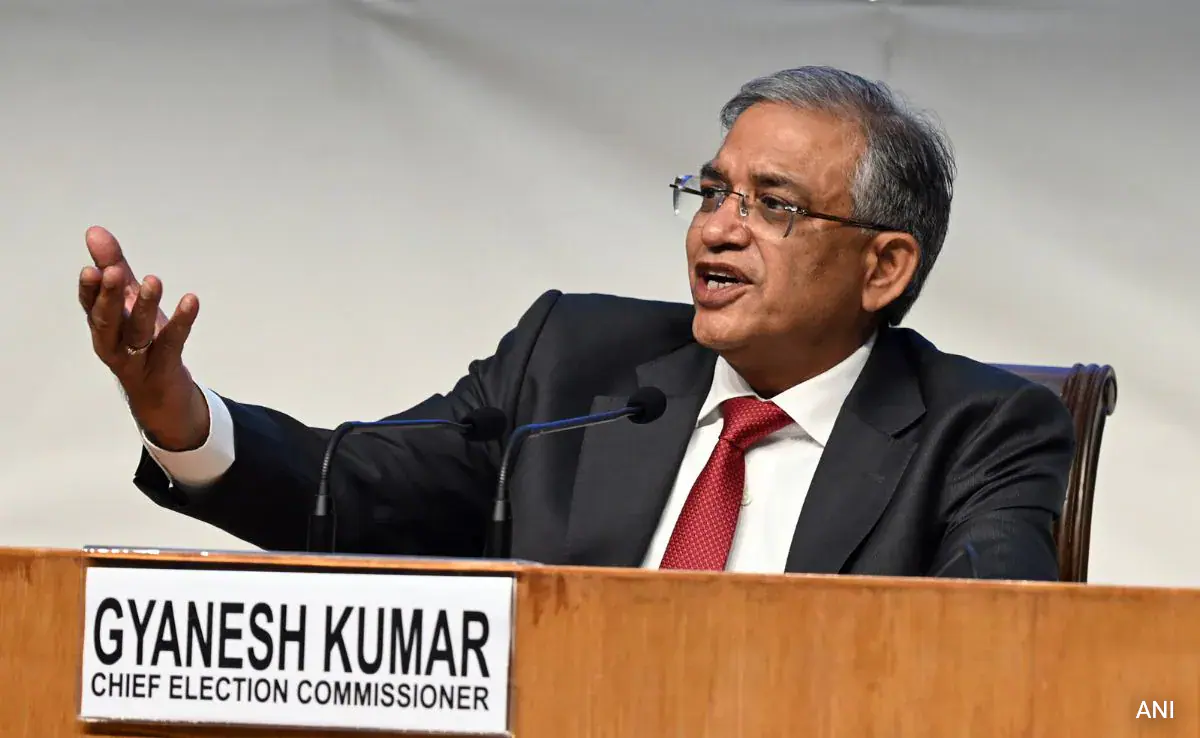
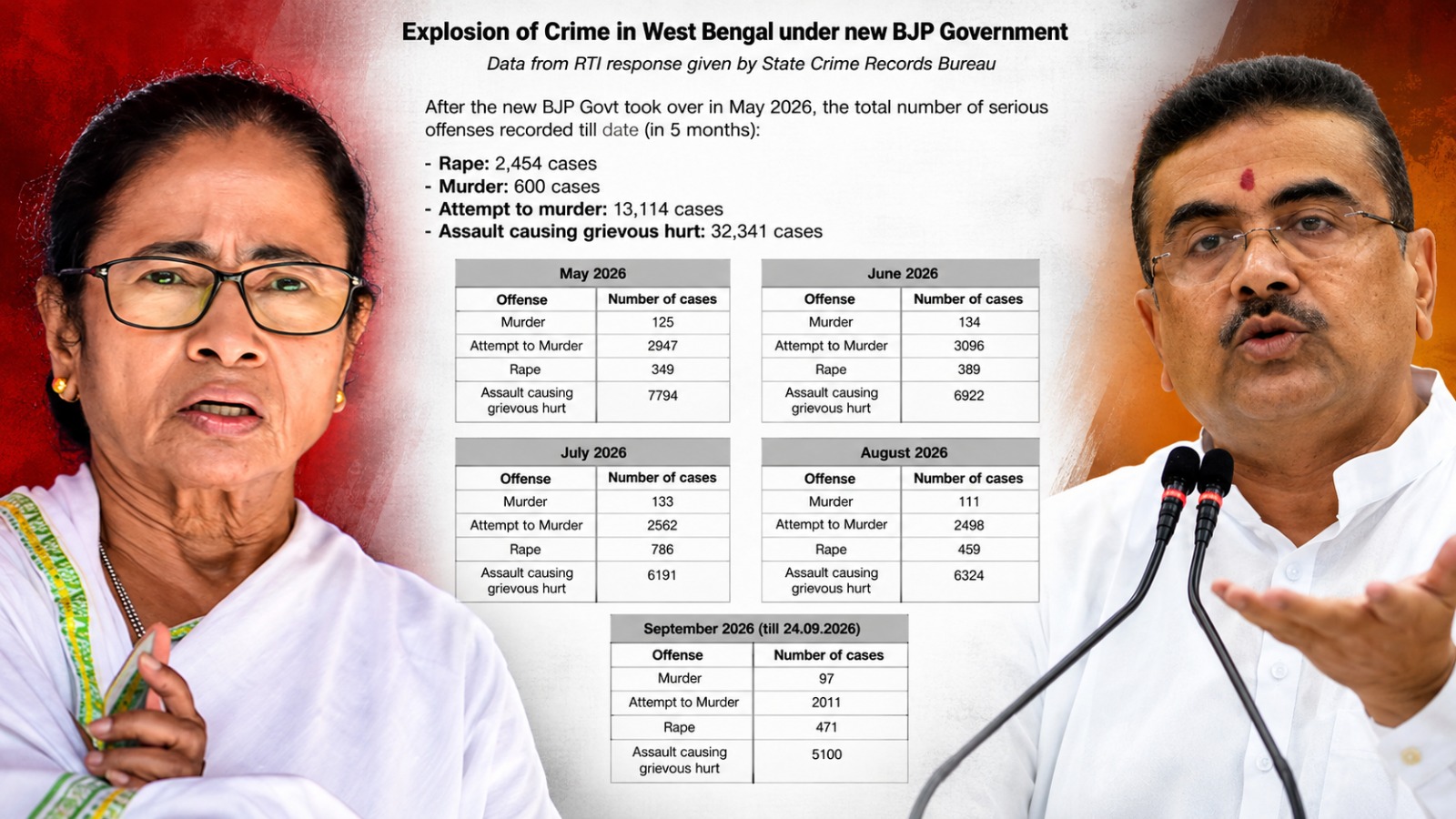
Anandabazar Patrika put the clash on its front page. One edition used the phrase “gerua gundami” (saffron hooliganism) and another pratik bhenge gerua gundami, tying the damage to the emblem with that phrase. On 28 August, Chief Minister Suvendu Adhikari, speaking at Jadavpur, demanded a front-page apology within 24 hours. He said the wording was wrong and that otherwise there would be a protest by people in saffron; he added that thousands of sadhus were ready and awaited only his word. He also said he was not threatening the press. A complaint by spiritual leader Sanjay Shastri Maharaj led to an FIR at Bowbazar against Datta Ray, chief reporter Soma Mukherjee and other editorial staff, alleging the headline was meant to hurt Hindu sentiment.
The paper did not apologise. It reported the chief minister’s remarks instead. Extra police were posted at the office from Saturday after staff expected some form of protest. The colour itself has already become a political language in Kolkata since the BJP replaced the Trinamool Congress earlier this year. In July, a ticket-counter room at the Academy of Fine Arts was painted saffron. Theatre workers later whitewashed it. BJP MLA Rudranil Ghosh and party workers painted it saffron again, arguing the shade was older than the controversy and that saffron meant sacrifice, not a party flag. Similar disputes have touched public buildings and street furniture. Tuesday’s action at a newspaper office moved that argument from a cultural institution to the press.
What happened at the Anandabazar wall is therefore both a specific protest and a larger test. One side treats gerua as sacred and any coupling of it with “hooliganism” as an attack on Hindu identity. The other treats the phrase as a description of a night of arson and forced entry on a campus, and the painting of a newsroom wall as intimidation. Police presence without an immediate FIR at the office leaves a third question: how far the state will go to police speech about colour when colour has become the government’s signature. By evening the pillars were white again. The argument they were meant to settle is not.