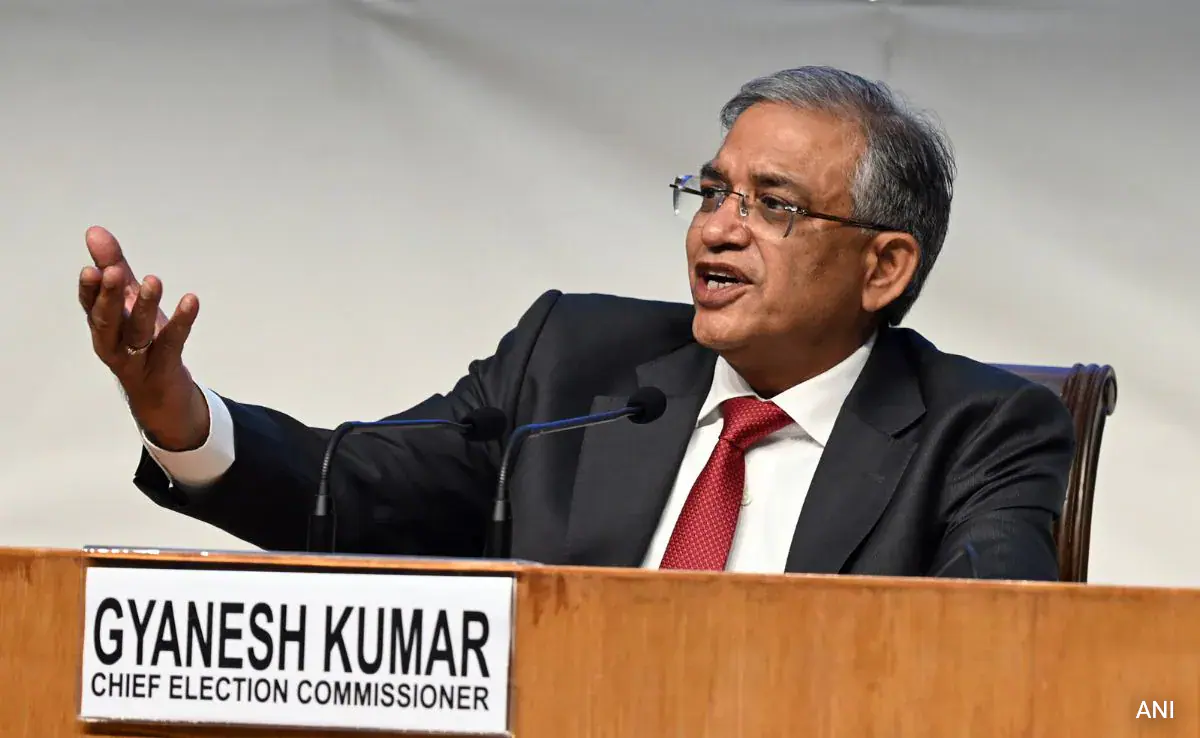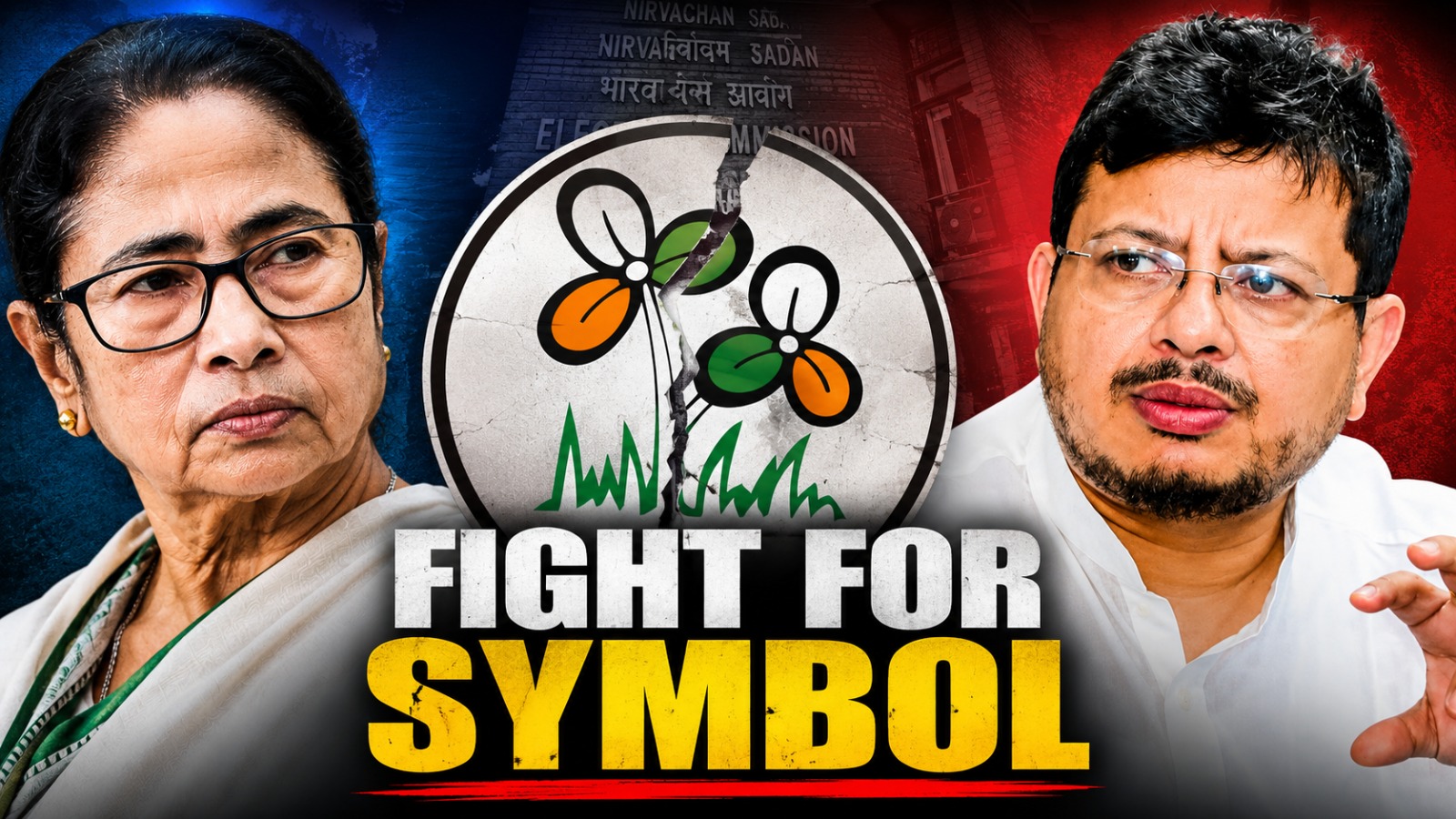
A 10-member delegation from the rebel faction of the Trinamool Congress (TMC), headed by West Bengal Leader of the Opposition Ritabrata Banerjee, is scheduled to meet the full bench of the Election Commission of India (ECI) on Thursday at Nirvachan Sadan in New Delhi. The group, which includes senior rebel MLAs such as former minister Snehasis Chakraborty, will present its case before Chief Election Commissioner Gyanesh Kumar and Election Commissioners Vivek Joshi and Sukhbir Singh Sandhu around noon. The rebels are seeking formal recognition as the legitimate All India Trinamool Congress and are laying claim to the party’s name, organisational structure, assets, and its iconic Jora Ghas Phul (twin-flower with grass) election symbol. They describe themselves as the “real” or “ashol” TMC.
The crisis erupted after TMC’s heavy defeat in the 2026 West Bengal Assembly elections, in which the party won only around 80 seats. Internal revolt broke out within weeks. On June 3, 2026, a large group of TMC MLAs - initially 58, later claimed by the faction to have risen to 64 - wrote to the Assembly Speaker nominating expelled MLA Ritabrata Banerjee as Leader of the Opposition. The Speaker accepted the claim, giving the rebels effective control of the party’s legislative wing in the state.
The rebels have since held parallel organisational meetings. In a special session on June 22, they announced the removal of Mamata Banerjee as party chairperson and installed veteran leader Arup Roy in her place. They formed a new National Working Committee and other structures, insisting they represent the authentic TMC founded by Mamata in 1998.
The split has not been limited to MLAs. Out of TMC’s 28 Lok Sabha MPs, 20 have also rebelled. Many of them have merged with the small Nationalist Citizens Party of India (NCPI) - a move they argue qualifies for protection under the anti-defection law as it involves more than two-thirds of the parliamentary party. This leaves only a small group, including Abhishek Banerjee and a few others, aligned with the official Mamata-led faction. The MP rebellion has taken a different trajectory from the MLAs, with some reports of proximity to NDA circles.
The twin-flower symbol (two flowers blooming on a single stem amid grass) was conceived by Mamata Banerjee herself. It has become synonymous with TMC’s identity, its grassroots appeal, and the slogan “Maa, Maati, Manush.” For voters across West Bengal, the symbol carries instant recognition and emotional resonance built over nearly three decades.
The rebels argue that because they command a clear majority in the legislature party (over 60 of the roughly 80 TMC MLAs) and significant organisational support on the ground, they have the stronger claim under the Election Commission’s guidelines for resolving intra-party disputes (Paragraph 15 of the Election Symbols Order).
The Mamata camp has strongly rejected the rebels’ locus standi, calling their approach to the EC “preposterous.” They maintain that only officially authorised signatories of the registered party can represent TMC before the Commission, and that the rebels were earlier expelled or sidelined through due process. Abhishek Banerjee has already approached the Lok Sabha Speaker seeking disqualification of the rebel MPs.
What This Means for Mamata Banerjee
Today’s scheduled meeting marks a significant escalation of the symbol battle to the highest level of the Election Commission. The outcome will have far-reaching consequences:
If the EC recognises the Ritabrata faction as the official TMC, the rebel group would retain the reserved twin-flower symbol for future elections. Mamata Banerjee’s remaining faction could be forced to contest on a free symbol - a severe disadvantage in a state where visual party identity and the leader’s personal brand are deeply intertwined with that specific symbol.
A ruling in favour of the Mamata camp would affirm her leadership’s control over the party’s official identity and assets, but it would not automatically resolve the ground reality of having lost the majority of sitting MLAs and control of the Opposition leadership in the Assembly.
The EC typically examines factors such as majority support in the legislature party, organisational structure, adherence to the party constitution, and other relevant tests. The rebels’ strong numerical position among MLAs gives them a potent argument, though the Mamata faction will counter with claims of organisational legitimacy and constitutional propriety.
Legal challenges in the courts are widely expected no matter which way the Commission leans, prolonging uncertainty. The splintering of the parliamentary party adds another layer of complexity: while rebel MLAs have chosen to stay in the Opposition and claim the original TMC mantle, the MPs’ merger with NCPI suggests the rebellion is not monolithic. This fragmentation weakens TMC’s overall bargaining power and cohesion at both state and national levels.
For Mamata Banerjee, the stakes are existential. The party has already suffered a historic electoral reversal. Losing control of its most recognisable electoral asset - the twin-flower symbol, would compound the damage, making recovery and reorganisation significantly harder. It could also accelerate further realignments in West Bengal’s political landscape, potentially benefiting the ruling BJP by dividing the main opposition space.