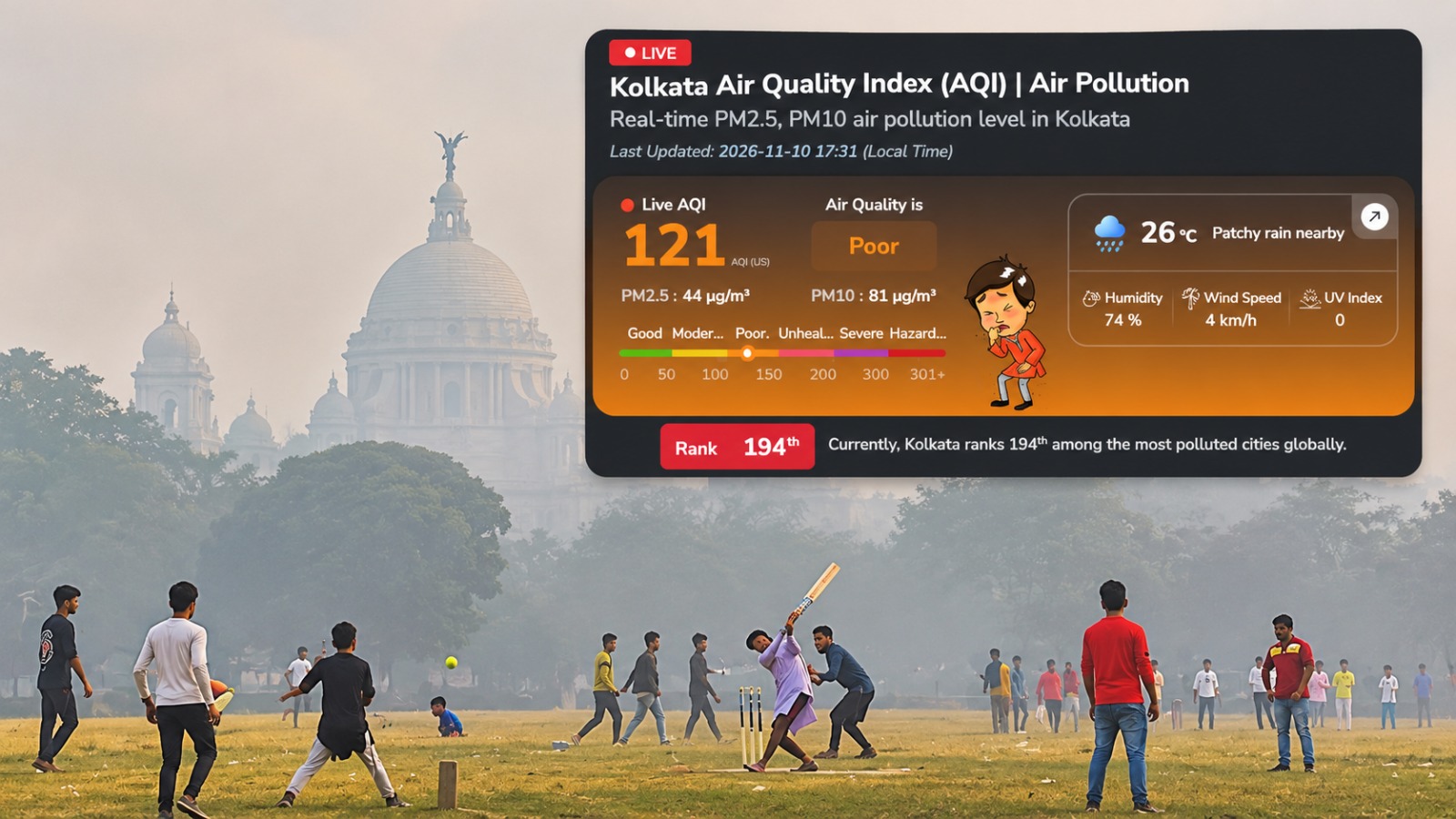
Kolkata witnessed a significant improvement in air quality on Tuesday after afternoon showers washed away some of the pollution that had accumulated following Diwali celebrations. The city's Air Quality Index (AQI), which had climbed to 332 in the morning, dropped sharply to 128 within an hour of rainfall, offering residents some relief from the polluted air.
According to data from AQI.in, Kolkata recorded its highest AQI reading of 332 at around 11 am on November 10. The reading placed the city in the 'very poor' category. However, after rainfall began around 2.30 pm, the AQI fell to 121, bringing air quality into the 'moderate' category.
The improvement came after several days of deteriorating air quality following widespread firecracker use during Kali Puja and Diwali celebrations.
Diwali celebrations trigger pollution spike
Kolkata's air quality had deteriorated considerably after the festivities. On Monday, the city's AQI reportedly touched 235, with pollution levels rising further overnight.
By Tuesday morning, the situation had worsened, with the AQI crossing the 300 mark. The resulting haze and poor air quality raised concerns, particularly among people with respiratory conditions.
Several residents reportedly complained of blocked noses, headaches and breathing difficulties, even without any pre-existing health conditions.
On November 10, Kolkata ranked fourth among eight major metropolitan cities in terms of air pollution, according to AQI.in. Delhi recorded the highest AQI at 205, followed by Chennai and Bengaluru.
More rainfall forecast over the next two days
The afternoon showers provided temporary relief by helping settle suspended particulate matter and wash pollutants out of the atmosphere.
The India Meteorological Department (IMD) has forecast further rainfall in and around Kolkata over the next two days. The showers could help improve air quality further by reducing the concentration of airborne pollutants.
However, the improvement may not necessarily be sustained if pollution levels rise again due to vehicular emissions, construction dust and other sources.
The sharp fall in AQI following Tuesday's rainfall has offered a brief respite to Kolkata residents after the post-Diwali pollution spike, although the city's air quality remains a concern as winter approaches.