
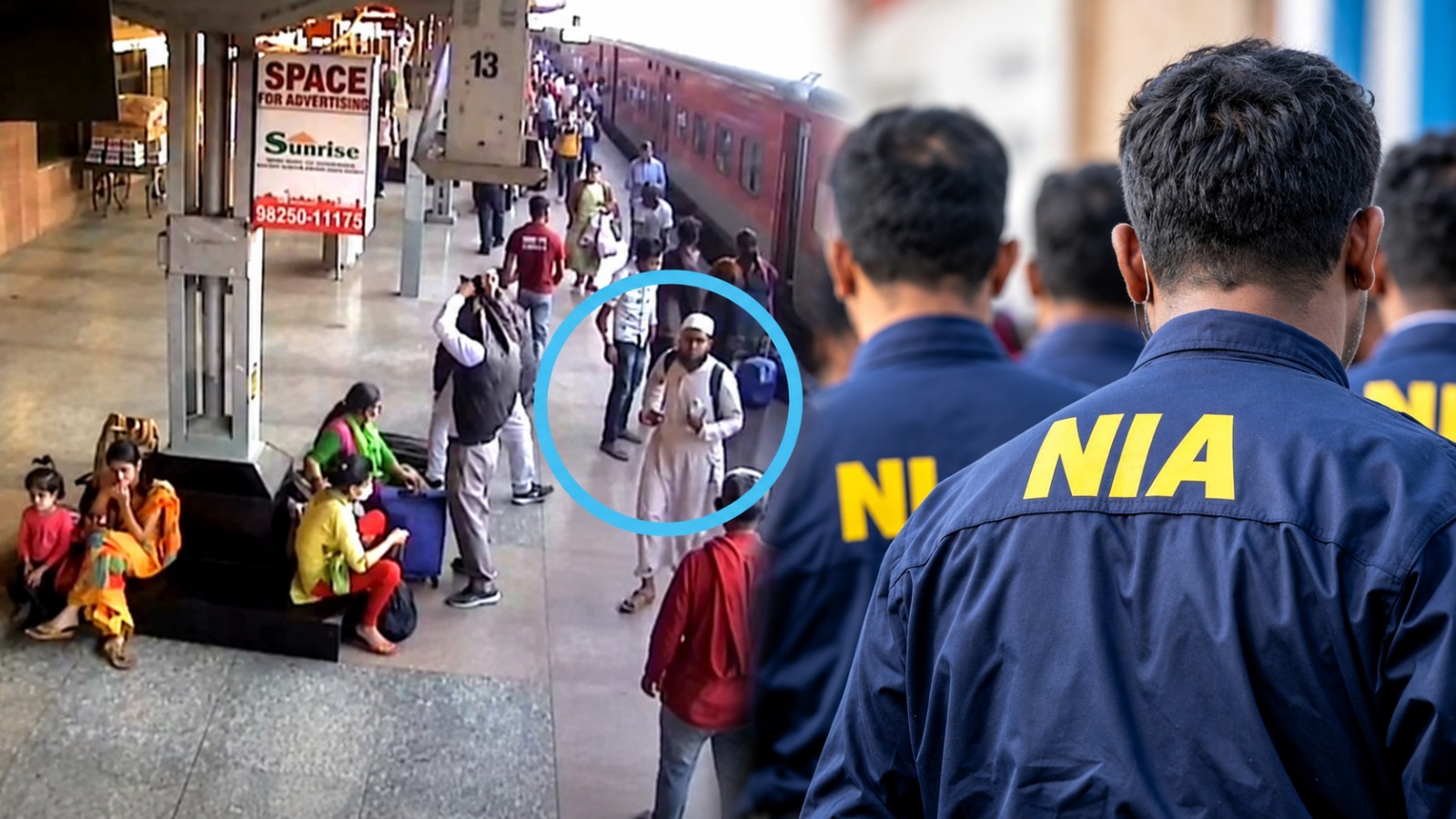
The National Investigation Agency (NIA) has launched a fresh probe into alleged sleeper cells and modules linked to Al-Qaeda in the Indian Subcontinent (AQIS) in West Bengal, revisiting a 2022 case registered by the state police Special Task Force (STF). The agency has registered two fresh FIRs as it investigates whether an alleged network built in the state by AQIS operative Ikramul Haque alias Abu Talha remains active and whether attempts are being made to revive it from Bangladesh. Haque has previously been identified by Indian and Bangladeshi investigators as a senior AQIS figure and has been wanted in multiple terrorism-related cases in India.
According to the NIA's allegations, AQIS used the Ansarullah Bangla Team network to recruit and expand its presence in India, with young people among its key targets. The first of the two cases names Haque along with four other accused, while the second reportedly names 19 people, including at least three Bangladeshi nationals. Investigators are now examining the extent to which the network allegedly established in Bengal and other parts of India remains operational.
Haque, a Bangladeshi national, is alleged to have operated in West Bengal and other parts of India between 2018 and 2022 as part of AQIS's recruitment and outreach activities. Investigators have previously alleged that he acquired Indian identity documents using the details of a couple from Dinhata in Cooch Behar, whom he allegedly presented as his parents. In 2022, after several suspected modules were uncovered, he reportedly left India for Bangladesh through an illegal route. He was subsequently arrested in Dhaka in 2023 following inputs shared by Indian agencies. A senior Kolkata STF officer had earlier described him as being instrumental in setting up sleeper cells in Bengal and around Kolkata.
The trail of alleged modules emerged through a series of arrests. Investigators had earlier arrested Amiruddin Ansari alias Huzur, a resident of Purulia, from a madrasa in Domjur's Bankra area. His alleged links subsequently led investigators to a sleeper cell in Diamond Harbour, where Siddiqui Ali and Mainuddin Tarafdar were arrested, while another accused, Jabaruddin Ali, was later arrested in Mumbai. A separate module was also traced to Shasan and Panchannagram, involving Abdul Rakib Sarkar alias Habibullah and Qazi Ahsan Ullah alias Hasan. Investigators have alleged that the accused were connected to a wider network associated with Haque.
The NIA is now examining whether any of these alleged networks remain active and whether they could be used to rebuild AQIS's presence in West Bengal. The agency is also seeking to establish the extent of Haque's alleged role and the links among the accused named in the fresh cases. The investigation comes amid renewed concerns among security agencies over the possibility of terrorist groups operating through small, decentralised cells that are harder to detect.
The broader regional security picture has also raised concerns. A recent UN Security Council monitoring report said AQIS had evolved into a more decentralised regional terrorist organisation, relying on small, scattered cells and developing logistical and financial networks. The report also warned of concerns that AQIS could seek to exploit Bangladesh to establish cells there. It further officially attributed the November 2025 Red Fort attack in Delhi to AQIS.
Against this backdrop, the NIA's renewed investigation is focused on identifying the alleged AQIS network in Bengal and determining whether dormant modules have retained the capacity to become active again. Investigators are also examining the current whereabouts and activities of Haque, who was arrested in Bangladesh in 2023 and later released on bail. Recent reports have raised questions over his whereabouts since his release, while Indian agencies continue to treat him as a key accused in terrorism-related cases.