The Supreme Court on Friday declined to suspend the bail granted to Sonam Raghuvanshi, the woman accused of murdering her husband, Raja Raghuvanshi, during their honeymoon in Meghalaya last year. The decision came while hearing a plea filed by the Meghalaya government challenging the order of the Meghalaya High Court, which had upheld a trial court's decision to release Sonam on bail.
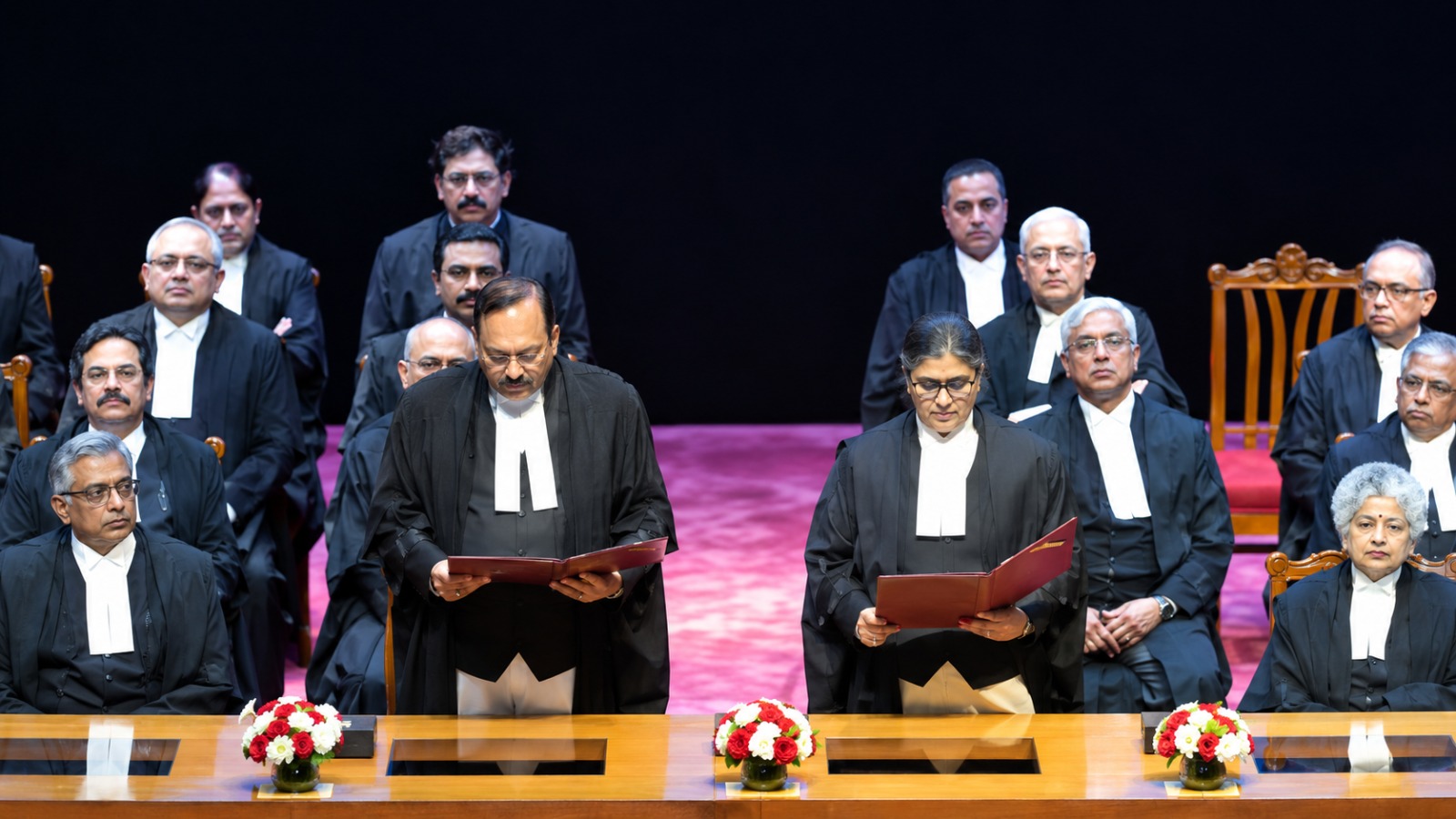
A Bench comprising Justices MM Sundresh and Sheel Nagu, while expressing concerns over the High Court's reasoning, refused to interfere immediately, noting that Sonam had already been released from custody. The Bench observed that it would monitor the progress of the trial before taking a further view and issued a notice to Sonam in the matter.
Appearing for the Meghalaya government, Solicitor General Tushar Mehta argued that the allegations against Sonam were grave and that bail should not have been granted on what he described as technical grounds. During the proceedings, Mehta also referred to the recent Pune fort murder case, in which Ketan Agarwal was allegedly killed by his fiancée, Siya Goyal, and her alleged lover, Chetan Chaudhary, to underline the seriousness of such offences.
Sonam Raghuvanshi, a resident of Indore, was arrested in June last year in connection with the alleged murder of her husband, Raja Raghuvanshi. The couple had married on 11 May and travelled to Sohra in Meghalaya for their honeymoon on 20 May. They went missing three days later, and Raja's body was recovered on 2 June. Sonam was arrested from Ghazipur in Uttar Pradesh on 9 June, while her alleged lover, Raj Singh Kushwaha, was also subsequently taken into custody.
After spending around ten months in judicial custody at Shillong District Jail, Sonam was granted bail by a trial court on 27 April. The trial court held that the investigating agency had failed to properly communicate the grounds of her arrest. It noted that key arrest documents, including the arrest memo, inspection memo, justification checklist and extracts from the case diary, incorrectly cited Section 403(1) of the Bharatiya Nyaya Sanhita instead of Section 103(1), which relates to the offence of murder.
According to the court, the repeated reference to the wrong legal provision could not be dismissed as a simple clerical error. It observed that none of the documents clearly informed Sonam that she was being arrested on charges of murder, nor did they adequately explain the factual basis of the allegations against her.
The Meghalaya government challenged the trial court's order before the High Court, contending that the incorrect section mentioned in the documents was merely a typographical mistake and had not prejudiced the accused.
The High Court, however, rejected the appeal, questioning how the same error had appeared across several official records. In its order, Justice W Diengdoh noted that parts of the arrest documents appeared to have been copied from standard templates, including an irrelevant reference describing the accused as a deserter from the armed forces.
The court observed, "It is evident that such preparation was made without any application of mind... and nowhere is found any specific allegation or information as to what are the actual charges against her." It further remarked, "If this is the manner in which the intimation of the grounds of arrest is made, the same reflects a total non-application of judicious mind on the part of the arresting agency."
Following the High Court's decision, the Meghalaya government approached the Supreme Court. The matter is now scheduled to be heard again on 9 July.