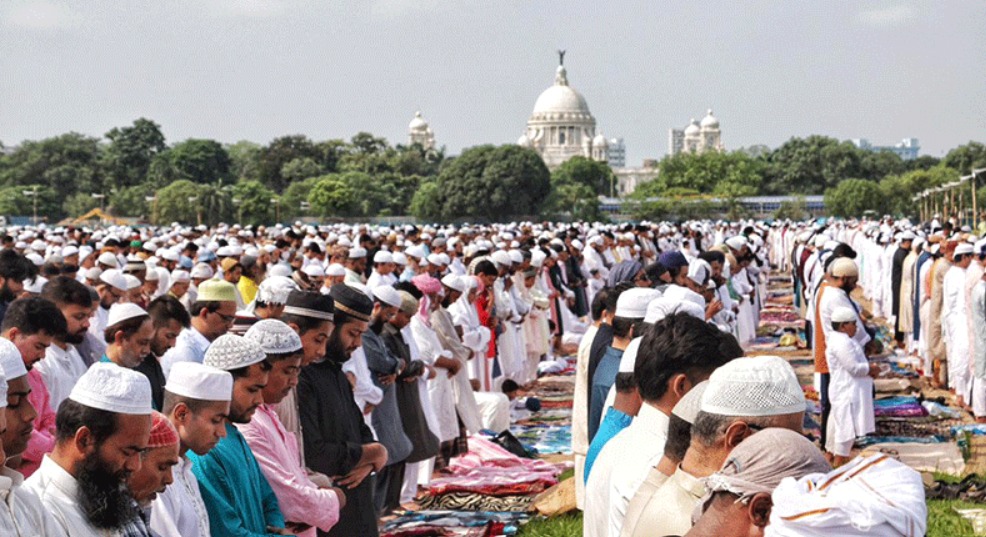
Kolkata witnessed a major change in its Eid al-Adha traditions on Thursday as congregational Bakrid prayers were held at Brigade Parade Ground instead of the customary Red Road venue, marking a significant shift in a practice that had continued for decades. The move comes amid a broader policy shift under the new BJP-led state government, which has stated that religious gatherings on public roads causing inconvenience to commuters would no longer be permitted.
For the first time in years, the city’s largest Eid congregation was not organised on Red Road, where prayers had traditionally been conducted twice annually, during Eid-ul-Fitr and Eid al-Adha, under successive governments, including the Left Front regime (1977–2011) and the Trinamool Congress administration (2011–2026).
Soon after assuming office as Chief Minister, Suvendu Adhikari announced that roads would not be used for religious congregations if they disrupted public movement and triggered traffic congestion. The impact of that decision became visible on Thursday, with the traditional Red Road prayers shifted to Brigade Parade Ground. Notably, Bakrid prayers this year were not conducted on open roads anywhere in Kolkata.
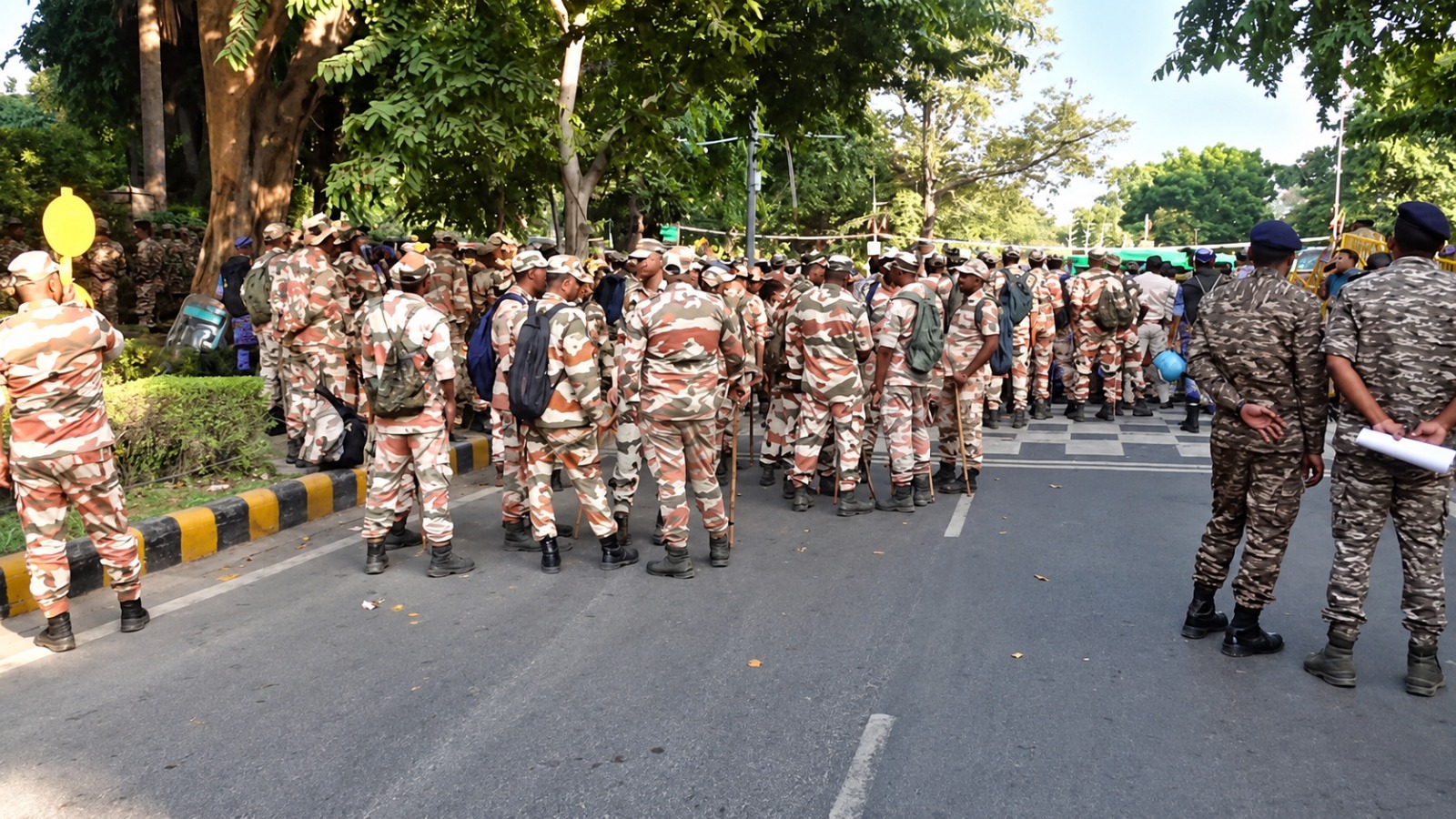
Kolkata Police made elaborate security arrangements across the city to maintain law and order during the festival. Heavy deployment was visible at Brigade Parade Ground and surrounding areas, while additional police personnel were stationed near major mosques and sensitive locations. Authorities also deployed drones for aerial surveillance, closely monitoring crowds and movement to ensure peaceful celebrations.
Red Road, one of Kolkata’s most prominent arterial stretches connecting Raj Bhavan, the High Court, the Assembly and Esplanade, had for years served as the city’s principal venue for Eid prayers.
The road, flanked by the Eastern Command headquarters of the Indian Army and several historic football clubs, had evolved into an important symbolic space for Bengal’s politics as well. During the Trinamool Congress era, former Chief Minister Mamata Banerjee regularly attended Eid gatherings on Red Road.
The transition away from Red Road, however, had begun taking shape last year. The Eastern Command of the Indian Army, which exercises administrative control over the area, reportedly raised security concerns and advised organisers, including the Khilafat Committee, to identify an alternative venue for Eid prayers. At the time, Mamata Banerjee had indicated that she would attempt discussions with military authorities to retain permission for Red Road. However, the change in government following the Assembly elections altered the course of the matter, eventually resulting in Bakrid prayers being shifted to Brigade Parade Ground this year.
The changes around Bakrid this year were not limited to prayer venues. Ahead of the festival, cattle markets in parts of north Kolkata reportedly remained subdued, with several traders struggling to attract buyers. The slowdown followed stricter government regulations issued in a notification dated 13 May, which clarified that bulls, oxen, cows, calves and buffaloes could not be slaughtered without proper certification. The government directed that animal sacrifice could only take place at authorised slaughterhouses and not in public spaces, while empowering enforcement agencies to inspect areas to prevent illegal slaughter. The move significantly reduced instances of public animal sacrifice in many localities.
Religious institutions also expressed support for some of the restrictions. The management of Kolkata’s historic Nakhoda Mosque endorsed the state government’s stance against public slaughter, stressing that religious observance should not inconvenience or discomfort members of other communities. Mosque authorities noted that since people of different faiths live side by side in urban neighbourhoods, public slaughter should be avoided.