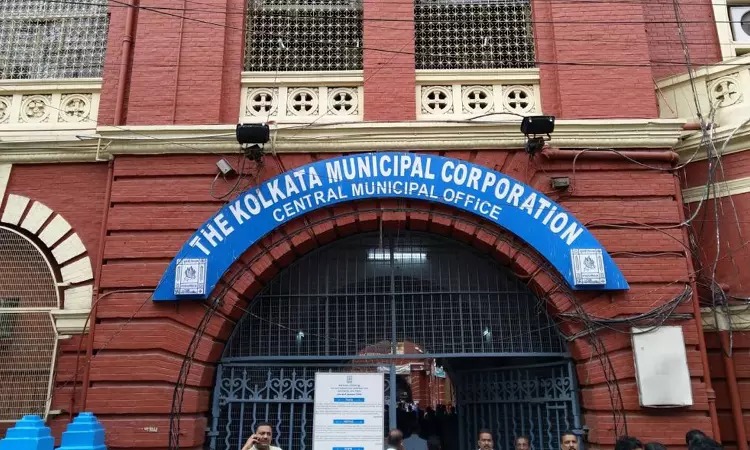
The proposed Kolkata Municipal Corporation (KMC) elections have been put on hold after the Calcutta High Court on Friday restrained the West Bengal State Election Commission from proceeding with the polls until a pending legal challenge to the ward delimitation exercise is decided.
A Division Bench comprising Justice Sabyasachi Bhattacharyya and Justice Arjun Roy Mukherjee passed the interim order, modifying an earlier order by a single-judge Bench that had declined to grant interim relief to the petitioners.
The court directed the State Election Commission not to call the KMC elections on the basis of the revised ward boundaries until the single judge delivers a final decision on the legality of the delimitation exercise. The dispute stems from the West Bengal government's decision to increase the number of Kolkata's municipal wards from 144 to 209 ahead of the forthcoming civic elections.
The challenge was mounted against a state government notification issued on September 11, which proposed expanding the number of KMC wards. The petitioners have questioned the legality of the exercise, arguing that the government proceeded without obtaining a valid recommendation from the elected municipal corporation. They contended that the elected KMC council had ceased to function and that its former chairperson, Smita Pandey, had subsequently been appointed as the corporation's Administrator.
Senior advocate Bikash Ranjan Bhattacharya, appearing for the petitioners, argued that an Administrator could not exercise the powers of an elected corporation, particularly when it came to making recommendations for delimitation. The petitioners also alleged that the redrawing of ward boundaries amounted to gerrymandering, claiming that the exercise could give an electoral advantage to a particular political party.
Opposing the challenge, West Bengal Advocate General Surajit Nath Mitra argued that the state government was empowered to undertake the delimitation exercise even without a recommendation from an elected municipal corporation. The state maintained that the Administrator had been vested with the powers of the corporation and could therefore exercise the relevant functions in its absence.
The government also questioned the timing of the petition, pointing out that the delimitation notification had been issued in September and that the petitioners had approached the court at a late stage.
During an earlier hearing on November 4, the Bench had raised questions about the state government's position on the Administrator's powers. The court had observed that allowing an Administrator appointed by the state government to exercise the powers of the corporation could create a situation where the state was effectively issuing instructions to itself. The Bench had remarked, "The State Government is giving an instruction to itself."
The court had also examined the provisions of the Kolkata Municipal Corporation Act, particularly the requirement for the state government to act on the recommendation of the corporation.