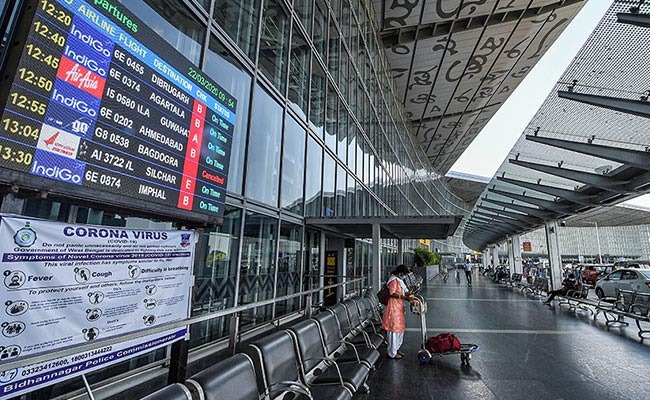
Kolkata’s Netaji Subhas Chandra Bose International Airport is planning to put an unused basement-level pathway into service in an effort to ease persistent congestion outside the terminal’s arrival area. Under the proposed plan, passengers booking app-based cabs would be directed to the basement, where they could board their vehicles away from the increasingly crowded lanes in front of the terminal.
Airport director Vikram Singh told Telegraph the proposal involves installing three large lifts to connect the arrival level with the basement pathway. The new facility would allow app-based cab operators, including those using the YatriSathi platform, to pick up passengers underground. The proposal has been sent to the Airports Authority of India (AAI) headquarters in Delhi for approval.
Once implemented, the arrangement is expected to significantly reduce traffic pressure in the lanes immediately outside the arrival area. App cabs would enter the basement through designated access points, park in an allocated section and pick up passengers before exiting through the underground route. Airport authorities are also considering restricting the lanes in front of the terminal primarily to private vehicles.
The move could also address another long-standing problem — unauthorised parking and touting around the arrival area. Yellow taxis and vehicles associated with touts are often parked along the outer lanes, while commercial vehicles sometimes use lanes designated for private cars. The resulting bottlenecks become particularly severe during morning and evening peak hours, when large numbers of passengers and vehicles converge outside the terminal.
The proposed lifts are expected to be considerably larger than the existing ones in the terminal. Officials said they would be modelled on the lifts at Delhi airport and could accommodate around 20 people along with luggage trolleys at a time. One lift is planned near gates 1A and 1B, another in the central section of the terminal for domestic passengers, and a third in the international section.
The basement pathway, which currently sees limited use by service vehicles, is already connected to entry and exit points at ground level. Officials said barricades blocking these access points would be removed if the proposal gets the necessary clearance. The intervention comes after years of complaints about congestion outside the terminal, a problem that has persisted since the present terminal became operational in 2013. Frequent flyers say passengers can sometimes be forced to wait several minutes — and in some cases more than half an hour — before they can finally get into their waiting vehicles.