
India on Friday said it is closely monitoring developments surrounding the proposed Teesta River Comprehensive Management and Restoration Project (TRCMRP) and will take all related factors into account while shaping its future approach to the Teesta river issue, as Bangladesh and China deepen cooperation on the strategically significant project.
Addressing the weekly media briefing, Ministry of External Affairs (MEA) spokesperson Randhir Jaiswal said India's development partnership with Bangladesh continues to be guided by a mutually agreed roadmap, while reiterating that New Delhi has already communicated its position on the Teesta project to Dhaka.
"India's development assistance for projects in Bangladesh is based on a mutually agreed roadmap which is regularly reviewed. Our views on the Teesta river project have been previously conveyed to the Bangladeshi side. We will factor all related developments in our overall approach to the Teesta issue," Jaiswal said.
The statement comes amid growing engagement between Bangladesh and China on the TRCMRP following Bangladesh Prime Minister Tarique Rahman's recent visit to Beijing. The project has attracted attention because of its potential strategic and geopolitical implications for the region.
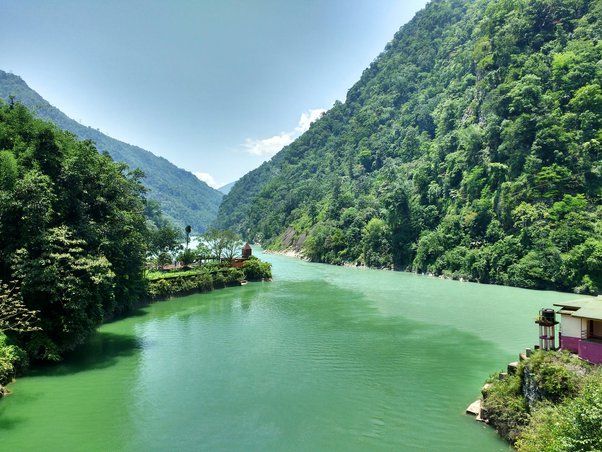
The Teesta river originates in the eastern Himalayas, flows through Sikkim and West Bengal, and enters Bangladesh, where it serves as a vital water source for agriculture and millions of people. The river basin also lies close to India's strategically sensitive Siliguri Corridor, often referred to as the "Chicken's Neck," which connects mainland India with its northeastern states.
Responding to questions on Bangladesh's reported plans to modernise Mongla Port with Chinese assistance and procure fighter aircraft from Beijing, Jaiswal said New Delhi remains alert to all such developments.
"We pay attention to all these issues and take whatever appropriate steps we deem necessary," he said.
Last month, Bangladesh Foreign Minister Khalilur Rahman said bilateral ties between Dhaka and Beijing had reached their "highest level" following Rahman's visit to China. He stated that both countries had made "significant progress" on the Teesta project, with China agreeing to support the initiative and expedite its feasibility study.
Rahman also said the two sides had agreed to fast-track work on the Mongla Port Modernisation and Expansion Project and the Chinese Economic and Industrial Zone Development Project in Chattogram.
Consular Services in Australia, Kuwait and UAE
On a separate issue, the MEA said Indian missions in Australia, Kuwait and the United Arab Emirates continue to provide limited consular services despite the temporary suspension of operations by outsourcing agencies.
"Our missions in concerned countries, that is in Australia, Kuwait and the UAE, continue to offer limited consular services," Jaiswal said.
He added that the outsourcing arrangements remain on hold as the matter is currently before the court.
"The operations of outsourcing agencies supporting consular services in these countries have been kept on hold as the matter is presently sub judice. We await directions from the honourable High Court," he said.
India on UNESCO's Concerns Over Taxila
Asked about reports that UNESCO had raised concerns over reconstruction work at Pakistan's Taxila World Heritage Site, Jaiswal stressed that safeguarding cultural heritage is a shared global responsibility.
"Cultural heritage, especially those recognised by UNESCO, don't belong to any one person or country. It belongs to the entire world. And as such, it's our responsibility to protect and preserve our heritage and move forward," he said.
According to Pakistani media reports, UNESCO has warned that Taxila could face removal from the World Heritage List if reconstruction work deemed harmful to the site's historical integrity is not reversed.
Taxila, located in Pakistan's Punjab province, is one of South Asia's most significant archaeological sites, comprising ancient settlements, Buddhist monasteries, a Mesolithic cave, and other historically important structures.