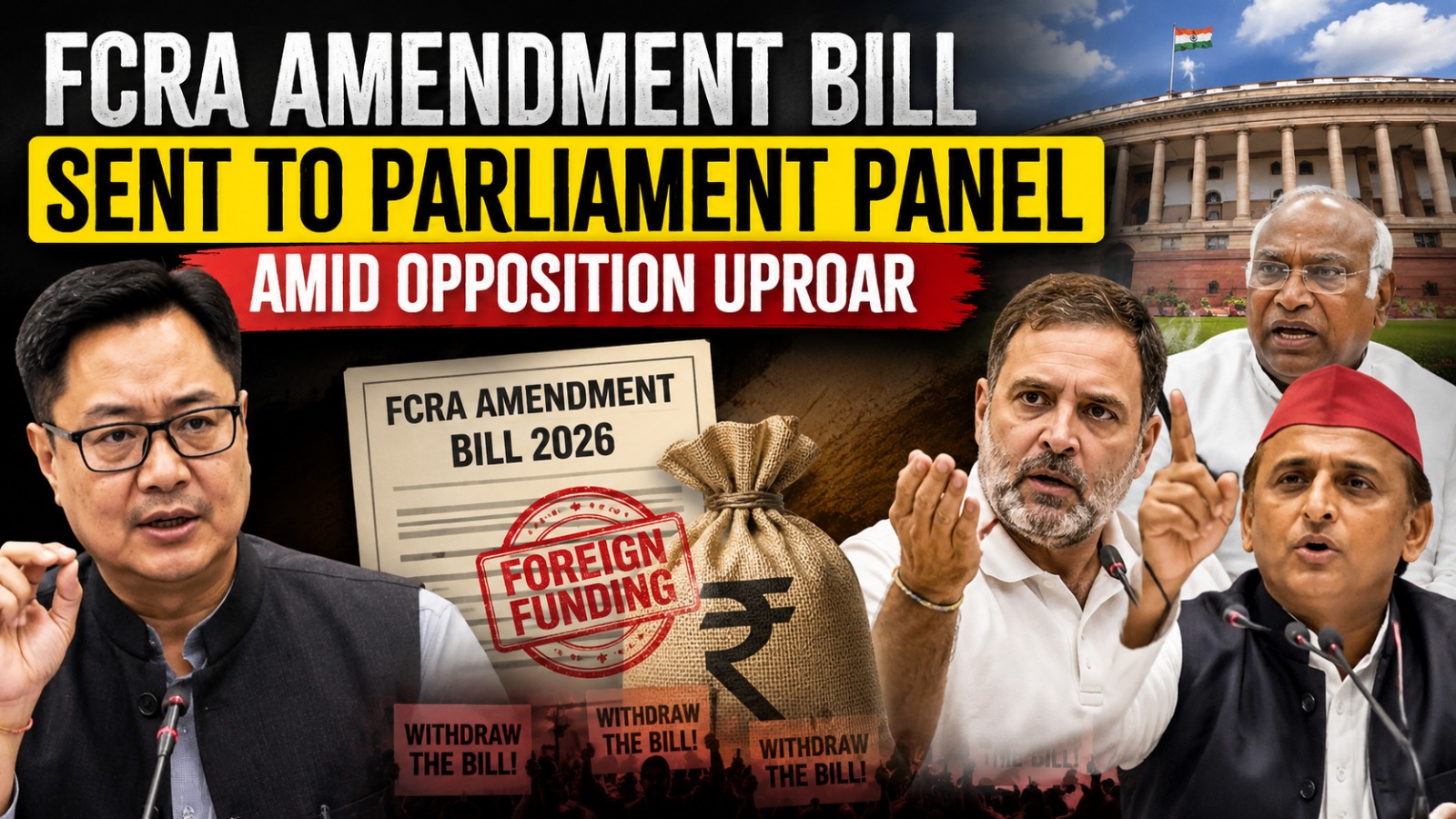
The Centre on Wednesday moved to send the controversial Foreign Contribution (Regulation) Amendment Bill, 2026, to a Joint Parliamentary Committee (JPC) for detailed scrutiny, amid strong protests from Opposition parties in the Lok Sabha.
Union Minister of State for Home Affairs Nityanand Rai moved the resolution seeking referral of the Bill to the committee. The proposed JPC will have 31 members — 21 from the Lok Sabha and 10 from the Rajya Sabha.
The move came as Opposition MPs objected strongly to the legislation, with several parties demanding that it be withdrawn altogether. The Opposition has alleged that the proposed changes could adversely affect NGOs and minority institutions, a charge the government has rejected.
Congress leader KC Venugopal described the proposed legislation as being against NGOs and minority institutions. “The bill is against NGOs and minority institutions who are doing good work,” the Congress leader said.
Samajwadi Party chief Akhilesh Yadav also opposed the legislation and called for its withdrawal. “The entire Opposition is against the bill and it must be withdrawn,” he said.
The government, however, defended the Bill and argued that sending it to a JPC would give Opposition members an opportunity to raise their concerns and examine its provisions.
Parliamentary Affairs Minister Kiren Rijiju rejected the allegation that the proposed amendments were anti-minority and challenged the Opposition to identify any provision that specifically discriminates against minorities. “Show me one provision in the bill which is against the minorities of the country,” he asked.
At the heart of the legislation is a proposal to establish a Designated Authority with powers to take over the management of foreign-funded assets when an organisation's FCRA registration is cancelled, surrendered or expires because it is not renewed.
The Union Home Ministry has said the proposed framework is intended to provide a clearer system for the vesting, supervision, management and disposal of foreign contributions and assets. The Bill also proposes changes relating to penalties and investigative procedures.
The government has further clarified that the proposed authority would deal only with assets created through foreign contributions and only after an organisation's registration has lawfully ceased. In the case of places of worship, the Bill provides that their religious character must be preserved.
The Opposition's objections, however, have kept the legislation at the centre of a fresh political confrontation in Parliament. The absence of Home Minister Amit Shah during the proceedings also became an issue, with Opposition MPs questioning why the resolution had been listed in his name earlier in the Lok Sabha's supplementary list of business.
The referral to the JPC now shifts the next phase of the debate from the floor of the House to a parliamentary scrutiny process. The committee is expected to examine the provisions and the concerns raised by various stakeholders before the legislation proceeds further.
The government has maintained that the proposed amendments are aimed at strengthening oversight and accountability in the handling of foreign contributions, while Opposition parties continue to argue that the changes could give the authorities excessive powers over organisations receiving overseas funds.