
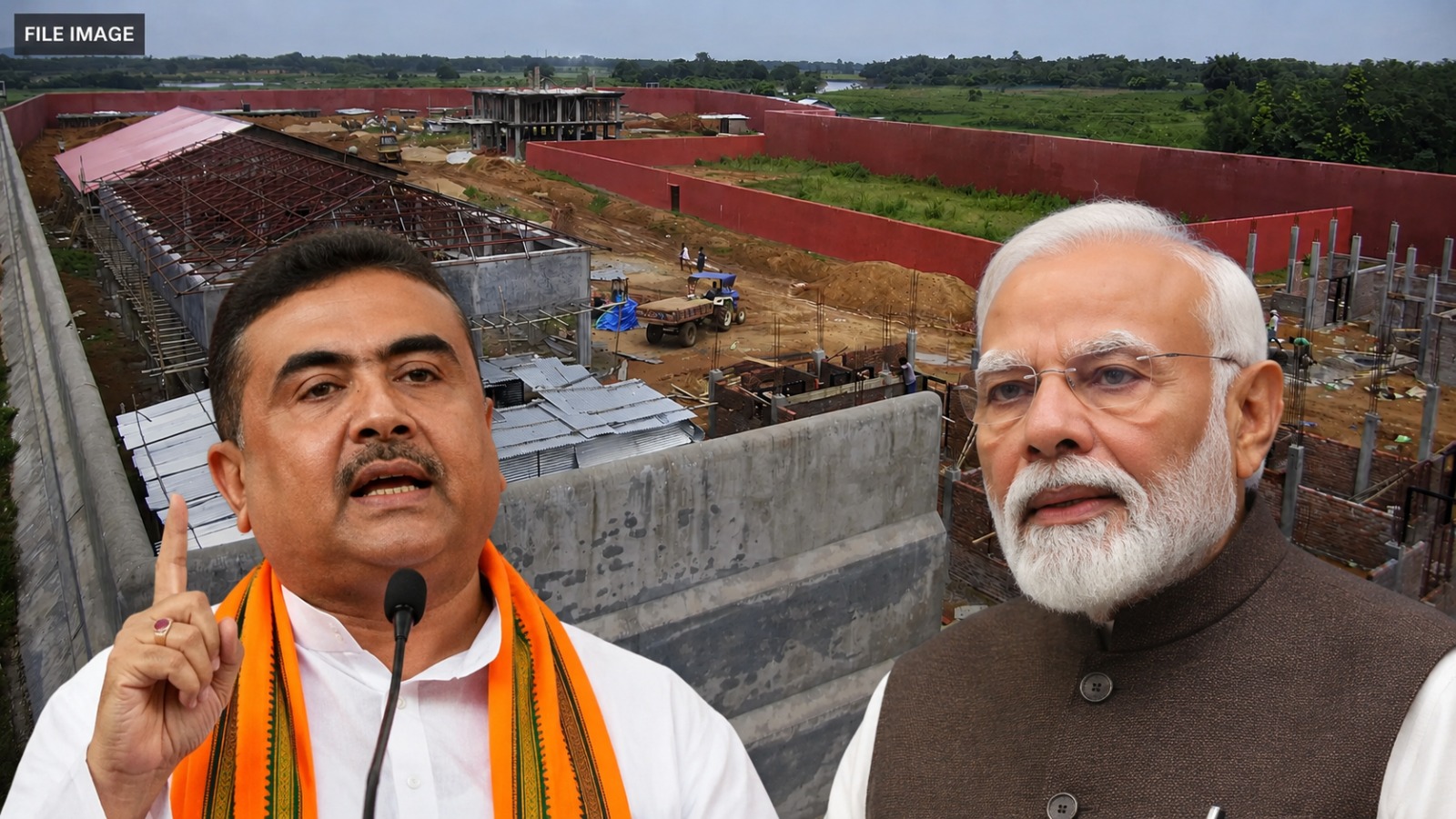
The newly elected BJP government in West Bengal has directed all districts to establish “holding centres” for detained foreign nationals, especially Bangladeshis and Rohingyas, and released foreign prisoners awaiting deportation, marking one of the clearest administrative steps yet in the state’s crackdown on alleged illegal immigration.
The order, issued by the state’s Home and Hill Affairs Department on May 23, instructs district authorities to create facilities for “apprehended foreigners” as well as foreign nationals who have completed prison terms but are yet to be repatriated or deported. The move comes days after Chief Minister Suvendu Adhikari publicly announced a “detect, delete and deport” policy targeting undocumented migrants, particularly Bangladeshis and Rohingyas allegedly staying illegally in the state.
According to reports, the directive has been sent to district magistrates, police superintendents, the state police chief, Kolkata Police Commissioner and the Foreigners Regional Registration Office (FRRO) in Kolkata. Authorities have been asked to establish the centres in accordance with Ministry of Home Affairs (MHA) guidelines issued in May 2025.
The MHA guidelines reportedly mandate every state and Union Territory administration to set up district-level holding facilities for illegal immigrants from Bangladesh and Myanmar. These facilities are intended to house two categories of detainees: those apprehended while allegedly residing illegally in India, and foreign nationals released from jail who are awaiting deportation or repatriation procedures.
Bengal govt. pushes for ‘Detention Camp’-style Holding Centres
The Bengal government’s order is politically significant because it operationalises a campaign promise that featured prominently in the BJP’s West Bengal election strategy. During the Assembly election campaign, BJP leaders repeatedly accused the previous Trinamool Congress administration of being soft on illegal immigration and promised tougher enforcement measures along the Bangladesh border.
Soon after taking office, the government announced that land would be allocated to the Border Security Force (BSF) to speed up fencing work along the India-Bangladesh border. Officials have also claimed that district police units, especially in border districts, have been placed on alert to identify undocumented migrants.
Speaking earlier this week, Chief Minister Adhikari stated that individuals protected under the Citizenship Amendment Act (CAA) would remain safe in the state, while those deemed illegal infiltrators and not covered by the law would be arrested and handed over to the BSF for deportation.
The administration’s approach appears closely aligned with the BJP’s broader national rhetoric around infiltration and border security. Bengal now becomes the second BJP-ruled state after Assam to formally move toward establishing district-level detention or holding facilities linked to deportation processes. Assam operationalised its first such ‘transit camp’ in 2023, which was initially known as ‘detention centres’.
Officials quoted in reports said suspected foreign nationals may initially be detained for investigation periods extending up to 30 days while authorities verify citizenship claims and documentation. If identified as illegal immigrants, their biometric information — including fingerprints and facial photographs — would reportedly be uploaded to the MHA’s Foreigners Identification Portal before deportation procedures begin.
The issue remains politically contentious in Bengal and beyond. Critics have frequently argued that anti-infiltration drives risk wrongful detention of Bengali-speaking Indian citizens, especially migrant workers. Past incidents in other states have sparked controversy after Indian citizens were allegedly mistaken for Bangladeshi nationals during verification drives.
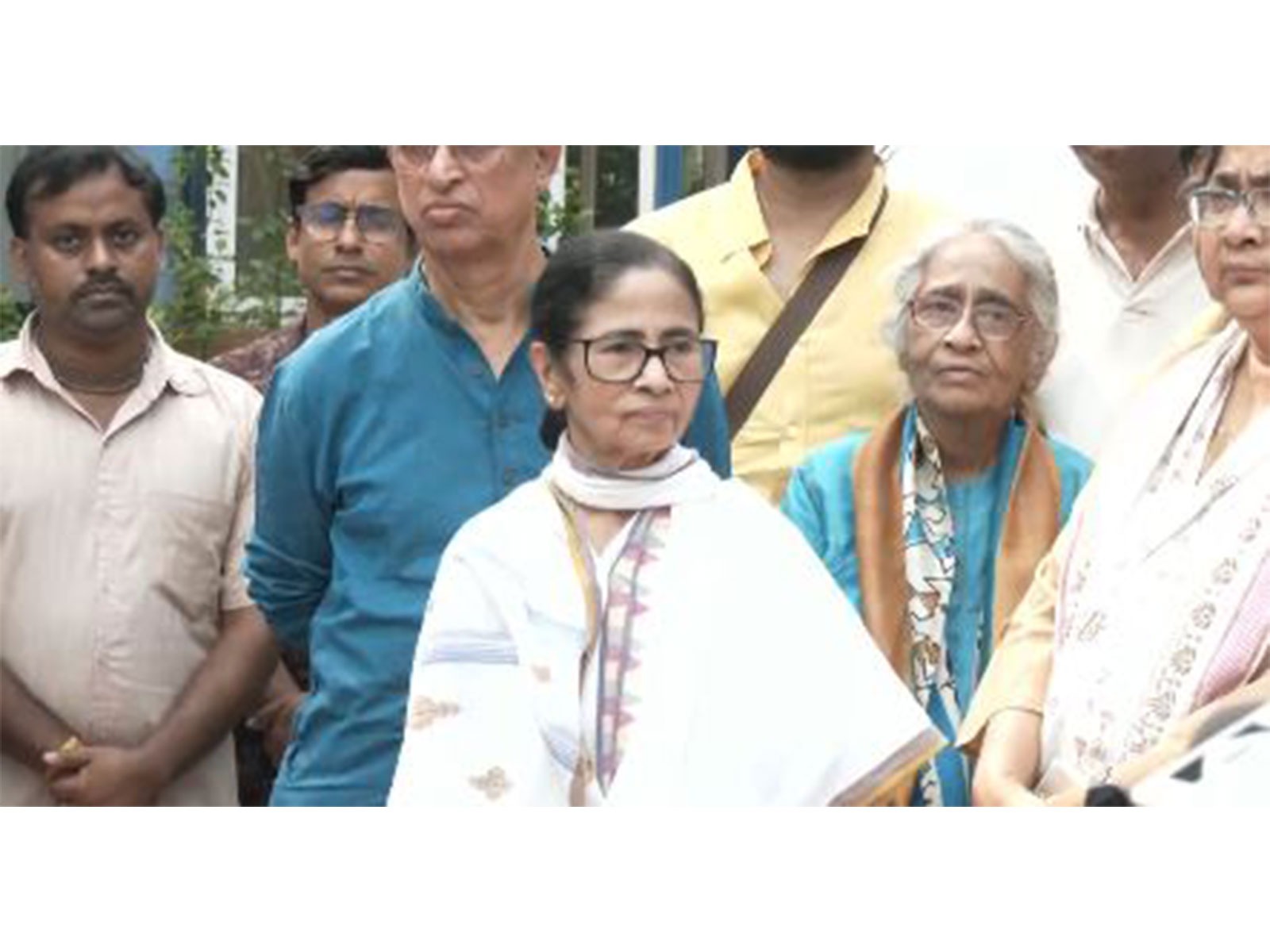
The Opposition in Bengal, Trinamool Congress has reiterated its long-standing criticism against ‘holding centres’ calling the implementation of such move in Bengal “purely politically-motivated.” TMC spokesperson and MLA from Beleghata Kunal Ghosh argued that “it is quite possible that the decision is to eliminate political opposition. Secondly, due to administrative haste, the process may not be completely transparent. BSF is responsible for border security then how are illegal immigrants supposed to reach to the interiors of the state? According to law, once intercepted, such immigrants must be produced before the court then transferred across border on special vehicles…this holding or detention centre is just to create panic among people.”
On the other hand, senior CPIM leader and member of the central committee, Sujan Chakraborty, also highlighted that the aim of Bengal BJP is construct ‘detention camps’ like those in Assam. “Bengal BJP government is following Assam-model detention camps. This will be a cause of concern for all kind of people. If required and it hinders life of people of Bengal then they must demolish such camps,” the senior Left leader said.
Online debates and political discussions have also focused on the division of responsibilities between the Centre and states. While border security and the BSF fall under the Union government, policing, land allocation, local verification and law-and-order responsibilities remain under state jurisdiction.
The state government, however, has framed the new holding centres as part of a procedural and legal framework linked to central guidelines rather than a new standalone policy. The Home Department’s communication specifically references MHA instructions concerning “Bangladeshi/Rohingyas apprehended for staying illegally in this country.”
‘Holding Centres’
Just to mention, the order to build detention camps is not new. It was first issued by Late Atal Vihari Vajpayee-government in 1995. Following which, all centre-ruled states were issued direction to construct detention or holding centres. In 2019, the Narendra Modi government too issued a notice to build detention camps based on a model.
The developments also come amid a wider national push by BJP governments and the Union Home Ministry to tighten surveillance and verification systems concerning undocumented migration. In recent days, police in parts of West Bengal have reported arrests of suspected Bangladeshi nationals allegedly possessing forged Indian identity documents.
At the same time, the humanitarian and legal complexities surrounding Rohingya migrants continue to shape the debate. Academic and policy discussions on Rohingya displacement have repeatedly highlighted the tension between national security concerns and refugee rights across South Asia.
With the “holding centre” order now formally issued, the Bengal government’s deportation framework appears set to move from political slogan to administrative implementation — a transition likely to intensify both support and scrutiny in the weeks ahead.