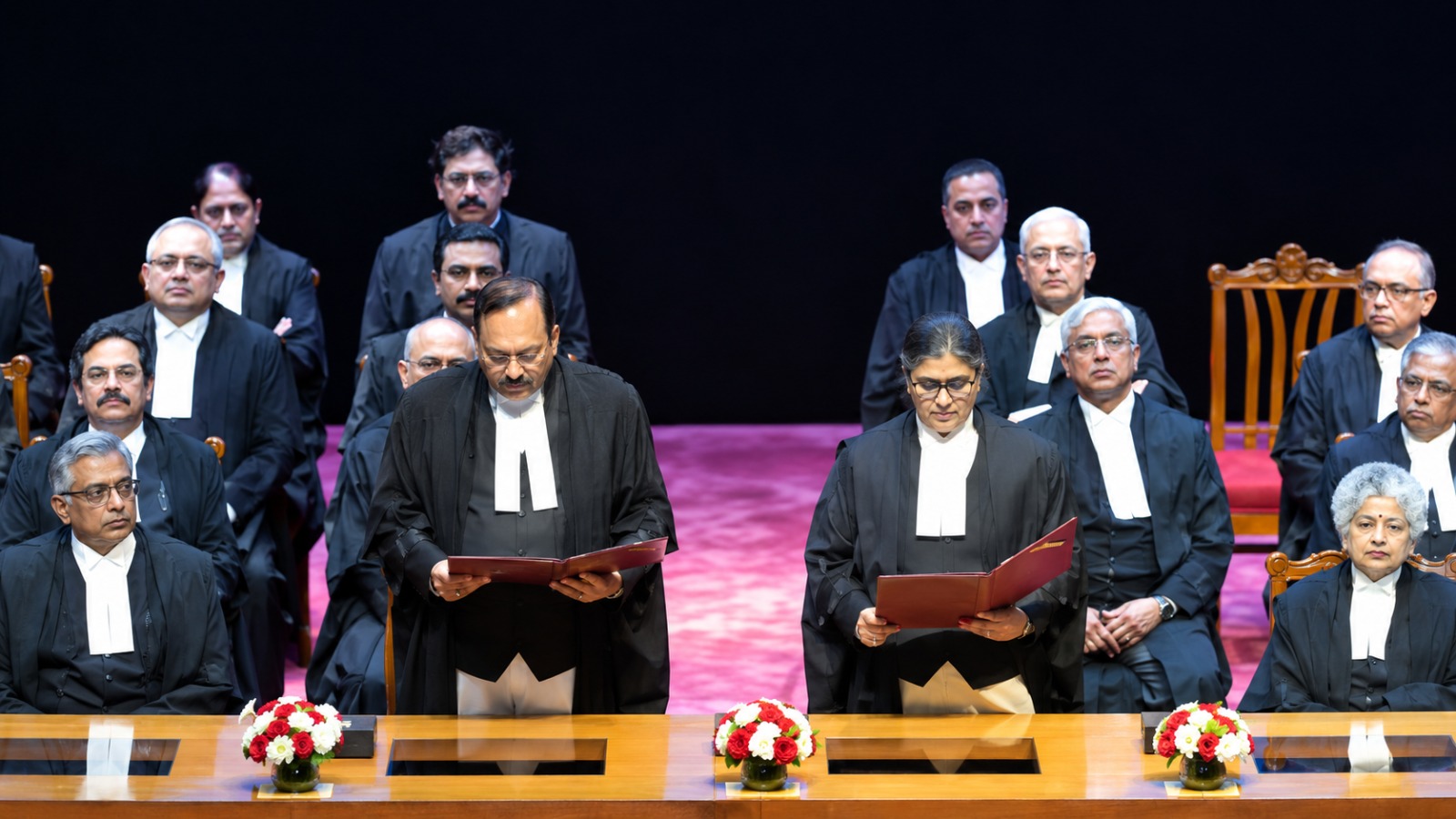


The Calcutta High Court has imposed an interim stay on the West Bengal government’s decision to re-verify caste certificates issued since 2011, temporarily halting the process covering Scheduled Caste (SC), Scheduled Tribe (ST) and Other Backward Class (OBC) certificates.
The order was passed by a Division Bench headed by Acting Chief Justice Tapobrata Chakraborty. The court has directed that no action be taken on the basis of the state government's May 14 notification for the time being.
State Had Ordered Fresh Verification
The state government had issued the notification on May 14, announcing that caste certificates issued between 2011 and 2024 would be subjected to fresh scrutiny.
Under the order, certificates found to be “fake” after verification could be cancelled.
The decision came against the backdrop of a prolonged controversy surrounding OBC certificates in Bengal. The government's move was subsequently challenged before the High Court, with petitioners arguing that the verification exercise had not been initiated in accordance with the law.
Appearing for the petitioners, senior advocate Bikash Ranjan Bhattacharyya argued that the state did not have the authority to undertake such a sweeping cancellation exercise.
Bhattacharyya told the court that the state “does not have the power” to cancel such a large number of caste certificates through the process outlined in the notification.
The state, however, defended its decision.
Government Defends Verification Process
Advocate General Surjit Nath Mitra, appearing for the state, argued that the government was entitled to verify the authenticity of caste certificates by examining various records.
According to the state's submission, authorities could examine documents including voter cards, Aadhaar cards and other records, along with family and caste-related details, while determining whether a certificate was genuine.
High Court Puts Notification on Hold
After hearing arguments from both sides, the Division Bench imposed an interim stay on the government's notification.
This means that “no action can be taken” under the May 14 order until further directions from the court.
However, the court has made it clear that the stay does not prevent authorities from examining individual complaints. If a specific complaint regarding a caste certificate is submitted to the government, the concerned district authorities can “verify and take a decision” on the matter.
The interim order has temporarily paused the state's broader caste certificate verification exercise, while the legal challenge to the government's notification continues before the High Court.