
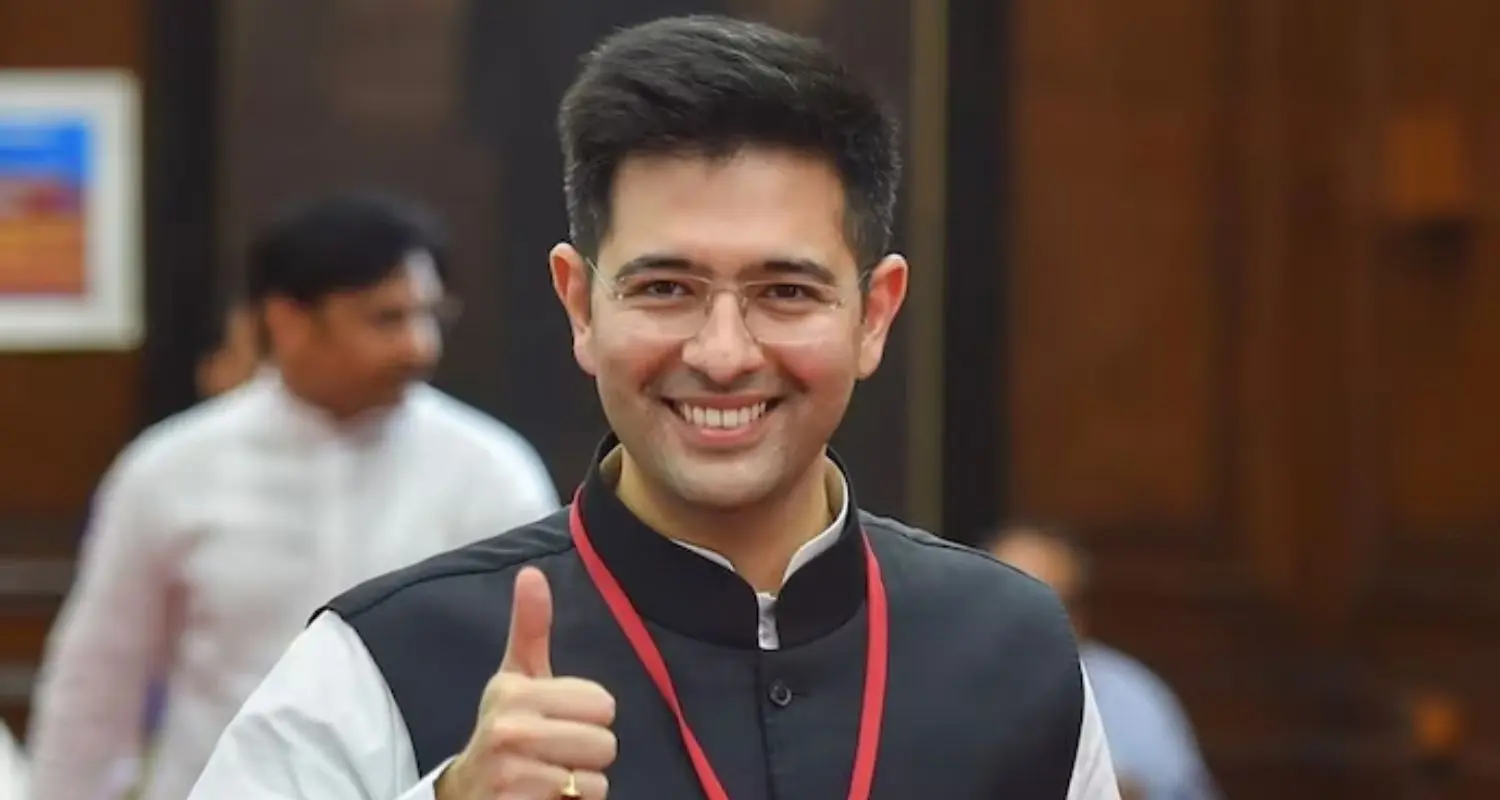
Former Aam Aadmi Party leader and current BJP Rajya Sabha MP Raghav Chadha has been appointed chairman of the Rajya Sabha Committee on Petitions, a key parliamentary body responsible for reviewing grievances and representations submitted by citizens to the Upper House.
The appointment marks Chadha’s first major institutional responsibility after his high-profile political shift from the Aam Aadmi Party to the Bharatiya Janata Party earlier this year — a move that had triggered intense political debate and accusations of “opportunism” from his former party colleagues.
The Committee on Petitions functions as one of Parliament’s formal channels through which citizens, organisations, and civil society groups can directly place governance concerns before lawmakers. The panel examines complaints, policy-related appeals, and administrative issues before forwarding recommendations to the Rajya Sabha.
Reacting to the appointment, Chadha called the position a “serious constitutional responsibility” and said the committee should become “a stronger bridge between citizens and Parliament.”
“People should feel that democratic institutions remain accessible to them,” Chadha said, adding that public grievances deserve “timely and meaningful attention through parliamentary mechanisms.”
Political observers view the appointment as significant, not only because of Chadha’s growing visibility in national politics but also because it comes soon after his controversial entry into the BJP. Once regarded as one of the most recognisable faces of the Aam Aadmi Party in Parliament, Chadha’s switch to the ruling party had surprised sections of the Opposition and triggered speculation over shifting political alignments ahead of future elections.
Since joining the BJP, Chadha has attempted to position himself as a leader focused on “institutional governance” and policy engagement rather than confrontational politics. Supporters within the BJP described his appointment as recognition of his parliamentary performance and communication skills, particularly among younger urban voters.
Parliamentary committees are often described as the backbone of legislative functioning because they allow detailed scrutiny of governance issues beyond the disruptions frequently witnessed during House proceedings. The Petitions Committee, in particular, is tasked with hearing citizen concerns related to public administration, lawmaking, and policy implementation.
While the committee’s recommendations are advisory rather than binding, they often influence administrative reviews and parliamentary discussions.
Opposition leaders, however, questioned the political messaging surrounding the appointment. Some critics argued that committee assignments are routine parliamentary exercises and should not be projected as major political endorsements. Others accused the BJP of strategically elevating recently inducted opposition leaders to strengthen its urban and youth-facing image.
Still, the development adds another layer to Chadha’s evolving political journey — from being a prominent Opposition voice in Parliament to occupying an institutional role within the ruling party’s broader parliamentary framework.
As chairman of the Committee on Petitions, Chadha is expected to oversee public submissions, committee deliberations, and recommendations concerning governance and public accountability in the coming parliamentary sessions.