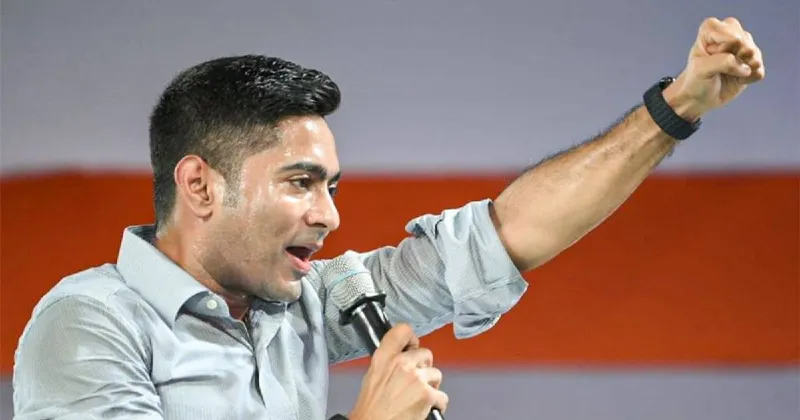
Trinamool Congress national general secretary and Lok Sabha MP Abhishek Banerjee is set to return to active political mobilisation nearly a month after the West Bengal Assembly election results, with the party announcing a statewide outreach programme focused on alleged victims of post-poll violence.
Beginning May 30, Abhishek will travel across different districts of West Bengal to meet party workers and families whom the Trinamool Congress claims were attacked after the elections, according to ANI report. The initiative marks his first major political programme since the Assembly poll setback and comes at a time when the party is grappling with internal dissent, organisational uncertainty and mounting criticism over its electoral performance.
According to party sources, the first phase of Abhishek’s outreach will begin with visits to Sonarpur South and Beleghata, where he is expected to meet injured Trinamool workers and families allegedly affected by post-election violence. The programme is being viewed as an attempt by the Trinamool leadership to reconnect with grassroots workers and re-establish organisational morale after the defeat.
The political significance of the move has increased because Abhishek Banerjee had largely remained away from public political mobilisation after the election results were declared. While he continued participating in internal meetings at Kalighat and remained active on social media over issues such as examination irregularities and national politics, he did not directly participate in several major post-election political activities of the party.
His absence from the streets had triggered visible unease within sections of the Trinamool Congress. Several leaders publicly questioned why the party’s second-in-command was not leading political resistance at a time when workers across districts were allegedly facing intimidation and attacks.
The Assembly election defeat has exposed deep cracks inside the Trinamool Congress. Senior leaders and public representatives have openly blamed strategic failures, organisational weaknesses and campaign mismanagement for the party’s poor performance. Much of that criticism has been directed at Abhishek Banerjee and political consultancy firm I-PAC, which played a major role in the party’s election planning and campaign management.
Leaders such as Kakoli Ghosh Dastidar and former Rajya Sabha MP Santanu Sen have emerged among the growing list of dissenting voices within the organisation. Significantly, several leaders who are now questioning the leadership were earlier regarded as politically close to Abhishek, making the criticism more damaging for the party’s internal structure.
However, BJP spokesperson Pranay Roy criticised Abhishek’s planned visits and stated that the new government had not encouraged any political violence after coming to power. He further claimed that the incidents being highlighted by the Trinamool Congress reflected public resentment against the former ruling party rather than politically sponsored attacks.