
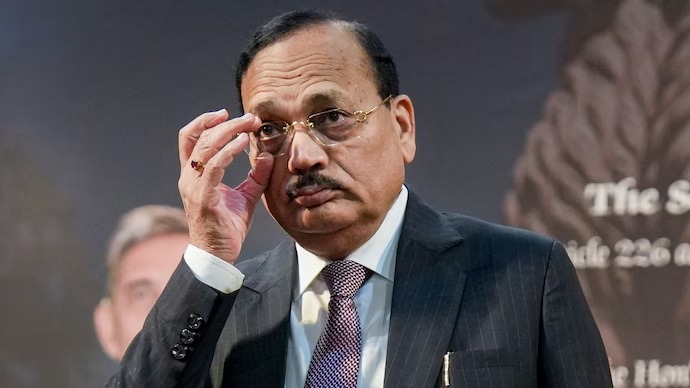
Chief Justice of India (CJI) Surya Kant on Monday urged lawyers to ensure that protests over the police crackdown in Delhi do not disrupt the Supreme Court’s functioning, stressing that the institution should not be drawn into political disputes.
“There should not be any obstruction in the functioning of the court. There should not be any impediment in the movement of the lawyers, their clerks, court staff or litigants,” Kant told Supreme Court Bar Association (SCBA) president Pradeep Rai, who sought an urgent hearing on a fresh petition concerning the detention of lawyers and the suspension of internet services. The CJI clarified that he had no objection to democratic protests, provided they took place at designated venues. “Every member of the Bar can also protest. Wherever there is a designated place to protest, you can protest,” he told senior advocate Gopal Sankaranarayanan.
Agreeing to list the SCBA’s petition on Tuesday, Kant reiterated that demonstrations must not affect the court’s work. “Alright, we will list it. But you must also see that democratic activities take place smoothly. There is no difficulty with that. But just see to it that at least the Supreme Court functioning is not affected,” he said. “I have appealed to the protesters as well but court should not be dragged into any politics,” the CJI added.
Gopal Sankaranarayanan, who sought the listing of a separate petition, questioned the absence of a publicly available order imposing restrictions under Section 163 of the Bharatiya Nagarik Suraksha Sanhita (BNSS). He also alleged that senior advocates Dinesh Dwivedi and Shadan Farasat had been detained and manhandled during the police action. “At some point the Supreme Court will also intervene and send a strong message to the police that they cannot get away with everything,” Sankaranarayanan said, alleging that children had been struck on the head during the crackdown.
The CJI declined to comment on the allegations, saying, “I don’t want to say anything as of now.” Senior advocate ANS Nadkarni also sought a hearing on a petition filed by a lawyer allegedly detained during the protests.
The exchanges came a day after a special Supreme Court bench comprising Justices Joymalya Bagchi and V Mohana issued directions to safeguard peaceful protest, freedom of movement and access to justice.
The bench said no person could be detained except in accordance with the procedure established by law. It also directed that metro and railway services operate normally, internet connectivity remain uninterrupted and restrictions around court complexes be removed. The court had previously asked authorities to reconsider proposed restrictions on public transport, emphasising that regulating services was different from shutting them down.
The proceedings follow the Opposition’s proposed march towards the Supreme Court on Monday, after the CJI declined a request by Congress president Mallikarjun Kharge and Leader of the Opposition Rahul Gandhi for a meeting.
The leaders had sought to raise concerns over police action against demonstrators, alleged electoral irregularities and the functioning of constitutional institutions. The request was declined, among other reasons, because related matters were already pending before the court. Rahul Gandhi had subsequently announced plans for Opposition parties, young people and civil society groups to march to the court and submit a memorandum to the CJI.
The protests centre on demands for the resignation of Chief Election Commissioner Gyanesh Kumar over alleged irregularities in the Special Intensive Revision (SIR) of electoral rolls, alongside allegations of excessive police action against demonstrators. The Supreme Court is scheduled to hear the pending matters again on Tuesday.
















