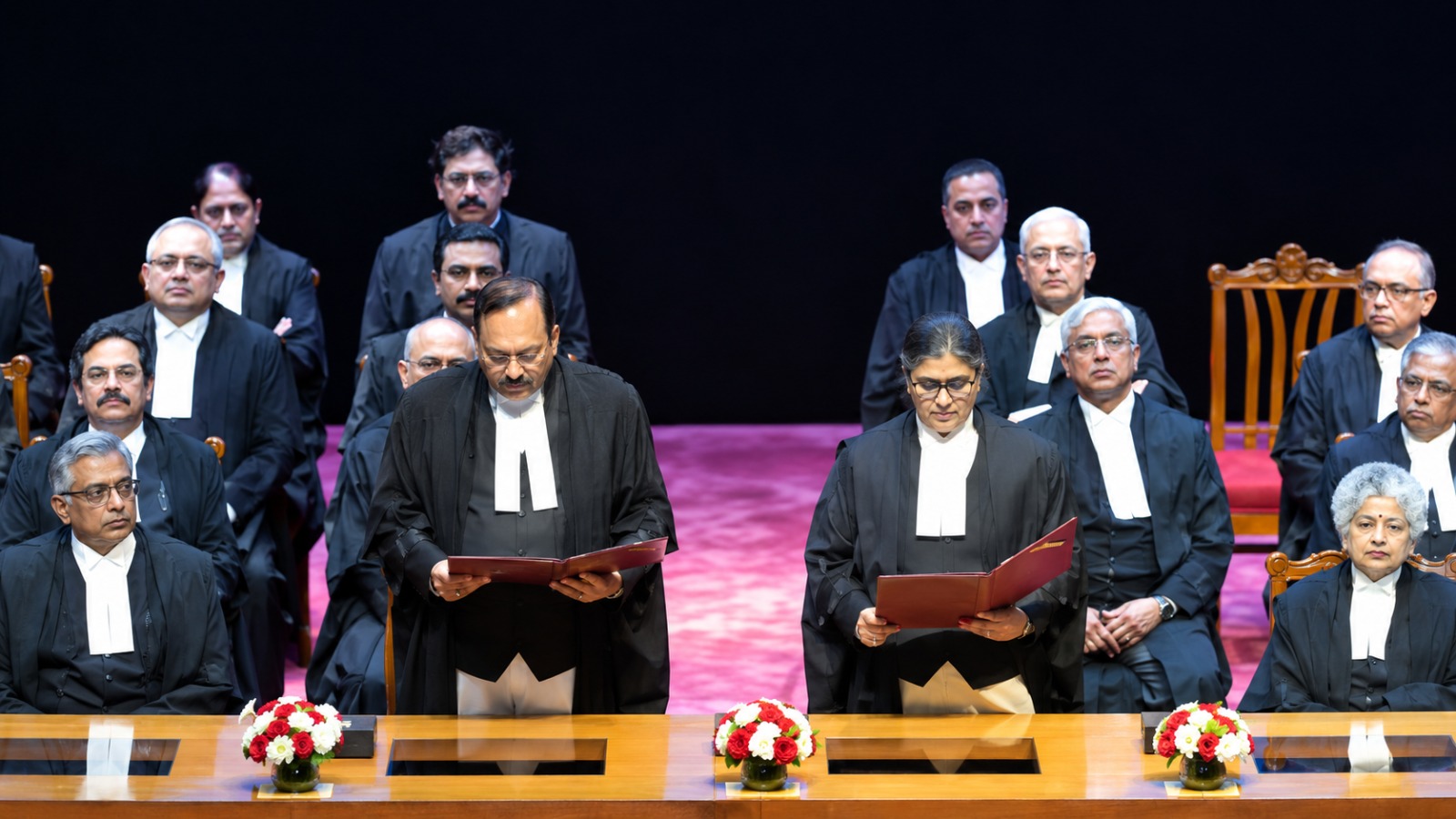
The Supreme Court of India has postponed the hearing in the I-PAC case by a week, scheduling it for April 22—just a day before the first phase of voting in the West Bengal Assembly elections. The development comes after the matter was originally slated for hearing on Tuesday, but the court announced on Monday evening that proceedings would not take place as scheduled.
A bench comprising Justice Prashant Kumar Mishra and Justice N.V. Anjaria issued directions stating that the matter would now be heard next Wednesday at the commencement of court proceedings. Notably, the revised date places the hearing immediately ahead of the first phase of polling on April 23, adding political significance to the timing.
The case had previously come up for hearing on March 24, when legal representatives for I-PAC and West Bengal Chief Minister Mamata Banerjee presented their arguments. At the time, the court had indicated that hearings would continue for three consecutive days starting April 14, with all parties expected to complete their submissions during that period. However, the latest notification has altered that schedule.
The postponement is attributed to the closure of the Supreme Court on April 14 on account of Ambedkar Jayanti, prompting the bench to assign a new date for the proceedings.
The case stems from earlier enforcement actions linked to an alleged illegal coal smuggling investigation. On January 8, the Enforcement Directorate conducted simultaneous raids in Kolkata, including at the Salt Lake Sector V office of the Indian Political Action Committee (I-PAC) and at the residence of its head, Prateek Jain, on Loudon Street.
The developments took a controversial turn when Chief Minister Mamata Banerjee visited the locations during the searches. Allegations subsequently surfaced that documents, files, and laptops were removed from the premises during the course of the raids. Following the incident, the Enforcement Directorate approached the Supreme Court, leading to the ongoing legal proceedings.