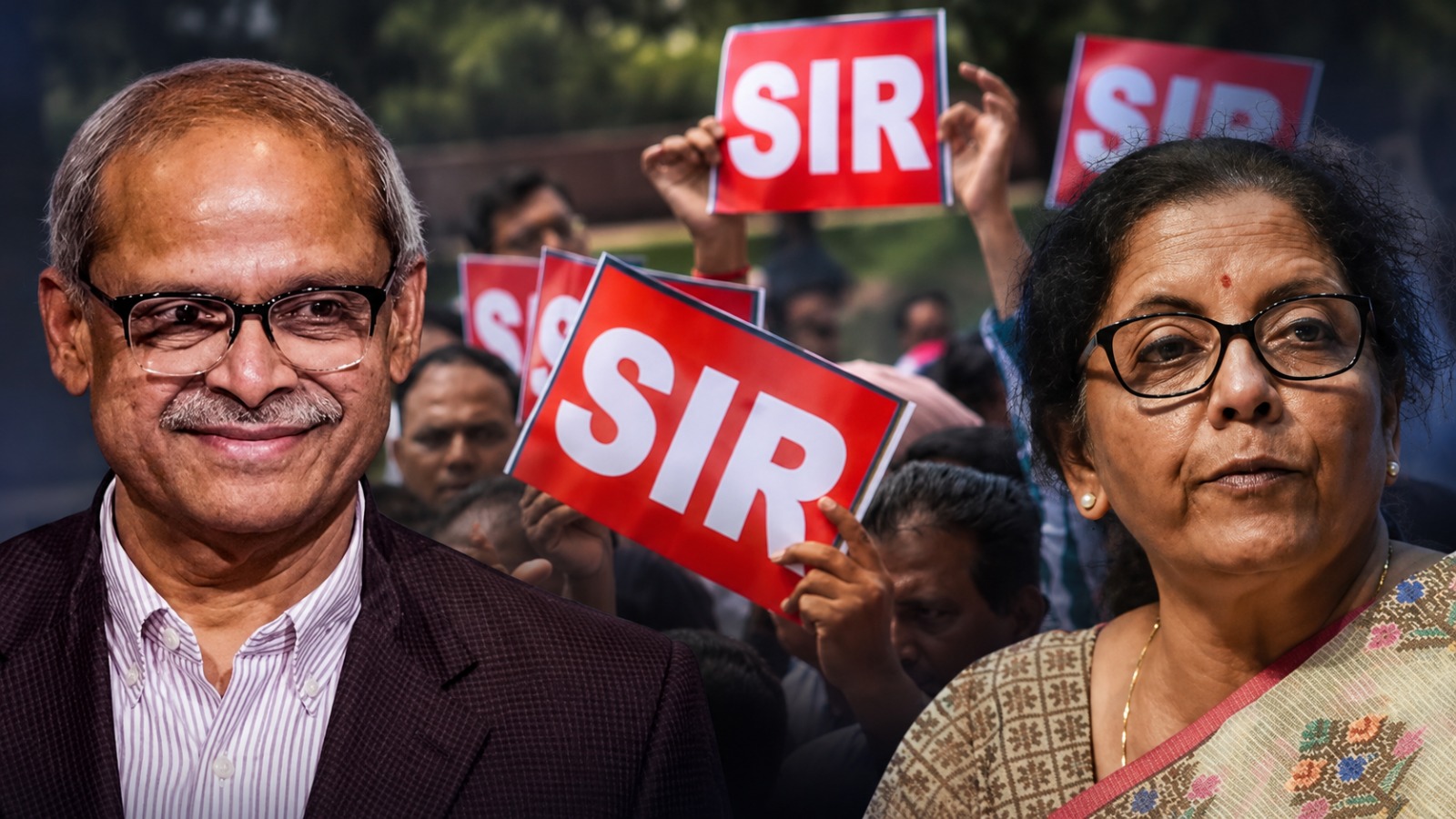
Economist and political commentator Parakala Prabhakar, husband of Union Finance Minister Nirmala Sitharaman, is set to participate in an anti-Special Intensive Revision (SIR) protest in Delhi on October 23, joining actor-activist Prakash Raj, senior advocate Prashant Bhushan and other public figures.
The demonstration, titled the “People’s March to Restore Democracy”, has been called by the People Against SIR alliance, formed on October 14. The alliance is opposing the Election Commission of India’s SIR exercise and demanding the resignation of Chief Election Commissioner Gyanesh Kumar.
According to reports, Prabhakar is expected to share the stage with Cockroach Janta Party (CJP) founder Abhijeet Dipke, All India Students’ Union president Neha Bora, farmer leader Rakesh Tikait, author Tushar Gandhi and former Jawaharlal Nehru University Students’ Union president Aishe Ghosh.
The organisers have also appealed to parties in the INDIA bloc to participate in the march.
Prabhakar Calls SIR a “Bloodless Political Genocide of Citizenship”
Prabhakar has emerged as a vocal critic of the electoral roll revision exercise, arguing that the deletion of eligible voters’ names could undermine their voting rights.
He has described the SIR process as a “bloodless political genocide of citizenship”, alleging that the exercise risks creating a divide between citizens who retain their right to vote and those whose names are removed from electoral rolls.
According to Prabhakar, deletion from the electoral roll does not extinguish a person’s citizenship, but it can deprive that person of a fundamental means of participating in the democratic process.
He has called for greater public mobilisation to help people whose names have been deleted seek restoration of their voting rights.
‘Har Haath Mein Tiranga, Har Gali Mein Jantar Mantar’
The alliance has announced the slogan “Har haath mein tiranga, har gali mein Jantar Mantar”, which translates to “a tricolour in every hand and a Jantar Mantar in every street”.
The campaign seeks to take the protest beyond the national capital, encouraging citizens to organise demonstrations in their neighbourhoods and localities.
The alliance has called on students, farmers, workers, women, Dalits, Adivasis, minorities, persons with disabilities and transgender people to participate in the mobilisation.