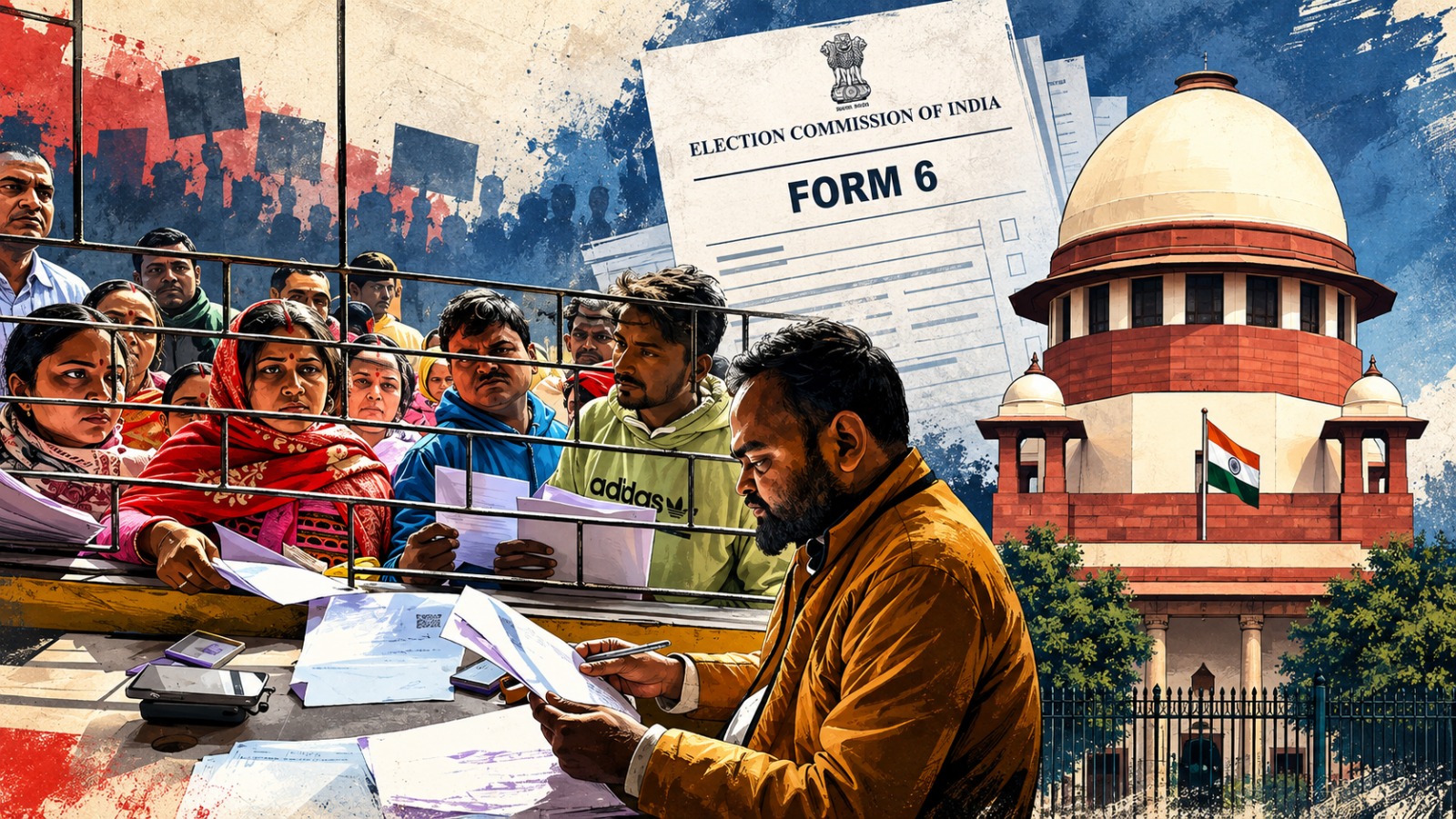

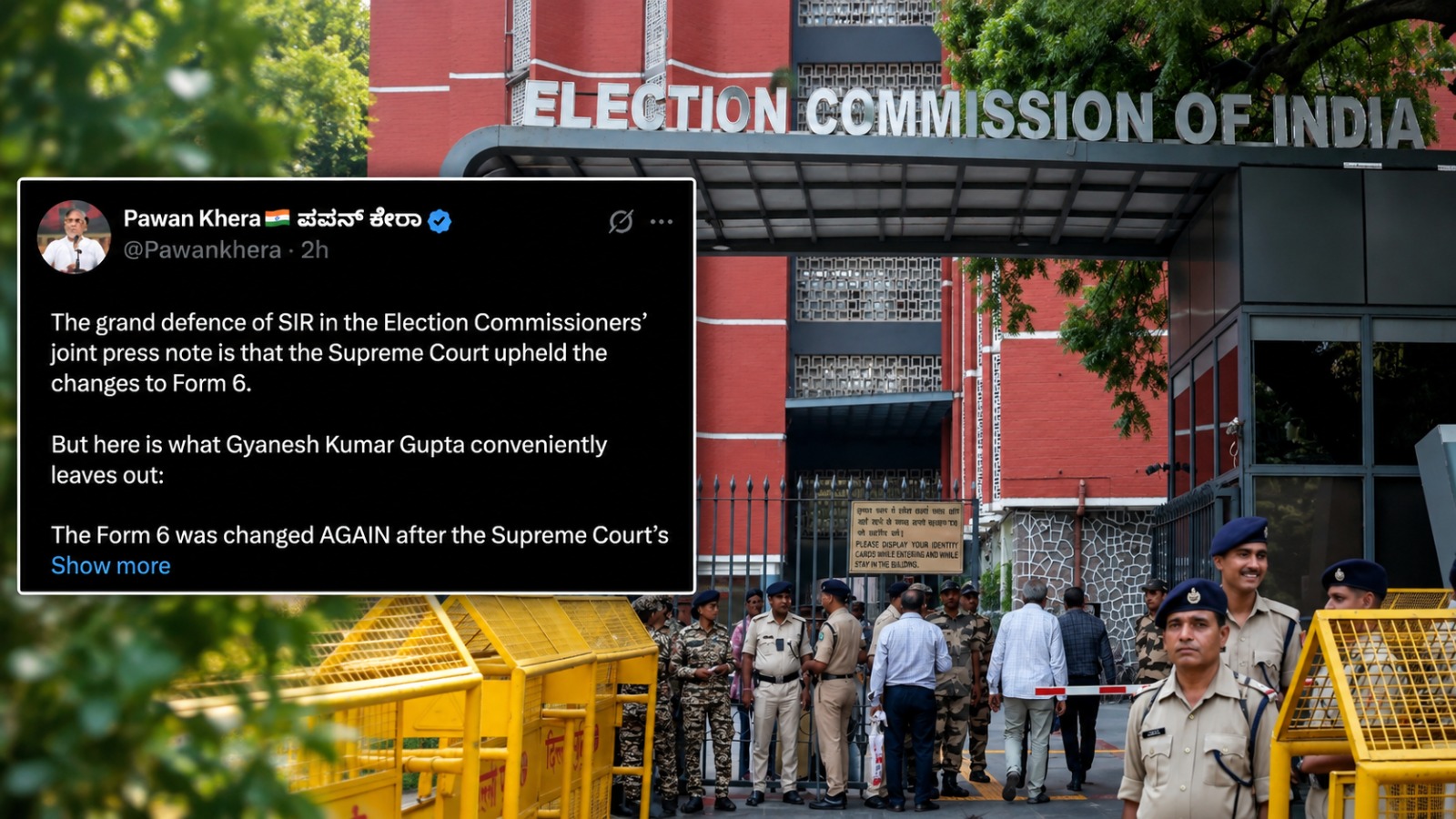
The Congress on Tuesday intensified its criticism of the Election Commission of India (ECI) over the ongoing Special Intensive Revision (SIR) of electoral rolls, citing concerns raised by former Union minister and former BJP leader R.K. Singh and questioning the poll panel’s defence of changes made to Form 6, used for enrolling new voters.
Congress leader Pawan Khera accused Chief Election Commissioner Gyanesh Kumar of invoking a Supreme Court ruling to defend a version of Form 6 that, he claimed, was modified after the court’s judgment.
“LIES, LIES AND DECEIT,” Khera wrote in a post on X, challenging the Election Commission’s assertion that the apex court had upheld the changes to the voter registration form.
“The Form 6 was changed AGAIN after the Supreme Court’s judgment,” Khera alleged, arguing that the court had not examined the version currently being cited by the commission.
The controversy centres on a declaration introduced to Form 6 in July 2026, requiring applicants to provide details concerning their parents or grandparents in the previous SIR exercise. The Congress has argued that the additional requirement places hurdles before young and first-time voters seeking enrolment.
The Election Commission, however, has maintained that the declaration was introduced through instructions and that Form 6 itself was not formally amended.
Congress cites R.K. Singh’s letter
Khera also cited an open letter by R.K. Singh, a former Union power minister and former Union home secretary, who has questioned the legality and implementation of the nationwide electoral roll revision.
Describing Singh’s intervention as a “devastating indictment” of the exercise, Khera said the concerns raised by the former bureaucrat and BJP leader warranted scrutiny beyond party politics.
Singh, who resigned from the BJP in November 2025 after being suspended over alleged anti-party activities, questioned whether the nationwide SIR complied with the Representation of the People Act, 1950.
“Do you want India to remain a democracy? Then you must understand what Gyanesh Kumar, the CEC, and his bosses are doing in the so-called SIR. They are violating the law,” Singh wrote in his letter.
He argued that Section 21 of the Act permits special revisions in specific circumstances and questioned the decision to extend the intensive revision across the country. “An exception allowed for special cases cannot become the rule,” Singh wrote, disputing the legal basis for the nationwide exercise.
The former minister also questioned whether the decision had been taken collectively by the full Election Commission or by the Chief Election Commissioner alone.
Questions over voter deletions and due process
Singh’s letter raised concerns about the deletion of names from electoral rolls and the procedure followed before voters were excluded.
Citing Section 22 of the Representation of the People Act, he argued that electoral registration officers must conduct an inquiry and provide voters with an opportunity to be heard before removing their names.
He alleged that voters whose names had been included by electoral registration officers after 2003 were removed without adequate inquiry or notice.
“Gyanesh Kumar removed the names of all the voters who had been listed by the EROs after 2003, without any basis, without any enquiry, and without any show cause to the registered voters,” Singh alleged.
He further questioned the requirement that excluded voters apply afresh through Form 6, arguing that it placed the responsibility on citizens to establish their eligibility after their names had been removed.
Singh maintained that the burden of demonstrating sufficient grounds for exclusion should rest with the authority seeking to remove a voter.
The allegations form part of a broader political dispute over the SIR exercise, with Opposition parties raising concerns about voter deletions, verification procedures and access to enrolment for vulnerable sections of the population.