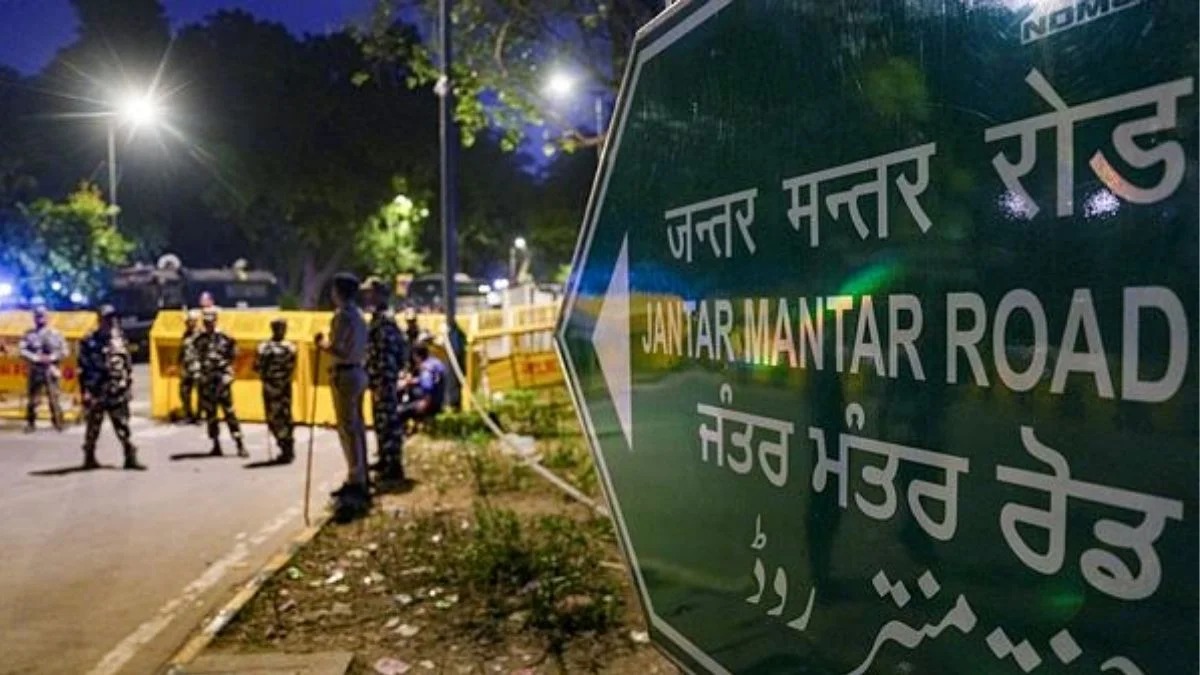
Will moving protests away from Jantar Mantar weaken the momentum of demonstrations in the national capital, or will the change push protesters to find new ways to sustain their campaigns? Delhi Police’s decision to remove Jantar Mantar from the list of designated protest venues has raised questions about the future of demonstrations in the city.
In an order issued on October 11, Delhi Police Commissioner Anurag Kumar designated Ramlila Ground, Burari Ground and CBD Ground in east Delhi as alternative venues for protests and sit-ins. The decision follows recommendations by a committee constituted by the Union Ministry of Home Affairs. A revised standard operating procedure (SOP) for demonstrations at the new locations is expected to be issued separately.
“Based on the recommendations of the Committee, Jantar Mantar as a protest venue has been de-notified,” the police order stated, while naming the three alternative locations.
A Change Beyond Geography
For years, Jantar Mantar has been one of Delhi’s most recognisable spaces for political demonstrations, public campaigns and sit-ins. Its location in central Delhi has offered protesters proximity to key government institutions, political centres and national media organisations.
Moving demonstrations to other designated grounds could change the logistics and visibility of protests. The distance from central political centres, accessibility for participants and the ability to attract media attention may all influence how individual campaigns develop.
However, a change of venue does not necessarily translate into a decline in public mobilisation. The impact will depend on whether protesters can continue to assemble in significant numbers, communicate their demands effectively and maintain public attention after the relocation.
Will the Shift Affect the Current Protests?
The decision comes amid demonstrations and political tensions surrounding demands for accountability from Chief Election Commissioner Gyanesh Kumar over alleged irregularities linked to the Special Intensive Revision (SIR) of electoral rolls.
The Cockroach Janta Party (CJP), which has been involved in protests against the Chief Election Commissioner, has criticised the move. CJP co-convener Saurav Das described the decision as “unacceptable” in a social media post.
For ongoing campaigns, the immediate question is whether the alternative venues will allow protesters to sustain their mobilisation without losing visibility. A shift away from a familiar protest site could create practical challenges, particularly for groups that rely on spontaneous participation, public outreach and regular media coverage.
At the same time, the relocation could prompt organisers to adapt their strategies, coordinate gatherings at the newly designated grounds or explore other lawful forms of public mobilisation. Whether these adjustments strengthen or weaken individual campaigns remains to be seen.
The Larger Question of the Right to Protest
The decision also renews the debate over how authorities balance public order and traffic management with the right to peaceful assembly.
In July 2018, the Supreme Court set aside a blanket prohibition on protests at Jantar Mantar and called for a regulatory framework that would balance peaceful demonstrations with the interests of residents and the maintenance of public order.
The latest order changes the designated locations for demonstrations, while the detailed procedures governing protests at the alternative sites are still awaited.
Ultimately, the effect on protest momentum will depend on more than the location itself. Participation, organisation, public support, accessibility and media attention are likely to shape whether the move becomes a significant obstacle for demonstrators or simply marks a change in where their campaigns unfold.
For now, the key question remains: can a change of venue alter the course of a protest, or will the momentum follow the protesters wherever they assemble?