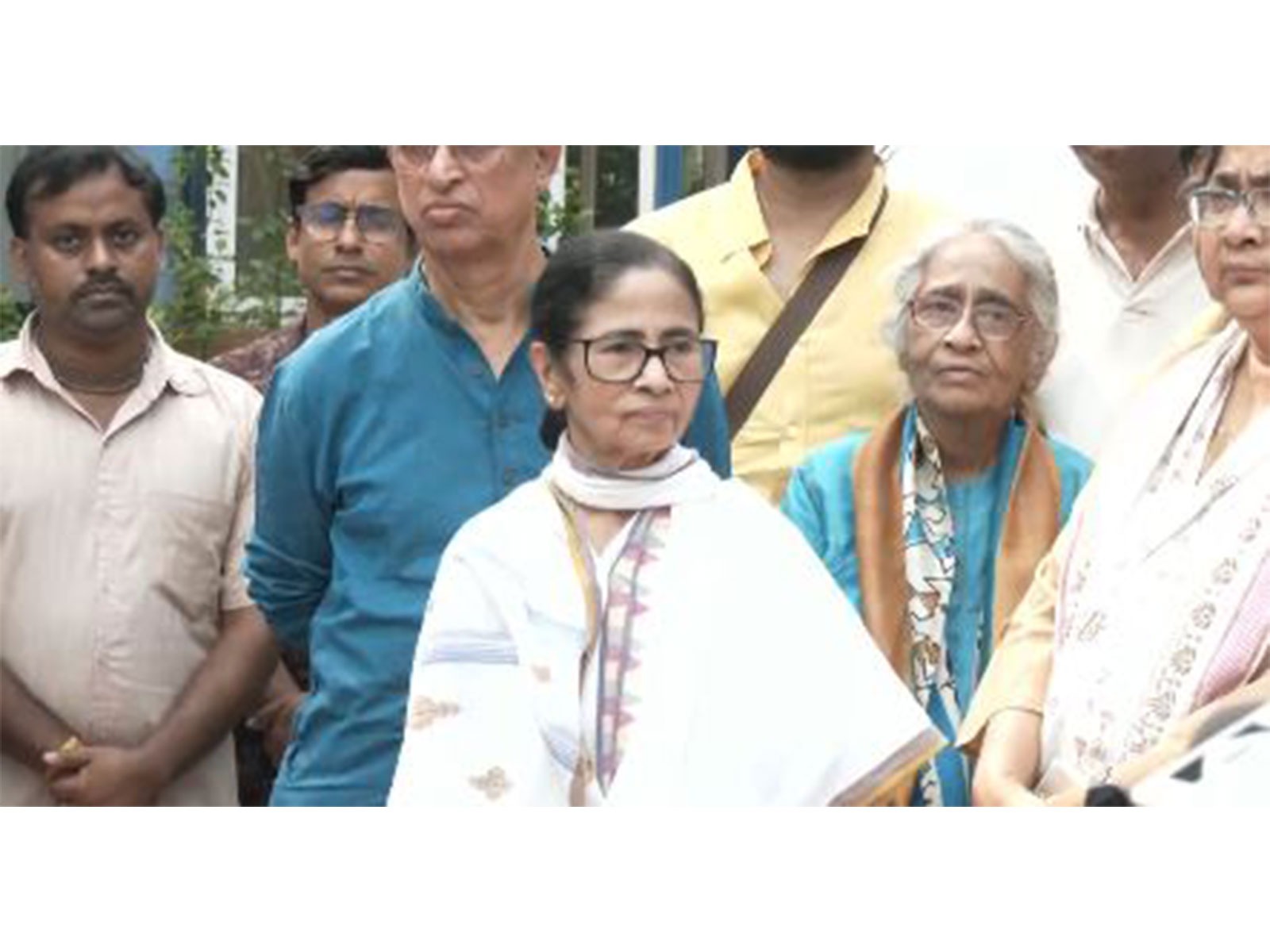

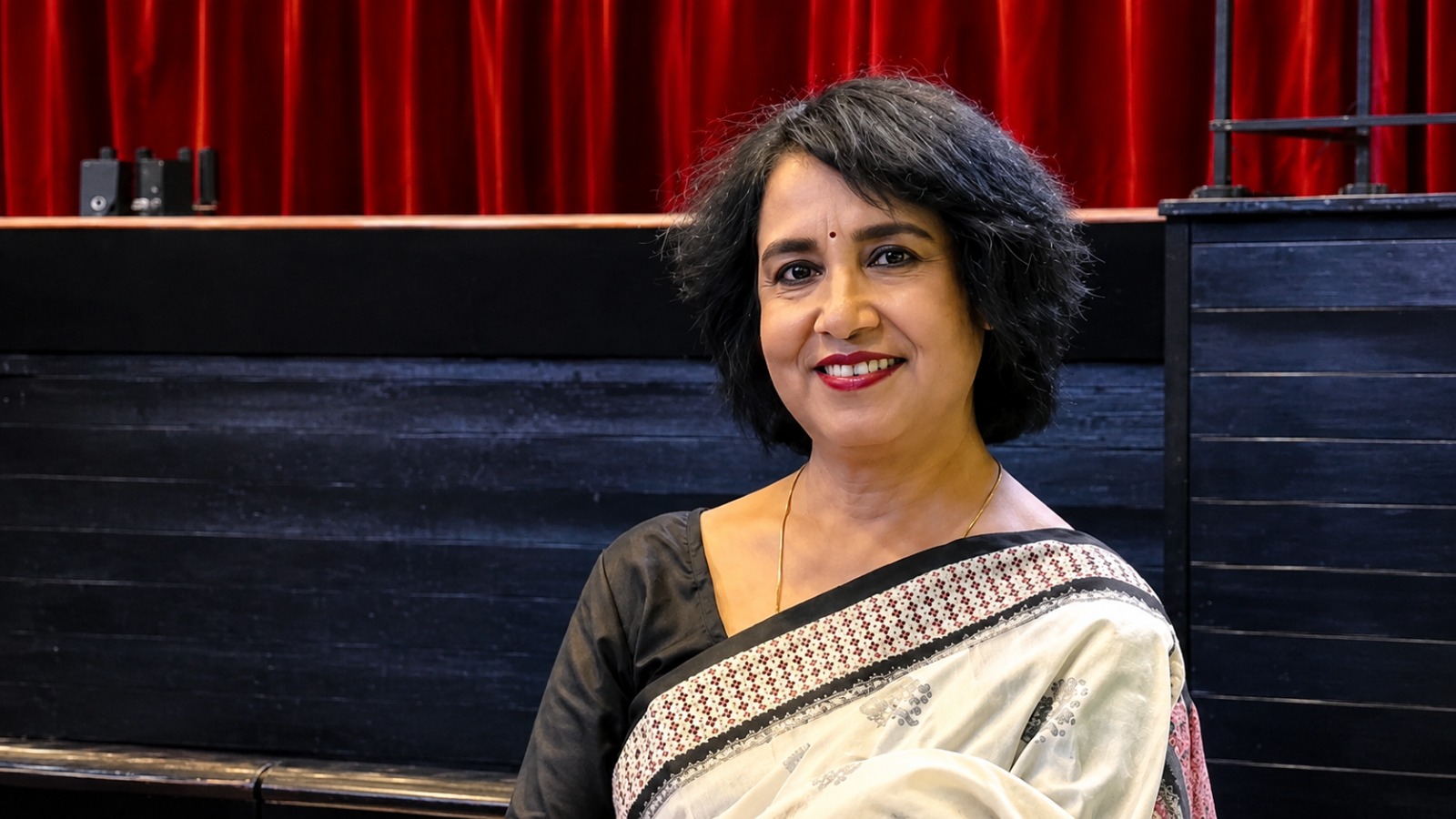
Bangladeshi writer, poet and novelist Taslima Nasrin returned to Kolkata after 19 years, making an emotional appearance at a literary event at Rabindra Sadan on Friday. The author reflected on exile, freedom of expression, women's rights and religious fundamentalism, describing her return as a deeply personal moment after decades of displacement.
Opening her address, Nasrin spoke of the emotional weight of returning to a city she once called home. "It took me 19 years to say this sentence: I have come to Kolkata after 19 years. I lost my address, I lost my home. I not only came back to this city but to a lost chapter of my life."
She extended gratitude to CM Suvendu Adhikari, appreciating the security arrangements.
'A Writer Must Not Need Police Protection'
Nasrin lamented the circumstances surrounding her return, saying it was unfortunate that a writer required security to attend a literary event. "It is a painful truth that a writer is requiring police protection to come back to a city. A writer must not need to protect her pen with security. I hope to look at a day when a writer does not need protection to protect free speech."
She stressed that she was not speaking on behalf of any political party but for universal rights. "I am not a political spokesperson for any party… I am here for the rights of women, human rights and call to allow existence and uphold right to free speech."
Recalling the timing of her return, she said August held profound significance in her life. "August is my birth month, it was the same month when I was exiled, and again it is August when I was re-welcomed. It will be 32 years of exile in another week. I have lived away from my country for more years than I have lived in my country."
Nasrin on Exile and Freedom of Expression
Reflecting on the circumstances that forced her out of Kolkata, Nasrin questioned why advocating equality had resulted in exile. "My writings bridged borders. The borders don’t separate language. Although HC annulled the exile order but I was forced to leave Kolkata. What was my fault? Did I murder someone? Did I burn someone’s home? I wrote about women rights, I wrote about right to equality."
She said her work consistently advocated equal rights irrespective of identity.
"I urged to allow equal rights for all irrespective of caste, creed, colour, orientation."
Calling her exile "a testament to a state's incompetence," Nasrin argued that governments had chosen appeasement over defending free expression."My exile is a testament to a state’s incompetence. With my exile, the state brought temporary peace. They learnt to bend their spine to louder threats."
She added that disagreement should never justify silencing writers. "In a learned society, if you disagree with an opinion, learn to oppose but not debar a pen from the society. Difference of opinion must be indomitable.
Nasrin reiterated her long-held criticism of religious extremism, particularly Islamic fundamentalism, while distinguishing it from criticism of religion itself. "I raise my voice against dogmas of the society. I am against radicalisation, mostly against Islamic radicalisation since I have been subjected to its atrocities for the larger part of my life. Speaking against the evils of Islam is not speaking against the whole religion."
She also criticised the Left for, in her words, aligning with separatist thinking. "The LEFT also aligned with such separatist mindset."
Calling for greater secularism and reform within the Muslim community, she said societies progress through introspection rather than silence. "I hope there is increase in secularism and no one’s human rights are snatched. It is important for reform of the Muslim community to discuss the evils the superstitions. Anyone who differs from the blind submission to Muslim fundamentalists will never allow them to come out to experience liberation."
Drawing parallels with reformers from other faiths, she said: "Why were Raja Ram Mohan Roy, Swami Vivekananda not exiled from society- today Hinduism, Judaism, Christianity moved forward because they accepted the reforms."
Nasrin argued that development is measured not merely by infrastructure but by intellectual and social progress. "Those who consider their daughter’s education a right and a Muslim daughter’s education unnecessary, it is not progression. A state moves forward not with great infrastructure, it moves when the society prospers intellectually. A state must ensure safety of all its citizens and not a particular religion. A religious identity is not over a human identity."
Reflecting on Bangladesh's present, Nasrin said she continued to hope for a future free from religious extremism despite decades of exile. "I have faced solitude due to my opinion but it has not washed off my belief system. Bangladesh today is still in the warps of extreme fundamentalists, which is why asking questions is still forbidden. I still dream that Bangladesh one day will be a free from the reigns of fundamentalism."
Ending her speech on an emotional note, the writer addressed Kolkata directly, saying the city remained deeply intertwined with her life despite the years lost to exile. "Today, Kolkata, I have come to say that I have come back. I had dreamt of coming back but my heart was heavy and no one can return the lost years to me. It is not a map that makes a country, it is people’s love that makes a country,” she concluded.