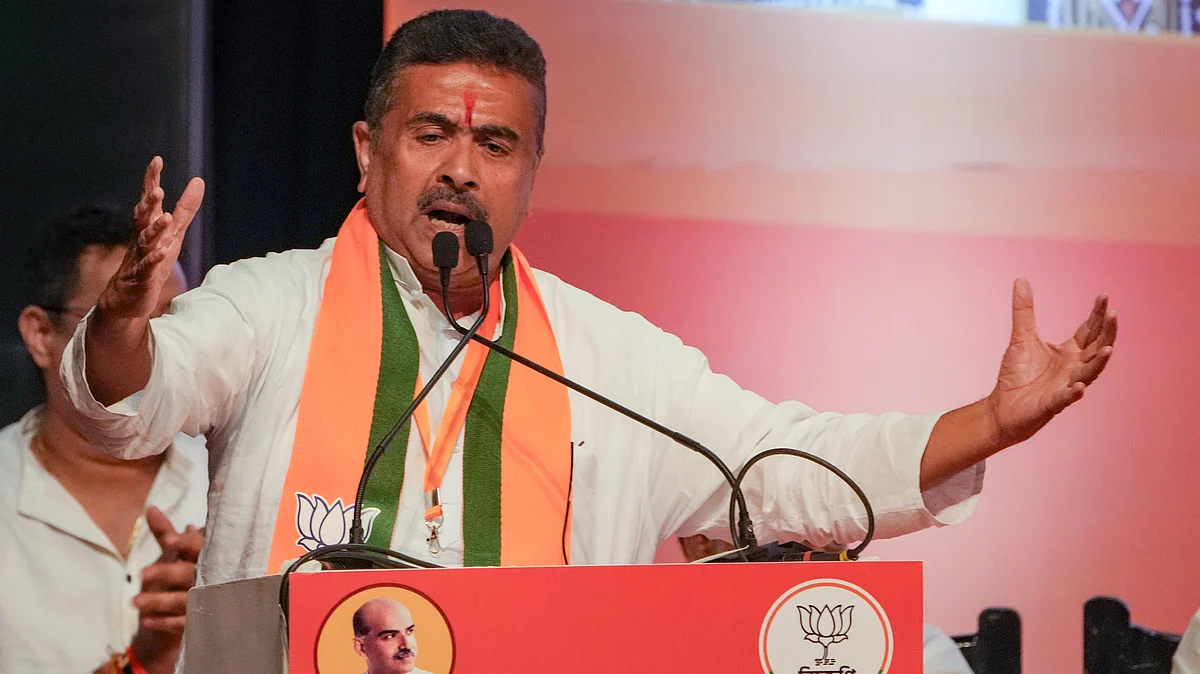
West Bengal Chief Minister Suvendu Adhikari on Wednesday clarified that boiled eggs will continue to be provided to government school students under the mid-day meal programme even as the International Society for Krishna Consciousness (ISKCON) begins a pilot project to supply cooked meals in large parts of Kolkata from August 1.
The announcement, made during a school education department programme at Nabanna (the state secretariat), addresses controversy that arose after the state government decided to entrust ISKCON with preparing and serving mid-day meals under the PM POSHAN scheme in Kolkata Municipal Corporation area schools. Critics, including Opposition parties, had alleged that the move would eliminate eggs - a popular protein source previously served about thrice a week and impose a vegetarian menu.
Adhikari said ISKCON would supply “satvik” and protein-rich vegetarian food as part of the pilot. “From August 1, as a pilot project, ISKCON will provide mid-day meals in various schools in Kolkata. They will serve highly nutritious food to the students. Along with them, the state government, through SHG (Self Help Groups), will provide eggs to the students for protein. Odisha follows this model. ISKCON serves mid-day meals in 22 cities in the country,” he stated.
In another formulation of the assurance, he noted that eggs would be arranged through self-help groups “so that we can provide protein-rich meals to our future generations.” He also highlighted the removal of funding disparities under the scheme: the material allocation for primary students has been raised from ₹6.78 to ₹10 per student per day to match the level for upper primary and high schools.
The government has indicated the transition will proceed in phases, with ISKCON initially covering select schools while existing arrangements continue elsewhere. Space has been allotted in Taratala for an ISKCON kitchen facility (Annamrita/related foundation), with possible use of existing infrastructure such as the Bagbazar kitchen if needed. The organisation already operates mid-day meal programmes in multiple Indian cities and states.
The decision to involve ISKCON, announced in the state budget earlier, had drawn sharp political criticism. Opposition leaders, including Trinamool Congress, questioned the exclusion of eggs on nutritional and cultural grounds and accused the administration of pushing vegetarianism. Government defenders maintained the focus was on hygiene, quality, and nutrition, noting that plant-based proteins such as soya, rajma, paneer, and pulses would feature, and that no one would be required to follow any religious practices. Legal challenges, including public interest litigations, have also been filed against the arrangement.