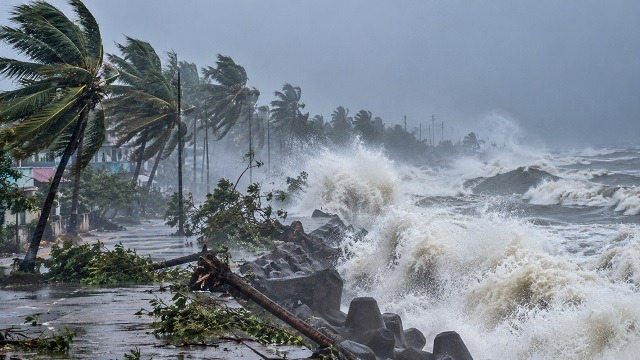
Cyclone Arnab made landfall near Narsapur in Andhra Pradesh’s West Godavari district early Wednesday, bringing heavy rainfall and strong winds to coastal areas. More than 1 lakh people have been evacuated across Andhra Pradesh and Odisha as authorities remain on alert.
The tropical cyclone battered the Andhra Pradesh coast after making landfall in the early hours of Wednesday, October 28, triggering heavy rainfall, strong winds and precautionary evacuations across the affected regions.
The very severe cyclonic storm made landfall near Narsapur in West Godavari district around 3 am, with authorities reporting heavy rain across eight coastal districts. The India Meteorological Department (IMD) had warned of gale-force winds reaching 135 kmph in parts of the state.
According to the Andhra Pradesh State Disaster Management Authority (APSDMA), more than 84,000 people have been shifted to relief shelters as a precautionary measure. The districts bearing the brunt of the cyclone include Polavaram, Kakinada, Konaseema, East Godavari, West Godavari, Eluru, NTR and Krishna.
Although no casualties or injuries had been reported at the time of the report, some old and uninhabited buildings collapsed due to the severe weather conditions.
Andhra Pradesh Steps Up Relief and Rescue Operations
Andhra Pradesh Chief Minister N Chandrababu Naidu appealed to residents of coastal districts to remain indoors and follow the advisories issued by the state government and disaster management authorities.
Naidu said 290 shelters had been established and 84,396 people had been relocated to safety.
“Our idea is only one; not even losing a single life. Saving all lives is our priority. There is no need for people to panic but they have to take precautions,” Naidu said, according to a report by Hindustan Times.
The state government has deployed disaster response teams, including the National Disaster Response Force (NDRF), State Disaster Response Force (SDRF), Indian Navy and Indian Coast Guard, to manage emergencies and assist in rescue operations.
Naidu also directed officials to clear fallen trees within two hours, restore electricity supply promptly and prevent breaches in tanks and canals.
Authorities have arranged drones to deliver food and medicines to villages that may become inaccessible due to flooding. Nearly 5,000 pregnant women have also been shifted to hospitals and healthcare facilities as a precaution.
More than 30,000 fishing boats have been brought back from the sea, while officials have warned that crops spread across 7.16 lakh hectares and horticultural crops covering 16 lakh hectares could be affected.
Odisha Braces for Heavy Rainfall
While Andhra Pradesh continues to deal with the impact of the cyclone, neighbouring Odisha is preparing for heavy to very heavy rainfall and strong winds.
The Odisha government has relocated more than 48,000 people from vulnerable areas across eight districts. As many as 135 cyclone shelters and 1,600 temporary shelters have been arranged to accommodate evacuees.
The IMD has issued red warnings for several districts, including Gajapati, Ganjam, Rayagada, Koraput, Nabarangpur and Malkangiri, forecasting heavy to very heavy rainfall accompanied by lightning and gusty winds.
Odisha Special Relief Commissioner Rajesh Patil said the state had sanctioned Rs 19 crore from the State Disaster Response Fund for preparedness and relocation efforts.
“The state government is fully prepared to tackle every possible situation even though it is challenging for us. We urge the people not to panic and to cooperate with the administration in dealing with the situation,” Patil said.
NDRF, Odisha Disaster Rapid Action Force (ODRAF) and fire services teams have been deployed across vulnerable districts to assist with evacuation and post-cyclone operations.
Authorities are also monitoring areas at risk of landslides due to incessant rainfall, particularly in Gajapati district.
Transport and Infrastructure Disruptions
The cyclone has also disrupted transport services across the region, with several trains cancelled and flight operations affected as a precaution.
Authorities have warned residents against unnecessary travel and urged people to avoid coastal areas, stay away from trees and large hoardings, and remain inside safe shelters until conditions improve.
With heavy rainfall continuing across parts of Andhra Pradesh and Odisha, officials are monitoring the situation closely and preparing for possible flooding, infrastructure damage and further disruptions.