
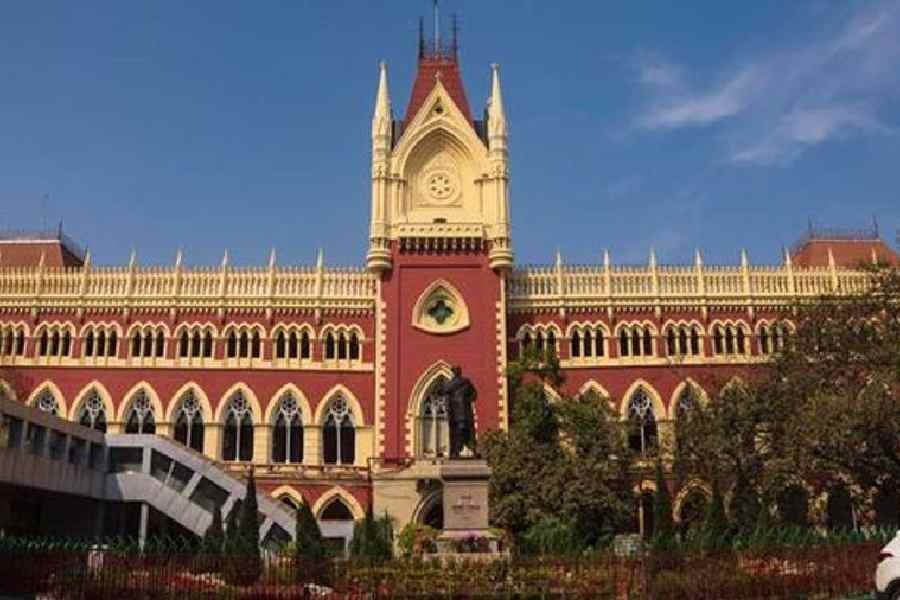
The Calcutta High Court on Monday suggested that the CPI(M)’s cultural wing consider setting up its bookstalls during Kali Puja instead of Durga Puja, while hearing a petition challenging the denial of permission for temporary stalls in Naihati and Bongaon in North 24-Parganas.
The petitioners told the court that they had been setting up bookstalls at the two locations during Durga Puja for nearly five decades. Their lawyer, Shamim Ahmed, submitted that the authorities had denied permission this year, citing “a direction from higher authorities”.
Justice Saugata Bhattacharyya questioned whether the petitioners’ long-standing practice automatically entitled them to continue setting up the stalls. During the hearing, the judge orally suggested that they could organise the bookstalls during Kali Puja, which was scheduled to take place about a fortnight later.
When the petitioners’ counsel requested that the case be released from the judge’s court, Justice Bhattacharyya said he would consider the request on Tuesday.
Political row over CPI(M) bookstalls
The case comes amid a political controversy over the CPI(M)’s tradition of setting up bookstalls near Durga Puja pandals across West Bengal. The stalls typically display Marxist literature, political publications and progressive books.
The dispute intensified last month after West Bengal Chief Minister Suvendu Adhikari urged Durga Puja committees not to allow CPI(M) bookstalls near pandals if the organisers described the festivities as Sharodotsav rather than Durga Puja. Adhikari argued that the terminology diminished the festival’s religious character.
The denial of permission in Naihati and Bongaon has now brought the dispute before the High Court, raising questions about the continuation of a decades-old cultural practice and the grounds on which temporary stalls can be permitted during public festivities.
The court’s suggestion to consider Kali Puja was made orally during the hearing. The matter was still under consideration, and the suggestion should not be construed as a final judicial order on the petition.
















